

Washington is doubling down on strongmen. The bet may be failing in the Middle East
The strategy banks on strong states and leaders in a chaotic region. Here is what the approach risks, and why it might not hold.
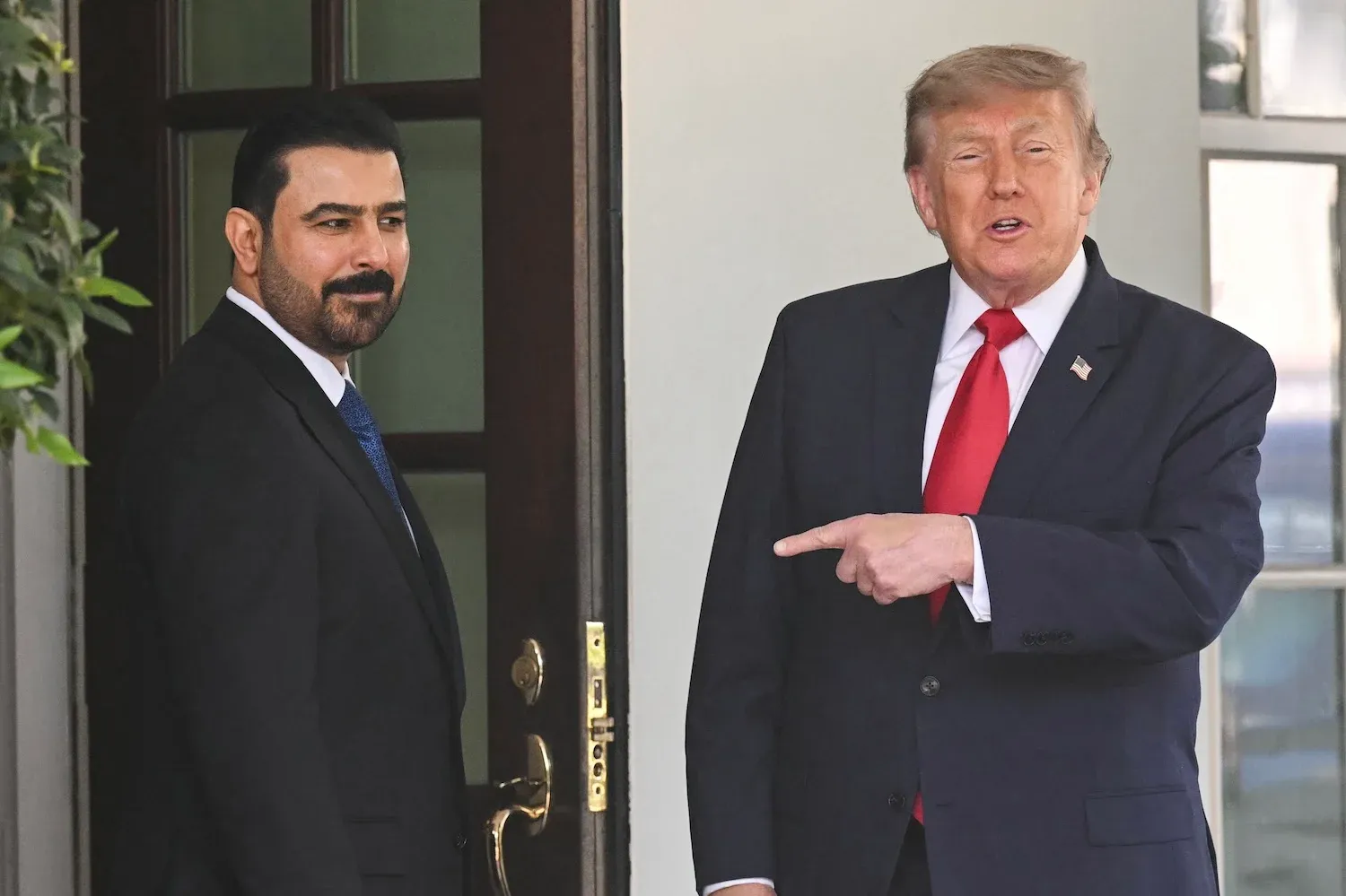
Foreign Policy examines Washingtons approach in the Middle East, betting that strongmen and strong states can advance U.S. interests amid chaos. For decision-makers, the key issue is whether the model actually produces stability, or just shifts the burden onto the next crisis.
Washington is betting on strongmen and strong states to advance its interests in a chaotic region. But will it work?
That is the whole question, and it matters because the United States does not operate in the Middle East on vibes. It operates through partnerships, security relationships, aid, intelligence, and the quiet influence that comes from deciding who gets backed and who gets bypassed. When policymakers choose strongmen, they are making a bet about leverage. The logic is straightforward: if institutions are weak, personalities will carry the load. If a state cannot reliably impose order, a ruler with control of coercive power will.
But Foreign Policy is pressing on the uncomfortable part of that logic. The region is chaotic. That means the environment is not simply “hard,” it is unstable in ways that keep changing the payoff for any single strategy. A leader who looks capable in one quarter can become a liability in the next, not because the original assessment was foolish, but because the underlying system can absorb pressure differently than outsiders expect. In other words, the bet is not only about who is in charge, it is about whether “strong” behaves the way Washington needs it to behave.
This is also a governance problem, not just a political one. “Strong states” can mean competent bureaucracies, dependable rule of law, and predictable enforcement. But “strong states” can also mean something narrower: control, surveillance, and the ability to direct resources with speed. When U.S. strategy leans heavily into the second version, it risks rewarding short-term control over durable institutions. That is the type of tradeoff that tends to surface later, when the costs of corruption, repression, or patronage become hard to manage, and when local legitimacy evaporates.
There is a market version of this too. In the Middle East, stability is not only a security outcome. It is a prerequisite for business decisions that require patience: infrastructure financing, long-term supply chains, and technology investments that depend on predictable regulation. Investors typically price risk based on the continuity of rules. If governance is primarily anchored in strongman dynamics, the rules can change with the ruler. And even when policies do not flip instantly, enforcement patterns can shift, creating a regulatory fog that raises costs and slows growth.
That brings us to the second-order implications for U.S. policy design. When Washington chooses to back strong states and strongmen, it is also choosing an information environment. Strongmen often centralize decisions, so outsiders get a cleaner signal in the short run. But that can degrade institutional feedback. If power flows upward to a single node, then warnings from below can get filtered, delayed, or selectively shared. Foreign Policy’s framing, focused on whether the strategy works, implicitly points to the possibility that the United States ends up optimizing for alignment with leaders rather than resilience in the system.
Board-level dynamics have an analogue here. In any organization, there is a difference between “oversight through individuals” and “oversight through institutions.” Individuals can move fast, but institutions scale competence and absorb shocks. A strongman-centric approach can deliver immediate action, but it can also crowd out the incentives to build the systems that prevent the next breakdown. That matters because chaos does not pause. If a partner regime survives by tightening control rather than building legitimacy and administrative capacity, the underlying volatility remains. The moment the external support, money, or political cover weakens, the strain reappears.
Regulatory background helps explain why this can become self-reinforcing. In environments where political authority is personalized, compliance is often negotiated rather than standardized. That makes it harder for companies to plan. It also makes it harder for external partners to separate policy goals from local political bargains. Over time, the U.S. may find itself pulled into choosing between supporting “stability now” and supporting “systems that stabilize later.” Foreign Policy’s question is essentially whether Washington can get both outcomes from the same strategy, or whether the approach inherently trades off long-term stability for short-term control.
So the strategic stakes are not abstract. For executives, investors, and policymakers watching from adjacent industries, the Middle East is a region where regulatory continuity and political legitimacy shape everything from risk premiums to operational feasibility. If Washingtons bet on strongmen and strong states works, it could mean fewer disruptions, more predictable partnerships, and a clearer path for investment and development. If it does not, the likely consequence is a cycle of recalibration, where the U.S. shifts its backing when the system produces new fractures.
Foreign Policy is challenging the assumption that “strong” is a durable lever in a chaotic region. The unanswered question in their framing is whether Washingtons model can withstand the second-order effects of personalized power, weak institutional feedback, and the regulatory uncertainty that follows. That is the risk. And in a world where decisions compound, it is also the reason decision-makers cannot afford to treat this as a distant geopolitical debate.
This story's Key Insights and Take-aways are locked.
Create a free account to unlock Executive Actions for one credit.
Register to UnlockAlways free for Executives Club members. Join the Club
More in Politics
Obama Defends Ilhan Omar After Agents Search Her Home in Trump Inquiry
The former president's intervention raises the stakes in a federal probe into immigration paperwork that has put a prominent progressive lawmaker in the crosshairs.

Blair-era minister: cut welfare to fund youth job support
Alan Milburn's call for welfare cuts to fund employment support opens a Labour fight over benefits and the Neet crisis.
Hot September CPI: energy costs surge, voters feel the squeeze before midterms
The latest inflation print lands as Trump campaigns for GOP control of Congress, putting cost-of-living worries at the center of the midterm fight.