

Waymo recalls 3,871 freeway robotaxis after missing construction zone closure warnings
Decision-makers get a clear fix-and-go-now reminder: restrict freeway driving while Waymo works through a specific ADS behavior.

Waymo is recalling 3,871 vehicles with its fifth-generation Automated Driving System after incidents in Phoenix and the San Francisco Bay Area where robotaxis drove past freeway construction zone closure warnings or between cones marking shut lanes. The interim response is freeway driving restrictions, and on June 8 Waymo's Safety Board decided to conduct a recall.
Waymo is recalling 3,871 vehicles equipped with its fifth-generation Automated Driving System after robotaxis repeatedly failed to handle freeway construction zones correctly. In practical terms, some cars drove past ramp-closure signs into pre-planned freeway construction zones, and in other cases they moved between cones designating a lane closure.
This is not an abstract “rare edge case” story. In April in Phoenix, Arizona, six events were logged in which vehicles drove past ramp-closure signs into those pre-planned freeway construction zones. In May in the San Francisco Bay Area, there were seven incidents where vehicles drove between cones marking a lane closure. Waymo’s stated reason in its Safety Recall Report was direct: “due to the ADS inappropriately prioritizing the avoidance of other freeway hazards and/or failing to recognize the construction zone.” That framing matters because it describes the failure mode, not just the outcome.
The immediate consequence for operations is also spelled out. The interim workaround is freeway driving restrictions until Waymo can apply a fix. For decision-makers, that is the rare moment where the compliance knob and the product knob line up: if the behavior is about recognizing and responding to specific roadway states, restricting the specific environment reduces exposure while engineering digs in. Waymo also tied the Phoenix response to its Field Safety Committee, which implemented freeway driving restrictions after the logged events.
On May, Bay Area incidents triggered a similar response, and the recall process ultimately caught up. On June 8, Waymo's Safety Board decided to conduct a recall. The scope is important for anyone thinking about liability, fleet planning, and rollout strategy. Vehicles not capable of driverless operation on freeways are not affected and have not been recalled. In other words, this is not a blanket “everything everywhere” retraining event. It is a targeted action tied to freeway-capable operation with the fifth-generation ADS.
This latest recall lands in a period when Waymo has already been forced to adjust its software based on real-world conditions. The recall comes about a month after Waymo disclosed that flooding could confuse its vehicles on high-speed roads, prompting another software fix. That sequence tells you something about the rhythm of autonomous vehicle deployment: even when systems are improving, they still have to earn trust one environment at a time, and operational constraints often appear before the permanent software patch is ready.
Regulators and public-facing stakeholders tend to watch these events closely, and Waymo’s track record shows why. The Register notes past recalls over the years, including a 2023 truck collision and a 2024 “prang involving a pole,” described as “neither was particularly serious,” but not confidence boosters. There was also a January 2026 incident: a Waymo vehicle struck a child near an elementary school. The Register cites an NHTSA document, stating: “the child ran across the street from behind a double-parked SUV towards the school and was struck by the Waymo AV. Waymo reported that the child sustained minor injuries.” Even if the details and root causes differ from today’s freeway construction zone issue, the public memory and regulatory scrutiny often stack.
Zooming out, this is also a systems and incentives story for the broader autonomous and mobility market. Waymo operates in several US cities, and it has also been sighted in London with a human ready to take control if needed. That combination, operating at scale in public roadways while maintaining governance around safety and recall triggers, puts board-level oversight front and center. When a Safety Board chooses recall rather than just another temporary restriction, it signals that the company believes the risk profile cannot be managed indefinitely with policy alone.
For peers, the second-order implication is uncomfortable but useful. If an ADS can “prioritize avoidance of other freeway hazards” and still fail to recognize a construction zone, then the core challenge is not only sensing, it is interpretation under conflicting cues: cones, signage, lane closures, detours, and the general chaos of construction. That is exactly the kind of environment that increases variation and makes simple rule-based fixes fragile. Today’s action, including the 3,871-vehicle recall and freeway driving restrictions, is a reminder that boards and executives need tight feedback loops between incident logging, committee decisions, and software lifecycle management. In autonomous driving, trust is not a marketing asset. It is a maintenance contract, and it gets renewed or revoked with each real-world scenario.
This story's Key Insights and Take-aways are locked.
Create a free account to unlock Executive Actions for one credit.
Register to UnlockAlways free for Executives Club members. Join the Club
More in Business

A flaw in PHP just forced governments to pull their own sites offline
European agencies from Belgium to Germany took websites dark to patch a critical weakness in the language behind almost 70% of the web, and the blast radius extends far beyond government portals.

BioWare shuts down, Mass Effect 5 dead after $55B EA buyout
The legendary RPG studio's closure lands months after a $55 billion investment group buyout of EA, raising tough questions for gaming's biggest acquirers.
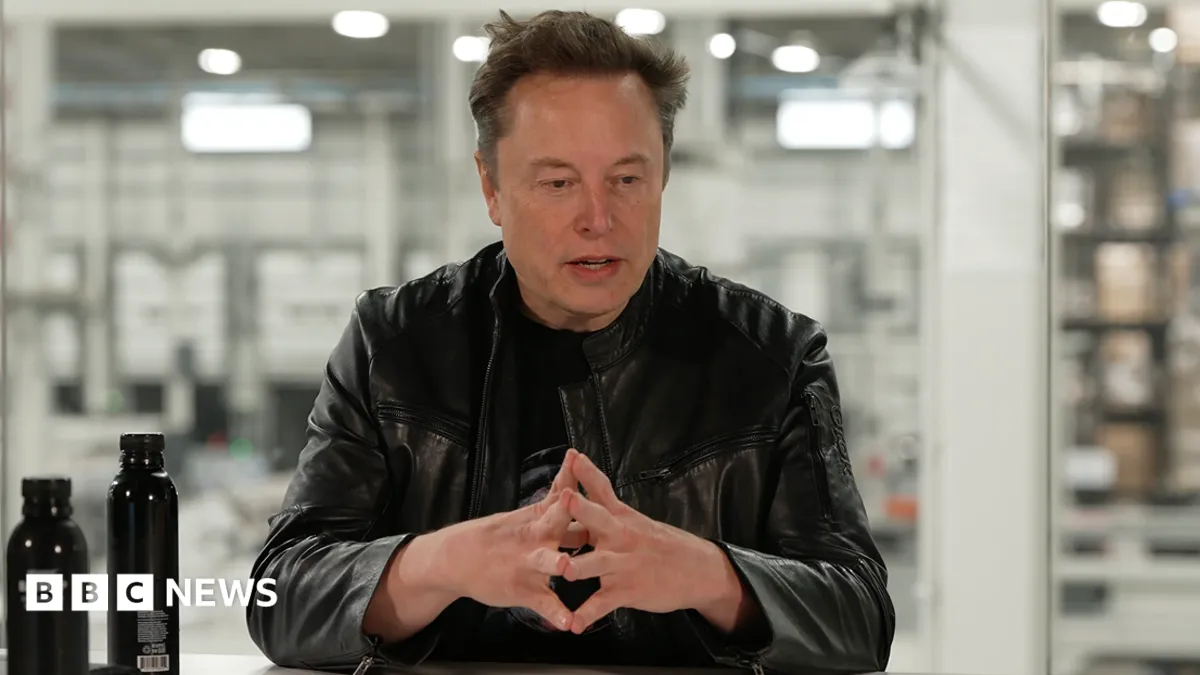
Musk weighs Tesla-SpaceX mega-merger as boards form review panels
Special committees at both companies will examine a tie-up that could fuse electric vehicles and space launch, forcing a fresh look at governance and valuation.