

Waymo’s Ojai gets delayed California approval, leaving robotaxi rides free until September
A DMV and Public Utilities Commission timing quirk slows Northern and Southern California expansion, but keeps early Ojai rides gratis.
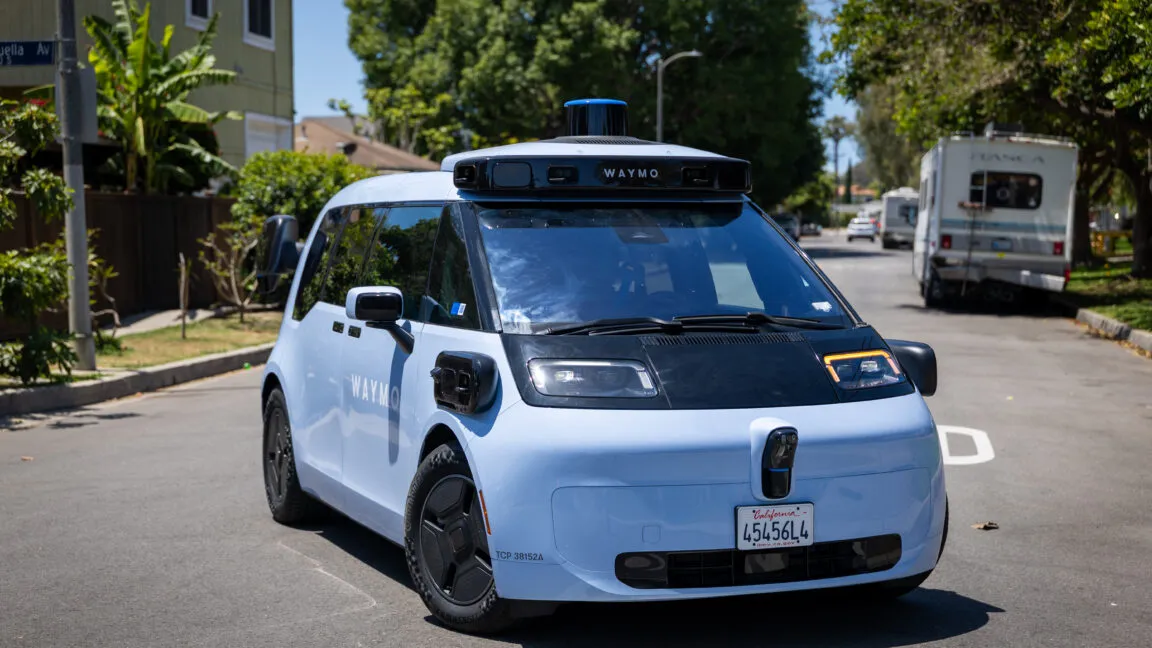
Waymo, Alphabet’s driverless robotaxi leader, is being held back in California because of a delay by state regulators. The delay affects when Waymo can expand and also means its new pale blue Ojai vehicle rides are not yet chargeable to California passengers.
Waymo’s new vehicle, the pale blue Ojai, started picking up riders last month. But a delayed decision by California regulators means the company still cannot charge California passengers for Ojai rides, and that could keep them gratis until the end of September, and perhaps beyond, according to the reporting.
That same regulatory lag is also why Waymo’s California map is stuck in motion but not moving outward. Because California requires permission before robotaxis can hit the roads, Waymo is not yet allowed to expand into parts of Northern and Southern California. In other words, the company that already operates and charges in California with its Jaguar I-Pace robotaxis now faces a weird split-screen: paid rides with the Jaguars, free rides with the Ojai, all because approval timing is caught in between two agencies.
To understand why this matters, you have to know how California is built. Robotaxi companies have largely flourished in the state for nearly two decades, helped by good weather, enthusiasm for technology, and a sophisticated labor force. But there is a regulatory spine running through the whole story. Unlike some other states that allow robotaxis to launch testing operations and later move into public service without much, if any, oversight, California does not let autonomous vehicles operate without permission.
The first gate is the state Department of Motor Vehicles. Companies require approval from the DMV to put their autonomous vehicles on the road at all. That is the baseline: no roads without the state saying yes. Then there is the second gate, which is where the “why are riders getting this for free?” question lands. Waymo also needs permission from the California Public Utilities Commission, the body that regulates taxi and other transportation services, to carry paying passengers.
The Ars Technica report frames the current situation as a regulatory quirk. The Ojai is already picking up riders, which tells you the system is not blocking operation entirely. Instead, the charging permission is still catching up. That leaves Waymo in a position where it can provide service, but it cannot bill California passengers for those Ojai trips yet. And if Waymo continues operating the Ojai in its driverless ride-hail service, those rides could remain gratis through the end of September and possibly longer.
There is a key detail in the business model here. Waymo is not going fully off the grid. The company continues to charge for rides in its Jaguar I-Pace robotaxis, which make up the majority of its fleet. So California customers are getting two different experiences depending on which car shows up: Jaguars that are chargeable, and the new Ojai that is currently not. For operators, that is not just a rider issue, it is a revenue and operations issue. You would expect a mix of vehicle rollouts to create questions internally, including whether to rebalance deployments and how to account for the gap between readiness and permission.
Strategically, this kind of delay has second-order effects for any executive tracking the robotaxi market. First, it changes the timeline of expansion. The report is clear that Waymo is not yet allowed to expand into parts of Northern and Southern California because of the holdup. That is a direct hit to growth sequencing, and growth sequencing is where capital efficiency and partnerships get stress-tested. Second, it creates a temporary pricing anomaly. Free rides for a period can shape rider behavior and expectations, and it complicates forecasting for customer demand, trip frequency, and operational utilization.
For boards and leadership teams across the autonomous and mobility space, California is a reminder that the path to commercialization is not a single approval. It is at least two. You can be allowed to operate, but not allowed to charge, until the Public Utilities Commission clears you for paying passenger service. The same state that helped robotaxis thrive also has a system designed to control when and how the transition happens. The “until September and perhaps beyond” window is not just a rider perk. It is a governance checkpoint that determines when a new vehicle becomes a commercial product instead of a service-in-waiting. If you are investing in or operating a robotaxi rollout, the lesson is blunt: watch the regulators' sequencing, because the order they move in can make your revenue model appear and disappear without any change in your technology.
This story's Key Insights and Take-aways are locked.
Create a free account to unlock Executive Actions for one credit.
Register to UnlockAlways free for Executives Club members. Join the Club
More in Business

AstraZeneca $27B wipeout as Wainua late trial misses cardiovascular target
A failed late-stage heart study triggered a swift market punishment, forcing investors and boards to reset timelines and risk.
Comcast shares jump 25% as it plans to split NBCUniversal and Sky
The tax-free spin-off could reshape focus, funding, and competition across media and tech for years.

Bungie cuts most Destiny 2 staff as Sony says Marathon still matters
Herman Hulst confirms layoffs affecting most Destiny and some Marathon teams after Bungie admits Destiny fell short.