

Wharton’s “AI Layoff Trap” warns CEOs may automate themselves into shrinking demand
Economists Gerry Tsoukalas and Brett Falk argue the race to replace workers with AI can collapse the very consumers companies need.
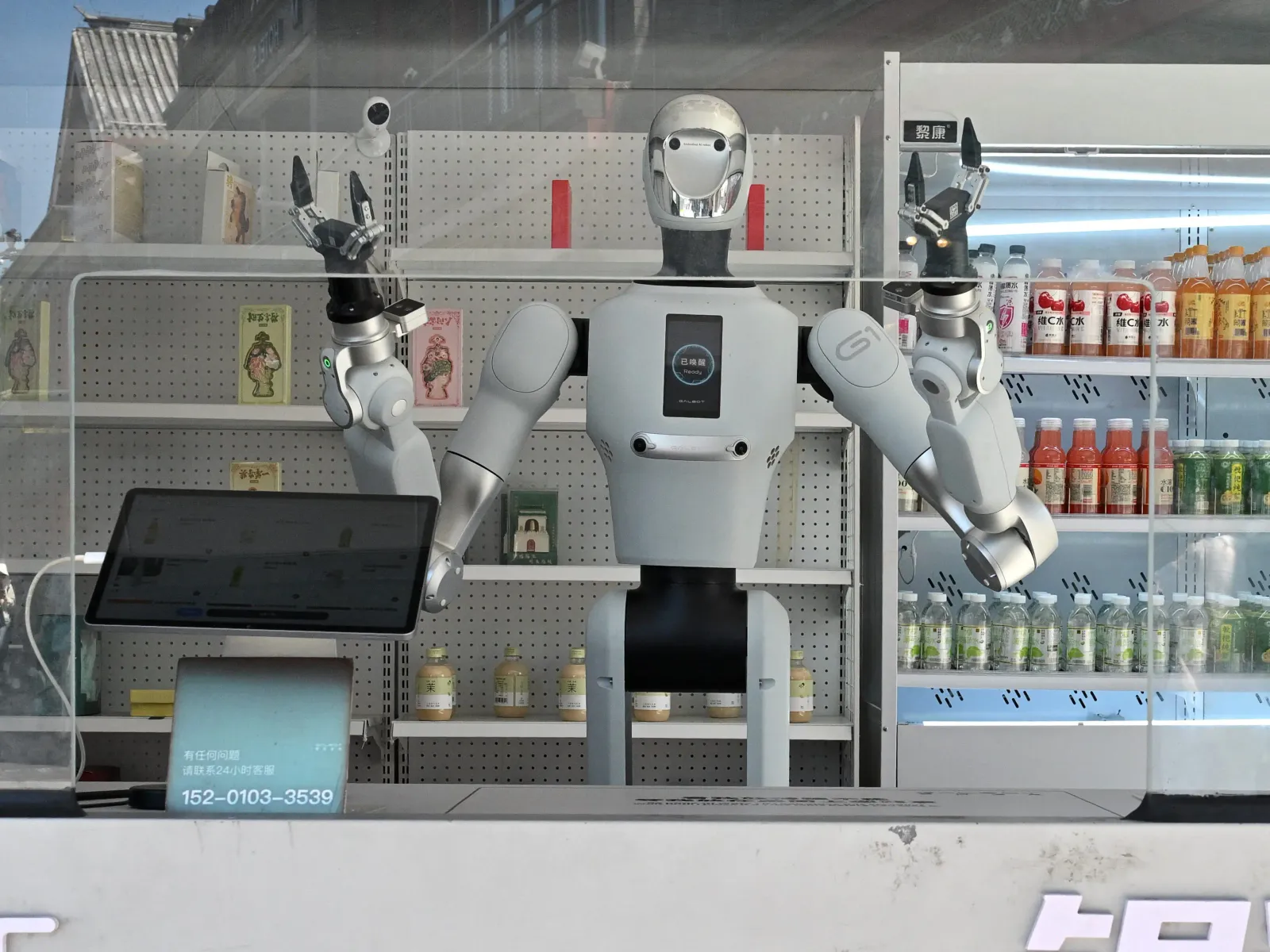
Gerry Tsoukalas, a senior fellow at The Wharton School, co-authored “The AI Layoff Trap” with Brett Falk, warning that AI-driven automation can trigger self-reinforcing layoffs. Decision-makers should treat AI workforce replacement as an economic feedback loop, not a one-off efficiency move.
Two economists at Wharton, Gerry Tsoukalas and Brett Falk, argue AI layoffs can become a trap that even smart CEOs cannot outmaneuver. In their paper, published by The Wharton School, they frame a simple economic nightmare: if companies replace too many workers with AI, consumer demand weakens, and the business that automated itself can end up with fewer customers.
The warning is not theoretical, and it is not only about “jobs going away.” Tsoukalas, a senior fellow at Wharton, told Katty Kay on the New Normal podcast that was posted on Monday that the key question is “who's going to be left to buy products if everyone gets automated and replaced by a robot?” That question hits because the incentive problem is built into competition. If rivals automate, a company that does not can lose market share. So the “best strategy” in a competitive market, Tsoukalas said, is often to adopt as much of the technology as possible. Economists call that a dominating strategy.
Here is where the story gets uncomfortable for executives. A single company might intuitively avoid layoffs because laying off too many workers reduces demand for its products. But in a market where competitors are also deploying AI, one company’s restraint may not pay off. Even if management understands the downstream demand risk, the pressure from competitors creates a prison of incentives: automate, or risk being outcompeted. The paper’s argument is that this can turn automation into a collective action problem, where each firm’s rational move undermines the market that all firms rely on.
The World Economic Forum is sounding a parallel alarm, which matters because global institutions influence how governments, regulators, and big employers think about “solutions.” In a July report referenced in the Business Insider coverage, the World Economic Forum said AI disruption is outpacing traditional reskilling efforts. The report argues jobs are changing faster than workers can be retrained and that it is not economically realistic to keep retraining a large population. It also makes a sharper conceptual critique: “The global conversation about AI and the future of work has been asking the wrong question for a decade.” Instead of asking which jobs survive, it argues we should ask whether “jobs” is still the right unit of analysis at all.
That “shift from jobs to livelihoods” framing is more than semantics. It signals a policy direction that leans away from treating retraining like a universal pressure valve. If the labor market is restructured faster than skills can be rebuilt, then companies and governments face a different problem: sustaining livelihoods even as tasks and roles are redesigned. The same source adds a stark illustration using a small, human scale. In a separate World Economic Forum report, if the global workforce were represented by a group of 100 people, 59 would be projected to require reskilling or upskilling by 2030, while 11 would be unable to receive help. The math translates the scenario into more than 120 million workers at medium-term risk of redundancy. For executives, that implies disruptions are not evenly distributed, and “train and transition” programs may leave gaps.
Tsoukalas also argues that waiting for companies to voluntarily restrain themselves is unlikely to solve the problem. He suggested that a tax could be imposed on firms for replacing their workforce with AI, and he said subsidies could also be provided to firms that keep their workers instead of firing them. The point is not that one policy is perfect, but that policy instruments can adjust incentives when competitive dynamics pull firms toward the same automation path. If your business model depends on customer spending, and your competitors can rationally drive wages and employment down, then a purely firm-level ethics approach may not be enough.
So what should peers do with this? For boards and CEOs, the strategic stake is that AI adoption might be less like a linear productivity upgrade and more like a system-level risk. If a race to automate reduces household income faster than new demand is created, companies could face a demand slump that arrives not because their product quality fell, but because the purchasing power around them did. This also changes how leaders might think about rollout sequencing, workforce transitions, and how to measure AI success beyond cost per unit. The core warning from “The AI Layoff Trap” is that in competitive markets, the safest-seeming move for one company can destabilize the market for everyone.
And that is why this matters right now. AI investments are being made inside timelines, budgets, and quarterly reporting cycles. But the economic feedback loop described by Tsoukalas and Falk runs through consumers and demand, which can make the consequences of a cost-cutting sprint show up later, after contracts are signed and automation is locked in. For executives reading this as either a risk memo or a strategic challenge, the question is straightforward: are you optimizing for efficiency alone, or are you stress-testing whether your customers will still exist in the numbers your growth plan assumes?
This story's Key Insights and Take-aways are locked.
Create a free account to unlock Executive Actions for one credit.
Register to UnlockAlways free for Executives Club members. Join the Club
More in Business

Uber buys Delivery Hero for nearly $15B, vaulting to top food delivery outside China
The deal doubles Uber's dual-services footprint and pushes a ride-and-eats bundling play into 50 more markets.

Epic and Google drop settlement bid, forcing rival Android app stores by July 22
Google told the court it is ready to carry third-party app stores starting Wednesday, July 22.
SK Hynix opens at $170, raises $26.5B, and tops foreign IPO records
In Friday's Wall Street debut, SK Hynix turns AI RAM demand into a $26.5B fundraising moment that rewrites comps.