
WhatsApp usernames are coming: reserve one now to stop sharing your phone number
WhatsApp is adding @usernames so you can reach people without exposing your phone number. Here is how to grab yours.
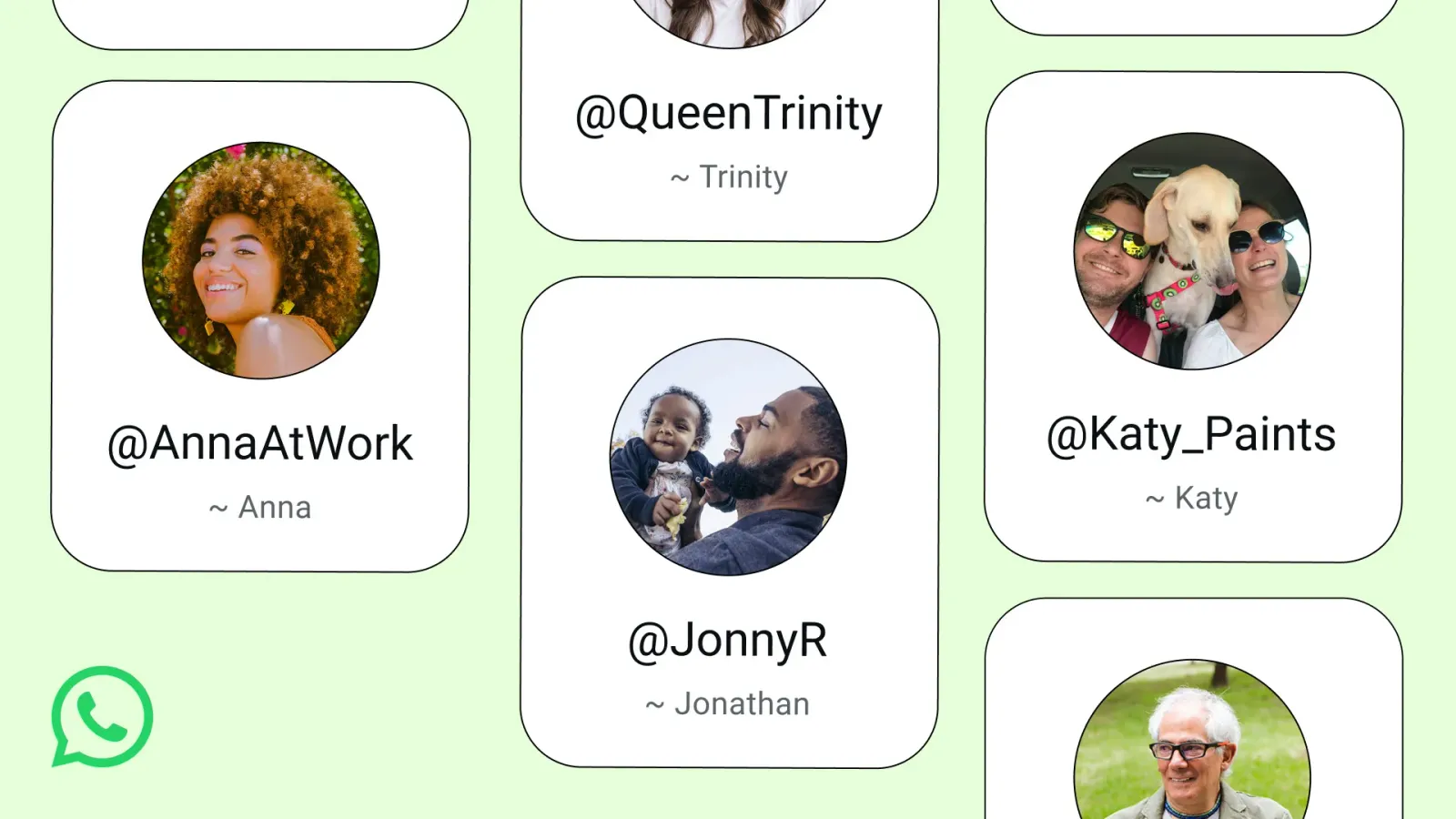
WhatsApp is rolling out usernames, letting users share an @handle instead of their phone number. For decision-makers, it changes how privacy, identity, and user acquisition signals work across messaging and growth funnels.
WhatsApp is getting ready to let people use usernames, and the practical punchline is simple: you can reserve one now if you want to stop handing out your phone number to strangers or casual contacts. Even if you use WhatsApp only sometimes, the moment matters because usernames are basically a new identity layer. Once it is available, your “how do people find me” answer can shift from phone-based discovery to handle-based discovery.
That is the real reason to care right now. WhatsApp is moving toward a system where someone can reach you using a username, rather than forcing you to disclose your phone number. If you have ever shared a number to connect with a new person, joined a community, or tried to manage who can see your contact details, this is an upgrade with immediate behavioral consequences. You are not waiting to be “found” by number. You are opting into a distinct address that can be shared intentionally.
Under the hood, this is also a privacy and friction story, not just a feature story. Phone numbers have always been the on-ramp for WhatsApp accounts, and that design choice has downstream effects. It ties your messaging identity to a more sensitive attribute that can reveal more personal context than a username alone. Regulators globally have pushed companies to minimize unnecessary personal data processing, and messaging platforms are no strangers to that scrutiny. While this move is framed as usability, the incentive to reduce how often users must disclose phone numbers aligns with the broader compliance direction: less exposure, fewer data points, cleaner boundaries.
There is also a network effect angle, which matters for executives thinking about adoption and retention. Messaging apps are social networks in disguise. The harder it is to connect, the more people bounce or default to other channels. Usernames can lower the cost of joining and reaching out, especially for users who do not want to be constantly “contacted” via their phone number. In practice, that can make WhatsApp feel more open for growth cases, while giving users a clearer control knob for privacy.
Still, the reservation step is where the tension lives. When a platform introduces usernames, demand usually shows up fast, especially around short, easy handles that are memorable and brandable. If you leave it, you might end up with a handle that is harder to remember or share. WhatsApp is telling users to reserve theirs now, which is a classic platform move: capture the early set of identities before the rush, while also encouraging users to log in and complete setup. For users, it is about keeping control. For the product team, it is about ensuring the feature actually lands with adoption.
There are second-order implications for how businesses and creators operate, even if they are not “WhatsApp businesses” in the formal sense. When discovery shifts from phone numbers to usernames, the default marketing and outreach rhythm can change. Instead of publishing a phone number as contact, companies can publish an @handle. That can simplify how campaigns look across channels, and it can reduce the privacy friction that leads some users to avoid sharing their number publicly.
For decision-makers watching this space, the strategic stakes are straightforward. WhatsApp is not just adding a cosmetic identifier. It is changing the identity surface area that governs who can contact whom, how easily, and with what data exposure. If usernames become the preferred method of connection, platforms that still rely heavily on phone number disclosure could face user pushback, especially from privacy-conscious cohorts.
In other words, this is a small feature with real leverage. The earlier you reserve a username, the more you control how your WhatsApp identity shows up. And if you run communities, products, or customer-facing outreach that touch messaging, the usernames migration is a moment to think about discovery mechanics now, not after the social graph has already normalized a new default.
This story's Key Insights and Take-aways are locked.
Create a free account to unlock Executive Actions for one credit.
Register to UnlockAlways free for Executives Club members. Join the Club
More in Technology

Nvidia's $89B data center quarter: the 9 companies cashing in
The AI buildout is minting fortunes beyond GPUs, and memory, cloud, and cooling suppliers are riding the same wave.

Google quietly links your phone number to every Android account on your SIM
Adding a SIM now ties your phone number to all Google accounts - and future accounts inherit it. Here's the security and privacy stakes.

Hijacker AI 'Skynet mode' runs 100,000 attack steps against exposed models
Symantec caught a criminal AI agent that borrows other models, steals data, and mines crypto; the only relief is no confirmed victims yet.