
White House swaps tariffs with forced-labor claims, foreign leaders allege protectionism
Foreign governments say the White House is using forced-labor allegations as cover for even more tariff pressure.

Foreign leaders accuse the White House of leaning on forced labor allegations while moving toward protectionist tariff measures. If that framing is right, decision-makers should expect trade friction to intensify, not soften.
A growing chorus of foreign leaders is accusing the White House of using forced labor allegations as a smokescreen for protectionist measures, while the trade policy direction stays firmly tariff-heavy. Foreign Policy reports this accusation in plain terms: the White House is alleged to be swapping out tariffs for a new set of tariff justifications, with forced labor claims positioned as the cover story.
The headline implication matters for anyone making plans around supply chains, pricing, or market access. If forced-labor allegations are being used as a tactical framing device, tariff pressure would not be going away. It would be reshuffling, possibly expanding, and coming with a regulatory veneer that is harder for targeted countries and companies to counter quickly.
To understand why this is a big deal, zoom out to how trade disputes usually work in practice. Tariffs are visible and therefore easier for firms to price, even if they hate them. But when governments wrap tariff measures in a compliance story, the timeline and the tactics change. Forced labor allegations, unlike a pure tariff rate headline, can trigger investigations, audits, documentation demands, and cross-border scrutiny that ripple through procurement. That can slow shipments, force contract renegotiations, and increase the cost of proving a product is clean.
This creates a second-order effect that executives feel in budgeting and operations. Even if the final action still lands as tariff-like economic pressure, the compliance route can be used to increase uncertainty. Uncertainty is expensive: it raises working capital needs, complicates forecasting, and can disrupt long-term supplier commitments. Boards get nervous when the cost of “not knowing” spikes. CFOs care when payment cycles, inventory, and lead times start to wobble.
There is also a geopolitical angle to why foreign leaders would make this allegation. Trade policy is rarely just economics. It is bargaining, signaling, and leverage. If a government believes competitors are hiding protectionist intent behind moral or legal claims, it will respond with its own framing. Foreign leaders accusing the White House of a smokescreen is essentially a public refusal to accept the stated rationale. In negotiations, that can narrow the room for compromise, because parties argue over intent and process, not only outcomes.
Another practical issue is the policy mechanics. Forced labor frameworks typically involve requirements that companies verify, document, and remediate. In an environment where tariffs are still the real economic lever, firms may end up having to do both: pay for compliance and absorb the tariffs. That can turn a “regulatory” story into a double cost hit, especially for companies whose products depend on complex, multi-tier supply chains.
For investors and executives in peer roles, the strategic stakes are clear. Foreign leaders are signaling that they see continuity in the protectionist direction, not a reset. Even if the form changes, the consequence for trade-exposed sectors is still higher friction. That means planning should account for the possibility that tariff pressure persists under different labels, and that legal and compliance pathways may be used to justify or accelerate it.
In short, the Foreign Policy report puts a spotlight on how trade conflict can evolve from a blunt tariff debate into a compliance and enforcement battle. If foreign leaders are right about the motivation, the White House is not reducing pressure on imports, it is changing the narrative tools. For companies, boards, and capital allocators, that is the key takeaway: watch not just the headline policy instrument, but the rationale and enforcement posture, because those determine the timeline, the cost of compliance, and the durability of market access constraints.
This story's Key Insights and Take-aways are locked.
Create a free account to unlock Executive Actions for one credit.
Register to UnlockAlways free for Executives Club members. Join the Club
More in Politics
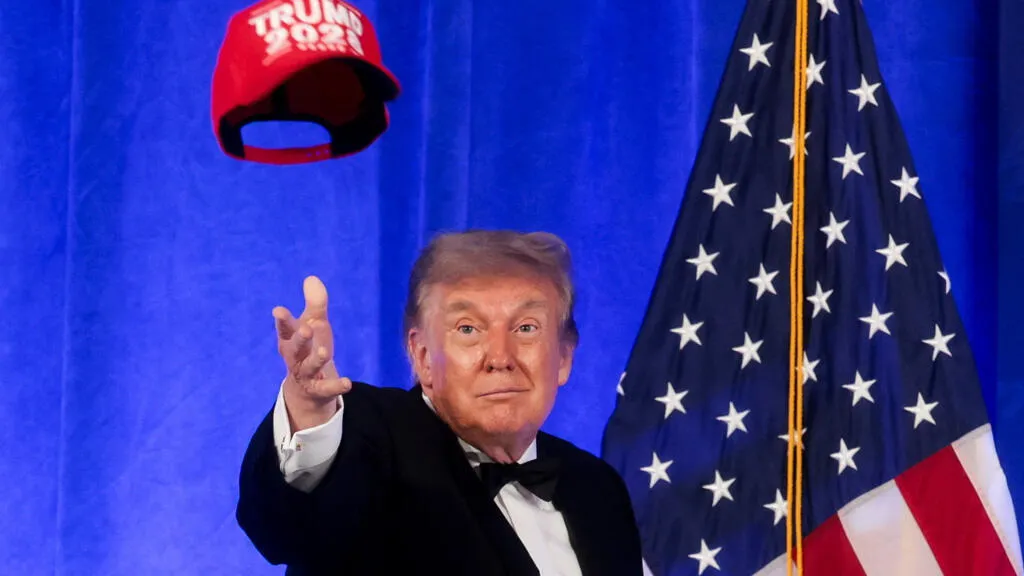
Trump jokes about 2028 third term at rescheduled White House Correspondents' Dinner
The president uses the comeback gala to lash out at

Trump returns to the White House Correspondents' dinner after 3 months
A rambling, hour-long speech resets the political-media signal just as the season turns and scrutiny ramps up.

France orders Bordeaux-area evacuations as wildfires sweep southwest, displacing 200,000-plus
Bordeaux towns were evacuated Saturday as wildfires advanced, and more than 200,000 people fled across France and Spain.