
France orders Bordeaux-area evacuations as wildfires sweep southwest, displacing 200,000-plus
Bordeaux towns were evacuated Saturday as wildfires advanced, and more than 200,000 people fled across France and Spain.
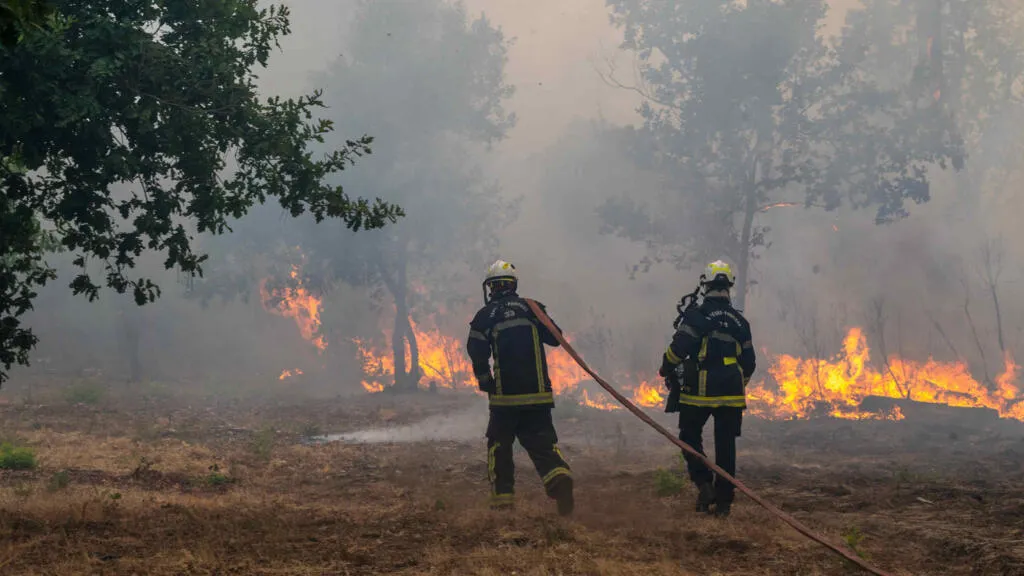
French authorities ordered evacuations of towns near Bordeaux on Saturday as wildfires moved toward the area. The displacement of more than 200,000 people across southwestern France and central Spain forces immediate operational and risk decisions for leaders.
French authorities ordered evacuations of towns near Bordeaux on Saturday “as a precaution,” after wildfires moved toward the southwestern city. The move was framed explicitly as preventative, not reactive, signaling that local decision-makers believed the risk curve was steep enough that waiting could be more dangerous than acting.
This matters because the wildfires are not contained to a single pocket. Intense wildfires have already forced more than 200,000 people to flee their homes in southwestern France and central Spain. That is a large, fast-moving displacement event, the kind that quickly turns “regional emergency” into business continuity, logistics, and public infrastructure stress.
For executives, the first-order read is obvious: evacuation orders change where people can safely live, work, and travel. But the second-order effects arrive even faster. When tens of thousands of residents leave an area, pressure spikes on surrounding municipalities, hospitals, shelters, and transportation hubs. Even if your company is not “in the fire zone,” the surrounding system is. Roads can become clogged with emergency vehicles. Utility networks can face outages. Staff availability becomes uncertain because commuting routes and home locations no longer match the normal map.
The “precaution” framing is also a signal about how governments think under uncertainty. Evacuation is a high-friction, high-cost move. It disrupts lives, strains local capacity, and can be politically painful if perceived as premature. So when authorities act early, it usually means they see credible indicators that the fire could shift or intensify. In this case, wildfires were described as moving toward Bordeaux, and the evacuation order targeted towns near the city. That combination suggests leaders are treating proximity and trajectory as enough to trigger action.
There is also a cross-border dimension. The source states that wildfires have displaced more than 200,000 people across southwestern France and central Spain. That matters for any organizations operating in both regions, because supply chains do not respect administrative borders. Fuel distribution, warehouse throughput, cross-country trucking schedules, and even staffing pools can be disrupted when multiple jurisdictions experience emergencies at the same time. Central Spain being affected alongside southwestern France points to a broader weather and fire-risk pattern rather than an isolated incident.
From a governance standpoint, this kind of event typically forces boards and senior management to revisit risk assumptions that sit behind business continuity plans. Many plans are designed around “one facility” failures: a plant outage, a single port delay, a local power problem. Wildfire displacement at this scale pushes into system-wide disruptions. It can influence insurance coverage questions, emergency procurement workflows, travel policies, and contract performance timelines. Leaders may also need to coordinate with public authorities on logistics constraints, for example how goods and personnel move through affected areas while evacuations are underway.
Capital planning and reporting are not immune, either. While the source does not provide financial impacts, displacement events can create immediate cashflow friction. If your operations rely on regional labor markets or local service providers, you may face unexpected labor shortages. If customer access changes, sales and service levels can drop quickly. If contractors are local, onboarding timelines can slip. And if your logistics routes pass through or near affected zones, lead times can lengthen without any “company fault.” In other words, the operational tail risk can turn into a financial and reputational tail risk.
For peers in similar leadership roles, the strategic stakes are straightforward: treat evacuation orders as early indicators, not just local headlines. The Bordeaux-area evacuations ordered “as a precaution” illustrate how authorities can move before the worst becomes visible. When more than 200,000 people are fleeing across both southwestern France and central Spain, the operational effects spread beyond the immediate geography. The leaders who respond fastest are the ones who can translate an emergency into concrete decisions: who can keep operating, which routes and facilities are at risk, how to protect staff safety and continuity, and how to communicate with partners while the situation remains fluid.
If you are tracking this in real time through the France 24 live updates, the key question for executives is simple: what will happen next to the fire’s direction and intensity, and therefore to the boundaries of what is safe? In wildfire emergencies, those boundaries move quickly. That is why precautionary evacuation orders are not just a humanitarian action. They are also a forward-looking risk read that boards and business leaders should treat with urgency.
This story's Key Insights and Take-aways are locked.
Create a free account to unlock Executive Actions for one credit.
Register to UnlockAlways free for Executives Club members. Join the Club
More in Politics
Obama Defends Ilhan Omar After Agents Search Her Home in Trump Inquiry
The former president's intervention raises the stakes in a federal probe into immigration paperwork that has put a prominent progressive lawmaker in the crosshairs.

Blair-era minister: cut welfare to fund youth job support
Alan Milburn's call for welfare cuts to fund employment support opens a Labour fight over benefits and the Neet crisis.

Hot September CPI: energy costs surge, voters feel the squeeze before midterms
The latest inflation print lands as Trump campaigns for GOP control of Congress, putting cost-of-living worries at the center of the midterm fight.