

White House vows fees for all ships through Hormuz, mirroring Iran’s blockade logic
Charging every commercial ship through the Strait of Hormuz turns navigation into a bill. Here is what that changes.
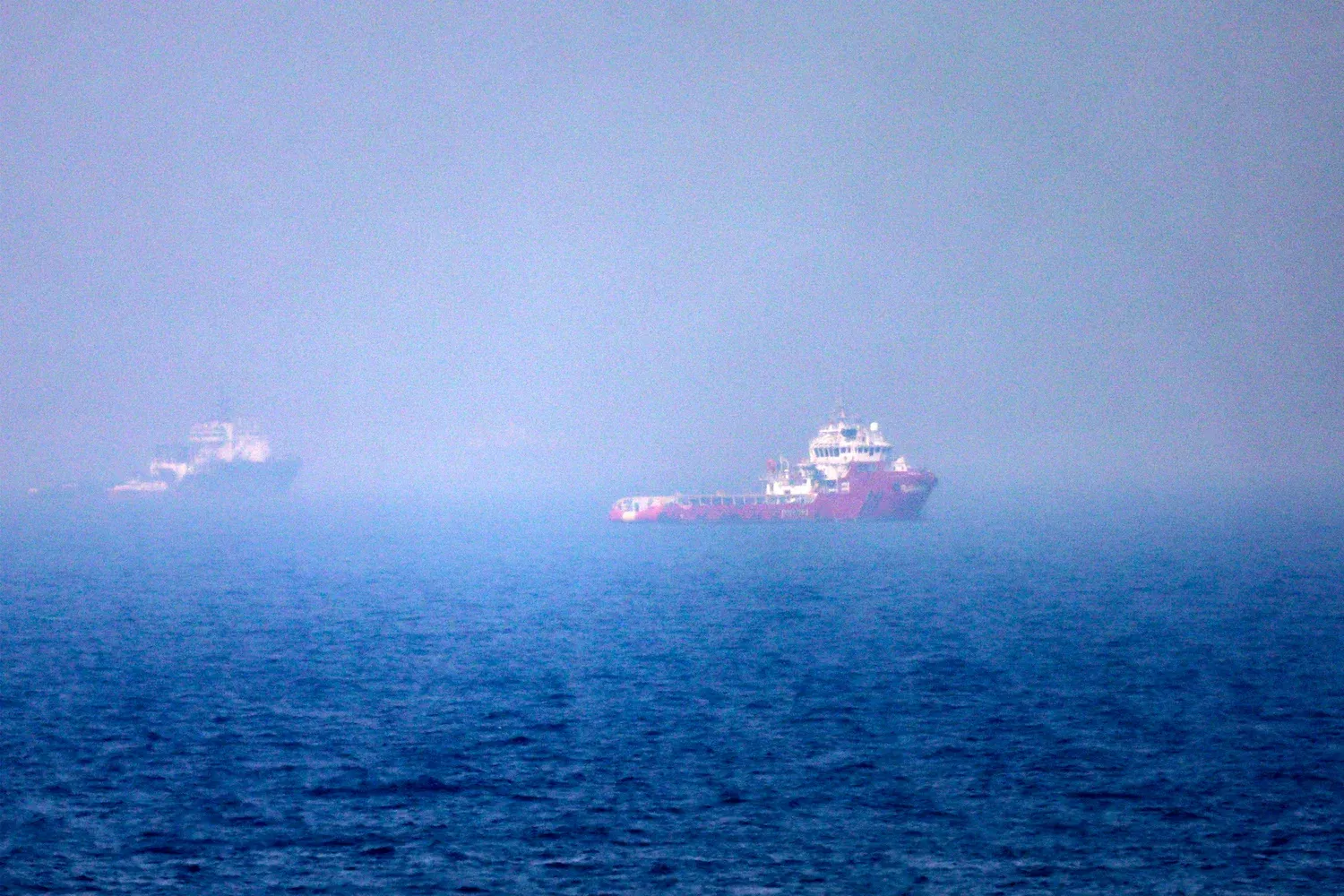
The White House vows to charge all commercial ships passing through the Strait of Hormuz, escalating how the chokepoint is managed. For decision-makers, the consequence is immediate: shipping costs, route planning, and risk pricing get political fast.
The White House says it will charge all commercial ships passing through the Strait of Hormuz. That is the key move: the chokepoint that powers global energy flows is being treated like a toll road, not just a navigation hazard.
Why this matters in the first place is simple. Hormuz is one of the world's most economically important maritime lanes, and when policy starts to attach fees to passage, money and risk start moving together. The White House's vow to charge every commercial ship through the Strait signals an approach that resembles Iran's playbook of turning control of the waterway into leverage. In other words, it is not just about security messaging. It is about monetizing access.
To understand the second-order effect, you have to think like a shipping CFO and a board. Companies that rely on tankers and bulk carriers already price in volatility tied to conflict risk, insurance premiums, and delays. A new, across-the-board charge effectively becomes another line item that can be passed through to buyers, partially absorbed by operators, or hedged via contracts. But either way, it changes the baseline for cost calculations. Even if the policy details are implemented smoothly, the uncertainty around how fees are collected, enforced, and verified can itself raise the risk premium.
There is also a regulatory and compliance angle that executives should not ignore. When a policy targets "all commercial ships" through a specific choke point, it changes how sanctions screening, documentation, and operational routing decisions get made. Maritime firms are used to navigating layered frameworks that include safety rules, port state requirements, and security-related guidance. Adding a toll-like charge at a geopolitical chokepoint creates pressure for tighter audit trails and faster decision cycles, because one missed payment or a dispute over eligibility can trigger delays that are expensive in their own right.
This approach also has incentives baked into it for multiple actors. For the U.S. side, charging ships can be framed as cost recovery or risk management, but it also forces commercial traffic to internalize the political reality of the region. For ship operators and charterers, it turns every voyage into a calculation not only of distance and weather, but also of political friction. For energy buyers, higher shipping costs can flow into landed prices, and that is where boards feel it, because the ripple effects show up in procurement budgets, margin assumptions, and earnings guidance.
The Iran comparison in the framing is the most strategically loaded part. Iran's influence over the region has historically leaned on chokepoint leverage. The White House taking a page out of that playbook, by charging passage, implies a shift from deterrence-by-risk to deterrence-by-economics. That is a different kind of pressure. Rather than solely signaling that passage will be dangerous if challenged, the policy suggests that even when passage is allowed, it is still priced as leverage. That creates room for retaliation dynamics, disputes, and counter-messaging, all of which can raise costs further even without new violence.
For executives, the practical question becomes: how do you plan when geopolitics starts charging you? Boards overseeing logistics, energy supply chains, insurance strategies, and risk committees should assume that routing, contract terms, and hedging strategies will face more frequent renegotiation pressure. Companies that buy shipping services or charter capacity may seek clauses addressing fee exposure and dispute timelines. Companies that sell products dependent on predictable transport may revisit pricing models and working capital needs.
Put bluntly: Hormuz is too important to stay purely in the realm of security briefings. The White House vow to charge all commercial ships passing through the Strait of Hormuz makes the chokepoint an economic instrument. If you're running a business that depends on trade through critical lanes, that is the new baseline. The game is still about sea access, but now it is also about who gets to bill for it, and how fast markets react when policy turns movement into payment.
This story's Key Insights and Take-aways are locked.
Create a free account to unlock Executive Actions for one credit.
Register to UnlockAlways free for Executives Club members. Join the Club
More in Politics

LA County: DOJ's 20,000 'noncitizen' voter list is 'unreliable,' includes U.S.-born
Preliminary review by Los Angeles County election officials finds errors in the federal list, raising the stakes for voter roll integrity ahead of November.

Trump's $1.5B Pentagon chip investment lands in North Carolina
A $1.5 billion defense infusion for North Carolina chipmaking signals a new era of Pentagon-backed reshoring - here's what it means for the industry.

Nigeria confirms first Ebola case in Abuja, a woman just off a Uganda flight
Health Minister Muhammad Ali Pate says the patient flew in from Uganda, putting Africa's latest outbreak on Nigeria's doorstep.