
Winston Duke says “You bald-headed demon” was fully improvised in Black Panther
The MCU coaxes spontaneity, and Duke’s off-the-cuff line reveals how performance risk can become franchise gold.
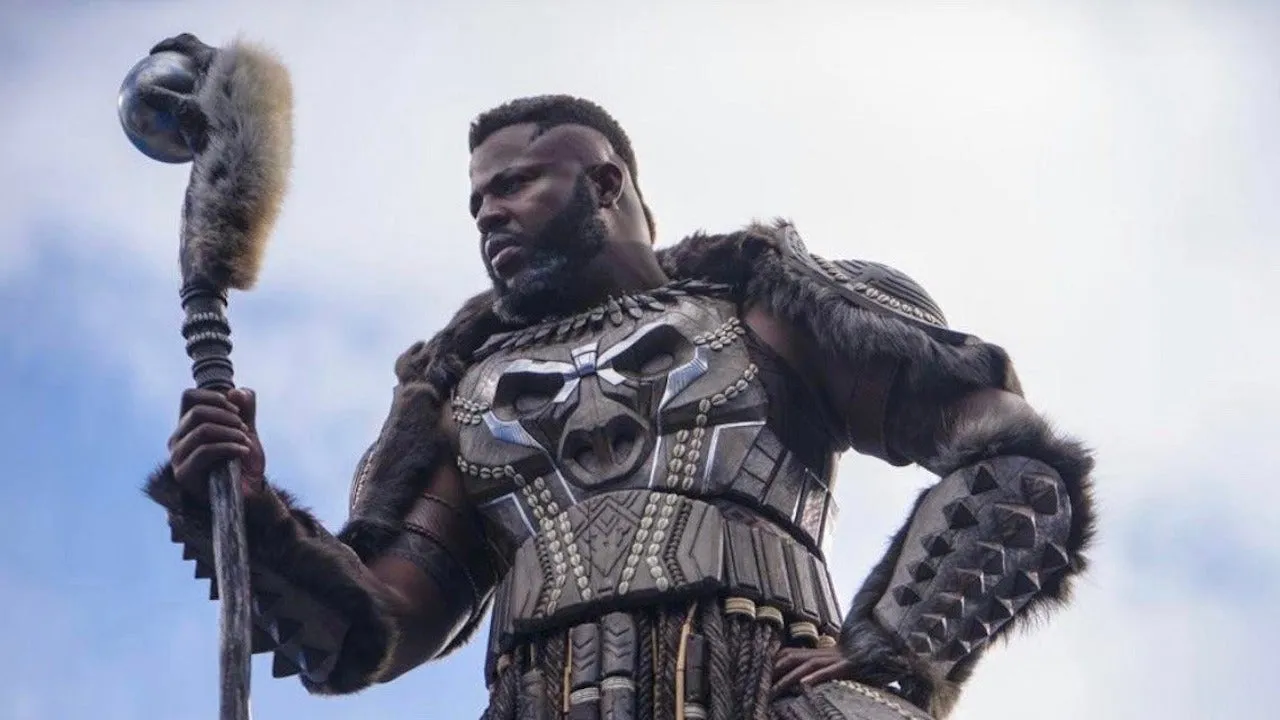
Winston Duke confirmed on the red carpet after Marvel’s Hall H Panel at San Diego Comic Con 2026 that his iconic Black Panther insult to Danai Gurira was “completely improvised.” The confirmation also frames what executives should notice: creative latitude is being treated as a feature, not a bug, as Black Panther III, Avengers: Doomsday, and the next Black Panther chapter all move forward.
Winston Duke just gave the MCU a rare behind-the-scenes honesty moment: the “You bald-headed demon” line in Black Panther was “completely improvised.” He said this after Marvel’s Hall H Panel at San Diego Comic Con 2026, laughing when host Jeffrey Vega brought it up. In other words, one of the franchise’s funniest zingers did not arrive pre-written. It arrived because Duke was allowed to riff as M’Baku.
That matters more than it sounds. Duke explained that he loves playing M’Baku because the character is “a very free guy, who is very honest and true to his attachments and his culture.” Duke then linked the improvisation to his creative process: he “borrowed a lot from Nigerian Igbo culture,” and he said the line felt like “something someone of that tradition would do and say in that moment.” He also underlined the story logic of the moment. It had meaning, but “didn’t have a lot of consequence,” because it was ultimately “a family squabble.” Duke added that the moment supported it, and he credits director Ryan letting him do it.
This is the kind of confirmation that executive teams should file under “capabilities, not accidents.” There is a reason franchises spend big money on scripts, continuity, and brand control. But the MCU also relies on performance friction, the human micro-moments that do not look like strategy until they turn into audience glue. Duke’s framing is blunt: he treated improvisation as character work, not random chaos. By grounding the insult in cultural texture and in the specific emotional shape of a “family squabble,” he made the risk legible inside the story.
And it was legible to actors too. Duke pointed to a key contrast inside Black Panther’s emotional ecosystem. He noted that Angela Bassett managed to “hold it together” after Duke delivered the insult to Danai Gurira. Even without turning this into a behind-the-scenes drama, the takeaway for leadership is clear: improvisation does not succeed only when the comic line lands. It succeeds when the rest of the scene, including seasoned co-stars, can track it in real time. That is a production quality signal, because it means rehearsal discipline plus on-set trust are doing double duty.
Now zoom out to the Hall H context, because the same night Duke confirmed the improv line also delivered major MCU direction. Black Panther III was one of the big reveals that evening, along with M’Baku’s apparent involvement in Avengers: Doomsday. Duke also shared his reaction to David Jonsson getting cast as the next Black Panther. He said it mirrored the audience’s reaction and emphasized continuity of treatment, extending “the same kind of grace” that was extended to him. He described Black Panther as his “very first movie,” where he said he was welcomed into “a cohort of people who just wnanted to make something great.” Duke then connected that environment to permission structures: he called it “a safe space to be daring,” where the team could “try things,” and where he could “add my personal interpretation.” He told Jonsson, “We all just want you to win and we can't wait to work with you.”
From an executive lens, those words are basically a playbook for how creative organizations reduce downstream risk. “Safe space” does not mean no accountability. It means the team has a shared understanding that iteration is allowed, and that new talent gets protected long enough to contribute something distinctive. In studio land, that can be the difference between a product that feels templated and one that feels alive. It also impacts board conversations, because confidence in development processes tends to be more important than confidence in any single joke, scene, or casting choice.
There is also a business calendar stake to these revelations. Black Panther III is slated for release on December 15, 2028. Meanwhile, Avengers: Doomsday comes out this December, and Spider-Man: Brand New Day is coming to theaters later this month. In parallel, Duke’s world is expanding again via a new Ghost Rider movie revealed at the Hall H panel, with Ryan Gosling cast as the titular character. For decision-makers juggling pipeline risk, overlap risk, and audience fatigue, the key is the sequencing logic: multiple tentpoles are being pushed through a near-term schedule, so the franchise needs repeatable “freshness” signals. Duke’s improvisation story is one of those signals. It suggests the MCU is willing to keep creating moments that do not feel copy-pasted.
Finally, this circles back to something boards and investors obsess over: how do you scale creativity without bottling it? Duke’s account hints that the MCU is not just manufacturing “brand-safe” performances. It is selectively granting room for actor instinct, especially when the instinct serves character and scene intent. That is how a single off-the-cuff insult can become a shareable cultural artifact. It is also how leadership can justify production investments that do not look like ROI on paper in the moment, but show up later in rewatch value, fan talk, and the kind of memory that keeps franchises sticky.
If you run a studio, invest in media, or oversee creative operations in any IP-heavy ecosystem, the question becomes simple: are you designing for permission and responsiveness, or just compliance? Duke’s story answers part of it for the MCU. In this case, the system worked. The improvisation was meaningful, the scene could support it, and the line became iconic anyway.
This story's Key Insights and Take-aways are locked.
Create a free account to unlock Executive Actions for one credit.
Register to UnlockAlways free for Executives Club members. Join the Club
More in Entertainment

'It's a Magic Trick': Ballet Experts Say Rosalía's SNL Pose Is Impossible
Three ballet experts tell Rolling Stone Rosalía's gravity-defying SNL stillness shouldn't be possible - and why the debate is now part of the show.

Activision CMO: GTA 6 Will Boost Call of Duty, Not Bury It
Activision's top marketer says Rockstar's blockbuster will drive players back to consoles and into Modern Warfare 4, even as the company admits its recent strategy failed.
Justice to Score GTA 6, Share New Song with Tame Impala, SZA, King Gizzard
Rockstar taps the French duo for the GTA VI score, and the first taste is a genre-melting collab with Tame Impala, SZA, and King Gizzard & The Lizard Wizard.