

Woodkid re-records Black Flag’s ‘Leave Her Johnny’ for July 9 remake
The ‘Resynced’ sea shanty lands in a new Summer Game Fest trailer and streams from midnight.
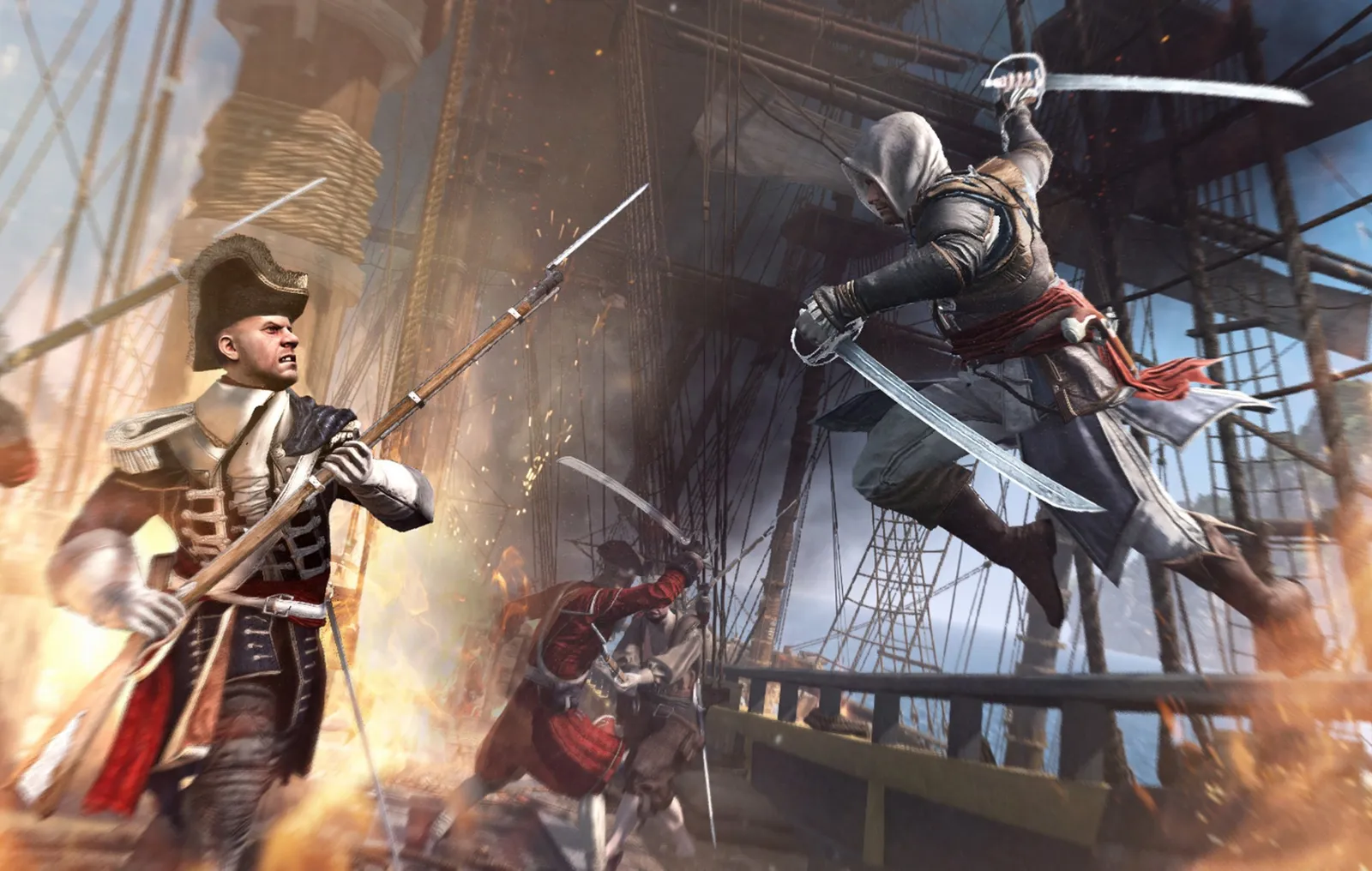
French musician Woodkid has re-recorded the classic sea shanty ‘Leave Her Johnny’ for Assassin’s Creed: Black Flag Resynced, replacing the original recording by Michel Schrey, Nils Brown, and Sean Dagher. For decision-makers, the move underscores how game publishers are treating audio IP like a marketing asset, not a soundtrack footnote.
Assassin’s Creed: Black Flag Resynced arrives July 9, and its biggest new twist is musical. French musician Woodkid has re-recorded the viral sea shanty ‘Leave Her Johnny’ into a “resynced” version called “Resynced,” debuting in a new trailer shared June 5 during Summer Game Fest’s opening ceremony. The track will be available to stream from midnight.
This is not a random soundtrack refresh. The original Black Flag featured a recording of the classic sea shanty ‘Leave Her Jonny’ by Michel Schrey, Nils Brown, and Sean Dagher, and it has been streamed more than 900 million times on Spotify, making it a genuine audience behavior, not just a nice bit of atmosphere. With “Resynced,” the remake is betting that fans recognize the tune instantly, but feel something new in how it is delivered, framed, and used in the trailer and then inside the game.
Woodkid’s involvement is also a throwback with a clear pattern. NME notes it is not the first time Woodkid has been involved with Assassin’s Creed: his debut solo single ‘Iron’ featured in the trailer for Assassin’s Creed 3: Revelations. In a statement, he tied the connection directly to his career, saying, “The world of Assassin’s Creed has been very important to me and is very linked to my career.” He also described the themes of the series, stating, “I know Assassin’s Creed: Black Flag is a major episode for the audience. It’s a game about escapism, rebellion, and exploration. These are themes that are very important for my work. I’m very excited about what we’ve done.”
The publisher messaging frames the change as both respectful and meaningfully different. A press release explains that “the game’s relentless pursuit of freedom is elevated by a track reinterpreted by Woodkid.” It says the approach is “Revisiting one of the classic and most streamed sea shanties from the original game’s soundtrack,” with Woodkid delivering a “mysterious, dark, and epic version” that “reinvents the piece without betraying it, offering a fresh perspective on this iconic work.” The release also makes the distribution point explicit: “In addition to the trailer, the track will also be featured in the game.”
Why does this matter beyond music nerds? Because this kind of “resync” is increasingly how major publishers cash in on attention without changing the core product premise. When a track is already streamed 900 million times, the publisher does not need to explain why people should care. They just need to convert that recognition into a reason to watch the trailer, talk about the remake, and then click launch day.
There is also an industry signaling angle. Assassin’s Creed: Black Flag Resynced will launch July 9 for PlayStation 5, Xbox Series X/S, and PC. And Ubisoft is pairing this audio update with a broader claim about rebuilding and immersion. In the reveal trailer, Edward Kenway’s actor Matt Ryan is quoted explaining: “Assassin’s Creed: Black Flag Resynced is a faithful remake of one of the most beloved Assassin’s Creed games.” He continues: “It’s totally rebuilt from the ground up and enriched with lots of new additions. The same story but elevated to a new level of realism and immersion - to bring you one of the most swashbuckling pirate adventures.” Audio here becomes part of the “immersion” pitch, not just a marketing garnish.
For executives and boards, the second-order implication is that soundtrack assets are now part of a remake’s risk management. If a classic track is deeply embedded in fan memory and behavior (the Spotify stream count is the evidence), then changing it is a governance question: can the new version drive excitement without alienating the audience? The “resynced without betraying it” framing is basically a promise to de-risk that transition. It also hints at how publisher decisions cascade: trailer creative, artist partnerships, and the user experience inside the game all have to align, because the same song is doing multiple jobs at once.
Look at the broader talent pipeline too. Woodkid’s “Iron” had already been used in an Assassin’s Creed trailer, and now he is stepping in again, this time re-recording a viral sea shanty rather than simply lending an existing track. That signals a willingness to invest in brand-level cultural cachet, the kind that can cut through summer showcases like Summer Game Fest, where attention is crowded and time is scarce. In other words, this is not only about whether players like the remix. It is about whether the remake can win a moment in the feed, then carry that moment into a purchase.
Finally, there is a strategic stakes question for peers in entertainment and gaming: as audiences already react to specific songs, the next competitive edge is often who controls the reinterpretation. Today it is “Resynced” and Woodkid. Tomorrow it could be a different asset, but the playbook will rhyme: take something proven, refresh it with recognizable authority, and ship it on a date that is close enough to turn interest into revenue. For decision-makers, that means treating partnerships and audio IP as operational levers, not afterthoughts.
This story's Key Insights and Take-aways are locked.
Create a free account to unlock Executive Actions for one credit.
Register to UnlockAlways free for Executives Club members. Join the Club
More in Entertainment

Christopher Nolan’s “The Odyssey” posts his biggest Tuesday haul, surpassing “The Dark Knight’s” record
The film’s Tuesday breakout reframes Nolan’s box-office ceiling and forces competitors to rethink timing, budgets, and release strategy.

Kacey Musgraves cancels Aug. 20, 29, Sept. 2 Middle of Nowhere shows
Ticketmaster emails are telling fans refunds are coming, while the tour still starts Aug. 21 in Chicago.

Billie Joe Armstrong launches Epiphone Les Paul Junior and Marshall 1959BJA signature gear
Two limited releases turn decades of Green Day’s tone into branded hardware, including Marshall’s first artist amp in 14 years.