

World Cup final fans still expect it to be their best day of life
One supporter’s pre-final promise is a reminder: the biggest events are engineered for emotions, not spreadsheets.
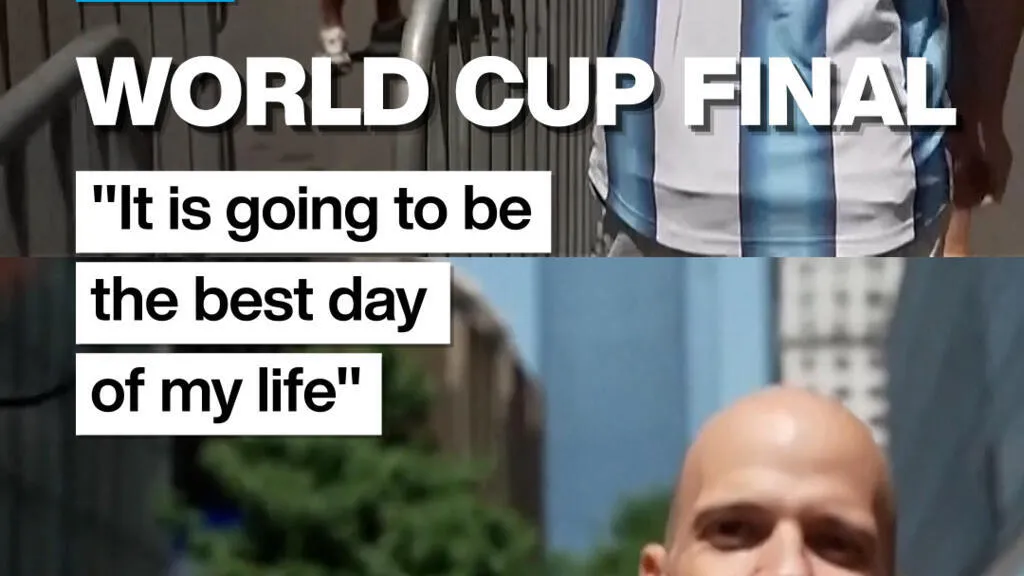
A France 24 report captures a World Cup final supporter saying, "It is going to be the best day of my life." The consequence for decision-makers is clear: fan experience is a strategic asset, because it shapes engagement and demand around major events.
Before the World Cup final even kicks off, at least one fan has already made a bet on emotion. A France 24 report quotes a supporter heading to the match with the line: "It is going to be the best day of my life." That sentence is small. It does not come with a sponsor logo or a revenue forecast. But it tells you something executives often forget until it is too late: these events are not just watched, they are lived.
In the same France 24 framing, the supporter is not speaking after the final, not after a trophy presentation, and not with hindsight. The claim is made before heading to the stadium. The stake is personal, immediate, and not hypothetical. If the World Cup final is the platform, then the fan experience is the product. And in a world where sports media, ticketing, and venue operations increasingly behave like business systems, the product is not only the game. It is the journey that leads fans to that moment where they can say, with confidence, that the day will matter.
That matters for decision-makers because major sports events sit at the intersection of economics and regulation. Ticketing rules, stadium safety requirements, broadcast rights, and crowd management typically involve layers of governance from local authorities and event organizers. Those frameworks exist for good reasons: to keep people safe, to standardize access, and to manage risk in dense public settings. But when companies treat those constraints like mere compliance checkboxes, they miss the point. Regulations shape how people move, wait, enter, and watch. And the way those processes feel can determine whether fans describe the day as the best of their lives, or as a frustrating exercise in delays.
There is also a capital allocation angle here, even if the France 24 quote itself does not mention budgets. World Cup-scale events pull in revenue and cost from multiple directions: hospitality, merchandise, hospitality partnerships, ticket demand, and rights licensing. Those streams respond to sentiment. Executives can model demand curves, but sentiment is harder to forecast and easier to damage. If fans are expecting a transformative day, then operational friction is not just an inconvenience. It is a threat to retention of goodwill, and goodwill is what keeps communities returning after the final whistle.
So what does a “best day of my life” expectation imply for boards and operators? It implies that the event is a narrative machine. Even before the first whistle, fans are mentally clocking the day as a once-in-a-while milestone. That narrative is fragile. It can be strengthened by clean entry lanes, clear signage, smooth transport coordination, reliable schedules, and respectful crowd communication. It can also be weakened by chaos. In other words, the “fan product” behaves like a service. Service quality is cumulative, not one-time. A final is not an isolated moment. It is the peak of a whole chain.
This is where the strategic stakes expand beyond sports. Any organization hosting a high-attention moment, whether that is a championship, a cultural festival, a major product launch, or a regulated public gathering, is essentially managing expectations under constraints. You cannot eliminate risk. You cannot guarantee perfect weather or perfect crowds. But you can control the operational design that determines whether people feel respected and in the right place at the right time. That is not just customer satisfaction. It is demand creation and brand resilience.
And that brings us back to the France 24 quote, which is as much about human behavior as it is about football. The supporter is not hedging. The supporter is not saying “I hope it will be amazing.” The supporter is declaring: "It is going to be the best day of my life." Executives should treat lines like that as a stress test for their systems. If even one fan can frame the event as life-defining beforehand, then the event must deliver enough dignity, joy, and meaning for the statement to land. If it does not, the reputational cost can outlive the match.
For leaders in similar roles, the question is not whether fans will feel something. They will. The question is whether your organization’s operational and regulatory decisions leave room for that feeling to become the story people tell later. The World Cup final is one day. But the pattern it creates sets expectations for the next tournament, the next venue, the next rights cycle, and the next time fans are choosing where to spend money and attention. When a supporter walks toward the final believing this will be their best day, the strategic message is simple: your job is to make sure it does not become a bad day by accident.
This story's Key Insights and Take-aways are locked.
Create a free account to unlock Executive Actions for one credit.
Register to UnlockAlways free for Executives Club members. Join the Club
More in Politics

LA County: DOJ's 20,000 'noncitizen' voter list is 'unreliable,' includes U.S.-born
Preliminary review by Los Angeles County election officials finds errors in the federal list, raising the stakes for voter roll integrity ahead of November.

Trump's $1.5B Pentagon chip investment lands in North Carolina
A $1.5 billion defense infusion for North Carolina chipmaking signals a new era of Pentagon-backed reshoring - here's what it means for the industry.

Nigeria confirms first Ebola case in Abuja, a woman just off a Uganda flight
Health Minister Muhammad Ali Pate says the patient flew in from Uganda, putting Africa's latest outbreak on Nigeria's doorstep.