

World Cup Final halftime adds New York Philharmonic, Simón Bolívar orchestra, led by Dudamel
Variety reports the tribute to Venezuela will expand the halftime lineup, raising cultural and broadcast expectations fast.
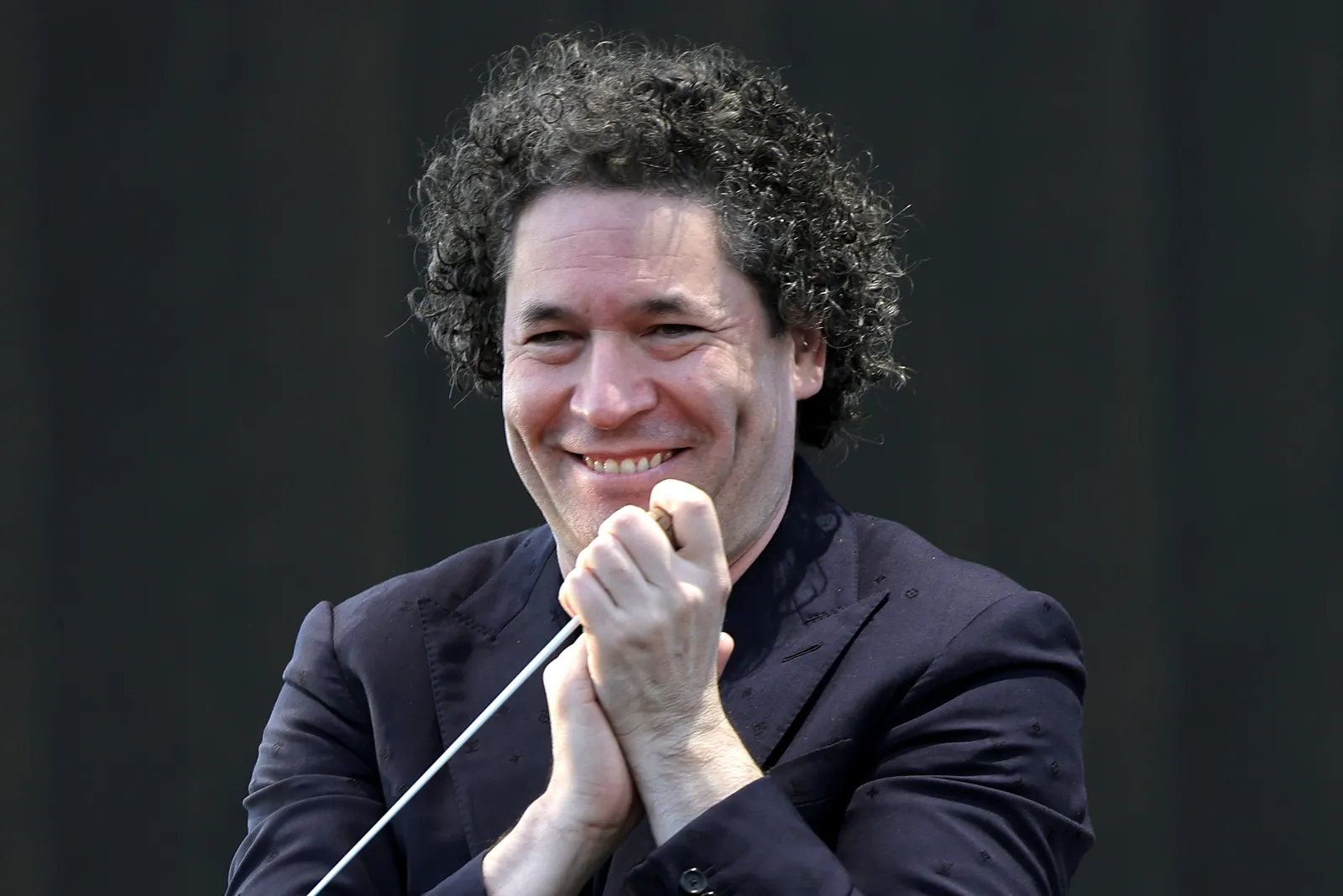
Variety exclusively reports that the FIFA World Cup Final halftime show will include members of the New York Philharmonic and Venezuela's Simón Bolívar Symphony Orchestra, performing a tribute to Venezuela. Gustavo Dudamel will conduct the segment, as the show responds to Venezuela's recent devastating earthquakes.
The FIFA World Cup Final halftime show just got a lot more complicated, and a lot more consequential. Variety has exclusively learned that the event will now include members of the New York Philharmonic and the Simón Bolívar Symphony Orchestra of Venezuela, who will jointly perform a tribute to Venezuela in the wake of its recent devastating earthquakes.
And the conductor matters. Variety reports that Gustavo Dudamel, identified in the story as the outgoing conductor, will lead the performance. That means the halftime stage is not just getting bigger. It is also getting a specific mission: to put a formal, high-credibility musical spotlight on a real-world emergency, with globally recognizable institutions and a conductor whose presence signals seriousness.
For executives, this is a reminder that “entertainment programming” at the biggest events is never purely entertainment. It is risk management, brand signaling, and global communications all at once. When two major orchestras from different countries collaborate on live television, the operational burden shifts. You need rehearsal time, language and logistics alignment, stage and sound engineering, and an approvals pipeline that can handle both the artistic side and the broadcast side without dragging the show.
There is also reputational math. The New York Philharmonic and Venezuela's Simón Bolívar Symphony Orchestra bring different audience expectations, different cultural contexts, and different levels of visibility to the halftime platform. The choice to mount a tribute “in the wake of” the earthquakes tells viewers this is a response to an ongoing situation, not a generic cultural segment. That matters because a tribute segment can be read in two ways: as solidarity and attention, or as performative branding. The way teams frame the moment, and the credibility of the collaborators, are what usually determine which interpretation wins.
Then there is the Dudamel factor. Gustavo Dudamel is central to the story because he is set to conduct. A conductor in this context is not only a musical leader. On a global broadcast, a conductor is the public face of the artistic intent, the person viewers associate with how the orchestra will sound and how the tribute will land emotionally. Variety’s wording that he is “the outgoing” Dudamel also adds another layer: halftime show leadership becomes tied to a transitional moment in his career. That is precisely the kind of timing that can raise stakes for producers, because the world tends to treat live events as either defining highlights or missed opportunities. Even one weak segment can ripple through press coverage.
From a regulatory and governance perspective, the halftime show sits in a lane where broadcasters and event organizers typically have to manage many layers of compliance. While the source does not cite any specific regulator or rules, the second-order reality is that live international broadcasts commonly require clear rights and clear production oversight. Adding orchestras from different jurisdictions usually means additional paperwork and coordination around venue production, licensing of any arrangements, and chain-of-custody documentation. Even if the music is traditional or newly arranged for the tribute, you still have to ensure the production can defend what it is doing when regulators, rights-holders, or rights-tracking teams ask for proof.
The bigger implication: this kind of cultural programming change becomes part of how sponsors and stakeholders evaluate the event. At this scale, decisions about the lineup can affect the perceived seriousness of the brand environment around the tournament, including how corporate partners and internal boards think about alignment with global humanitarian moments. If you are a decision-maker in media, entertainment, or sports partnerships, you are not only asking, “Will viewers like it?” You are also asking, “Will it hold up under scrutiny from audiences, press, and institutional partners who care about how attention is used?”
Finally, there is the strategic stake for everyone watching the FIFA World Cup Final as a playbook. This halftime update suggests that mega-events are increasingly expected to do more than entertain. They must curate meaningful collaborations with credible institutions and deliver them with operational precision. If you are leading a live event strategy, a network programming desk, or a board that monitors brand risk, this is the direction of travel: the lineup is becoming a communications instrument, and music is one of the most potent languages a global audience can share in a single moment.
This story's Key Insights and Take-aways are locked.
Create a free account to unlock Executive Actions for one credit.
Register to UnlockAlways free for Executives Club members. Join the Club
More in Entertainment

12TB Steam 'teraleak' goes beyond Valve: GTA 3, Mafia 2 prototypes exposed
A 12-terabyte dump of Steam data reveals prototypes and builds of third-party classics like GTA 3 and Mafia 2, plus unreleased Valve content, rewriting game history.

LinkedIn's romance problem: 1 in 4 workers say dating on it is fair game
A new survey shows a quarter of U.S. employees treat the professional network as fair game for romance, even as LinkedIn bans it and removes hundreds of thousands of offending posts.

Enhypen's first No. 1 album breaks K-pop's Billboard 200 streak
The K-pop group's 98,000-unit debut tops the chart while Dolly Parton's catalog reentry shows how death reshapes streaming.