

Writer John Lowe alleges Matlock fired him after reporting racist comments
A California suit names CBS Television Studios, showrunner Jennie Snyder Urman, and exec producers Nicki Renna and Jeffrey Lieber.
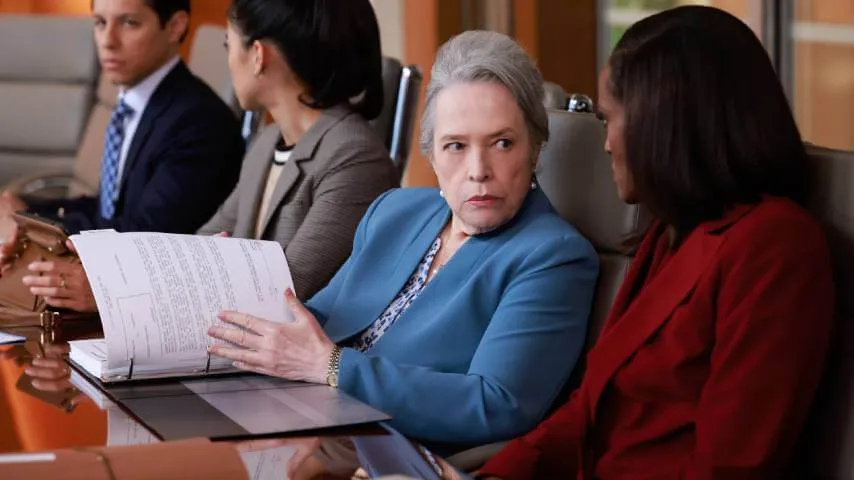
Writer John Lowe has filed a California state court lawsuit against CBS Television Studios, alleging he was fired after reporting racist and sexually disparaging conduct on the Matlock writers' room. The complaint names showrunner Jennie Snyder Urman and executive producers Nicki Renna and Jeffrey Lieber and seeks unspecified damages.
CBS' Matlock is facing a new legal reckoning, and it starts with one claim: writer John Lowe says he was fired after he reported racist language and other discriminatory treatment. In a lawsuit filed in California state court, Lowe alleges a hostile work environment “permeated by sexually explicit and discriminatory conduct,” and he says his termination came less than two weeks after he raised concerns about Urman’s reference to the holiday Juneteenth as “coonteenth.”
What makes this story hit harder than the usual “workplace complaint” headlines is the timing and the structure of the allegations. Lowe says he was hired to work on Matlock in October 2023, then shortly after being hired, he faced comments tied to his race and even his body, including being told he was “well-endowed down there” because of his race and shoe size. He also alleges he was asked, “how he handled a man’s genitals,” and that he brought these issues forward and then lost his job in 2025, which he calls retaliatory.
The lawsuit names CBS Television Studios, showrunner Jennie Snyder Urman, and executive producers Nicki Renna and Jeffrey Lieber. It seeks unspecified damages, but the allegations are vivid and wide-ranging: Lowe describes conduct he says was both racially and sexually discriminatory, and he frames certain episodes as using supervisory power to burden him. One example he gives is that Urman allegedly brought her dog into the writers' room and coerced Lowe into keeping it for a year, with Urman allegedly saying, “As long as you have this dog, you’ll always have a place here.” Lowe calls that “racially motivated harassment and an exercise of supervisory power designed to burden him.”
Then there are the alleged comments about cast member Eme Ikwuakor and the alleged late-night communications. Lowe says Renna claimed that recurring Black cast member Eme Ikwuakor “can barely read.” He also alleges Renna called him late at night, informing him that she was in bed wearing only underwear. These are the kind of details that can matter in litigation because they speak to pattern, context, and intent, not just one-off misunderstandings. They also spotlight the uneasy reality behind many high-profile writers' rooms: power is concentrated, and relationships can blur into conduct that employees later characterize as coercive or humiliating.
CBS, for its part, is denying the allegations through a spokesperson. In a statement to The Hollywood Reporter, a CBS Studios spokesperson said: “We are committed to maintaining a safe and respectful environment for everyone and take all workplace complaints seriously. In this instance, a thorough investigation was completed, and we were unable to find support for his allegations. We look forward to defending this lawsuit.” That “investigation completed” language is common in these disputes, and it signals that CBS intends to contest both the factual record and the legal framing.
But this is not a standalone problem for Matlock. The lawsuit is described as the second one CBS has faced this year tied to behind-the-scenes goings-on at the show. In March, actor David Del Rio filed an arbitration claim against the network, alleging that CBS “caused substantial professional and reputational harm” when it fired him. Del Rio was fired in October 2025 after his co-star, Leah Lewis, accused him of sexual assault.
For executives and boards, these stacked matters create a second-order risk that is bigger than any single case. First, recurring disputes can force more internal process strain: investigations take time, legal spend climbs, and leadership attention gets diverted from creative and production timelines to risk management. Second, reputational capital becomes harder to rebuild when multiple internal or employment-related claims surface close together, because stakeholders start connecting dots that may be legally separate but emotionally related in public perception. Third, the named people matter. When showrunners and executive producers are directly named, it raises questions about oversight, escalation paths, and how seriously concerns were handled internally.
There is also a regulatory and legal backdrop worth keeping in mind. While this story is in California state court and not framed as a regulator action in the source, employment discrimination and retaliation claims often draw on established standards around hostile work environment and retaliatory termination. Even without predicting outcomes, the practical takeaway for peers is clear: documentation, complaint handling, and the consistency of responses are not “HR paperwork.” They can become the difference between a case that stays contained and one that expands.
Strategically, the stakes land on everyone who runs content pipelines with similar power structures: showrunners, studio chiefs, and boards overseeing talent ecosystems. Matlock now has a lawsuit alleging discriminatory and sexually explicit conduct, retaliation, and the use of supervisory power, with specific alleged episodes involving Urman, Renna, and Lieber. Whether or not CBS ultimately prevails, the mere fact pattern is already a stress test for governance: how fast concerns are investigated, how retaliation claims are addressed, and how safe, respectful workplace expectations are enforced in the places where decisions are made.
This story's Key Insights and Take-aways are locked.
Create a free account to unlock Executive Actions for one credit.
Register to UnlockAlways free for Executives Club members. Join the Club
More in Entertainment

Russell Brand's accuser 'bewildered and confused' as he denies 7 sex charges
The criminal case against the comedian is a live test of how media companies manage talent risk when serious allegations go public.

'It's a Magic Trick': Ballet Experts Say Rosalía's SNL Pose Is Impossible
Three ballet experts tell Rolling Stone Rosalía's gravity-defying SNL stillness shouldn't be possible - and why the debate is now part of the show.

Activision CMO: GTA 6 Will Boost Call of Duty, Not Bury It
Activision's top marketer says Rockstar's blockbuster will drive players back to consoles and into Modern Warfare 4, even as the company admits its recent strategy failed.