

Xbox CEO Asha Sharma joins Federal Reserve AI taskforce on productivity and jobs
The Fed is building evidence on AI’s economic impact, and Sharma is one of its external advisers.
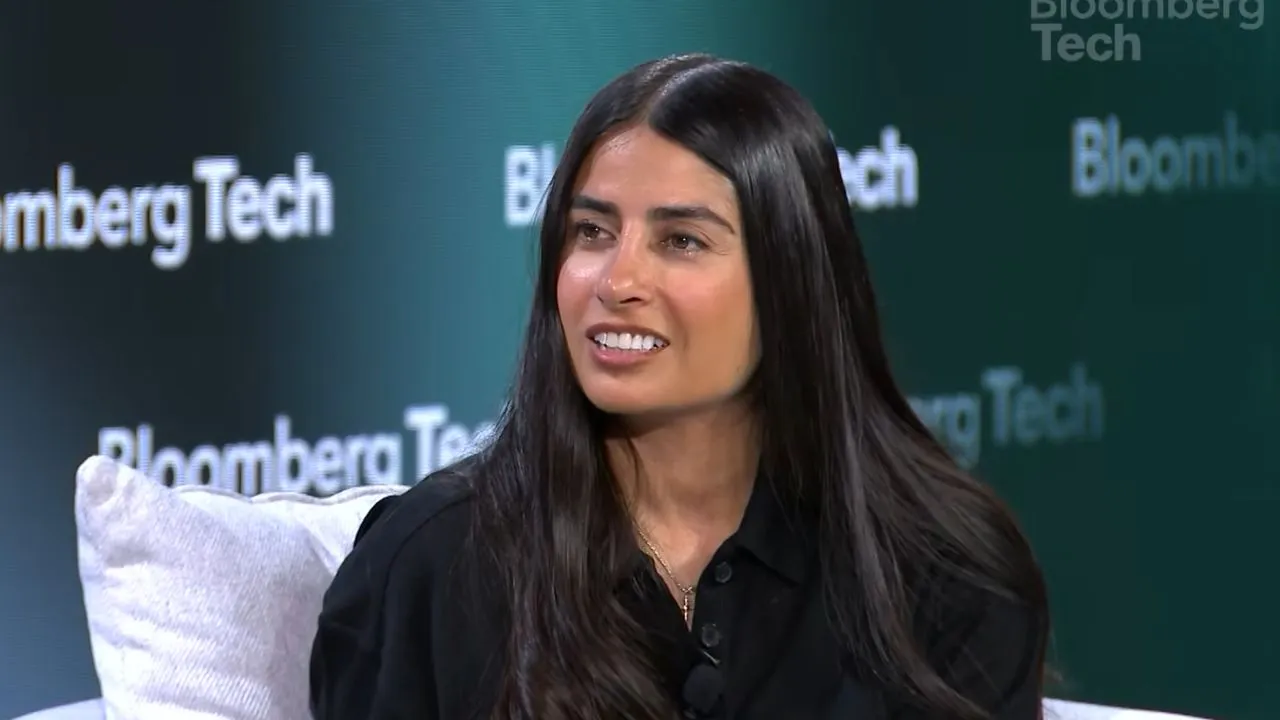
Xbox CEO Asha Sharma has joined US Federal Reserve taskforces as an external adviser focused on productivity and jobs, including AI’s economic impact. For decision-makers, it signals how central bank thinking on “general-purpose technologies” is starting to touch corporate leadership.
Xbox CEO Asha Sharma is now sitting at a desk that does not usually belong to a gaming executive: she has been tapped to advise the US Federal Reserve on AI and the economy as part of a “Productivity and Jobs” taskforce. The Fed says the goal is to “assess the economic impact of new general-purpose technologies, including artificial intelligence,” to inform the Federal Open Market Committee’s policy judgments.
This is not a vague relationship. The Fed describes five distinct taskforces, each co-led by a group of “external advisers,” with mandates to “follow the evidence,” give “candid feedback,” and produce “rigorous findings” for the FOMC. Sharma is assigned to the productivity and jobs category, meaning her contribution is explicitly tied to how AI changes output, labor demand, and job dynamics. She is also the only active CEO among the advisers named in the Fed’s release.
Why would the Fed bring in a sitting CEO from one of the world’s biggest gaming companies, and why does it matter beyond Washington press cycles? First, AI is the rare technology that has moved from product hype to broad economic discussion. The Fed is positioning itself to evaluate AI as a “general-purpose technology.” In plain English, that means the Fed is treating AI less like a single app or niche tool and more like a technology with the potential to ripple across many sectors, changing how firms produce goods and services.
Second, the Fed is not making this decision in a vacuum. Recent policy debates have increasingly circled around employment, productivity growth, and whether new tech leads to faster output gains or more disrupted labor markets. By organizing work across multiple categories like Communications, Balance Sheet Policy, Data, Inflation, and Productivity and Jobs, the Fed is creating a structured pipeline from external expertise into policy deliberations. In that setup, external advisers are not decorative. They are there to influence the evidence base that feeds the FOMC.
Third, Sharma’s timing is particularly notable because she has only been Xbox CEO for a short stretch, and she has already been in the middle of major operational decisions. The source notes that Sharma wrote an email to employees announcing mass layoffs at Xbox, with 3,200 cut jobs targeted by the end of the 2027 fiscal year amid a major “reset” for the brand she will spearhead. If you are looking for the “human” stake behind the Fed’s taskforce framing, it is right there: when leaders are simultaneously making job-impacting changes inside their own companies, they are uniquely positioned to understand the messy real-world side of productivity and employment debates.
The source also adds a career thread that helps explain how Sharma might have landed on the Fed’s radar. Before becoming Xbox CEO, Sharma was president of Microsoft’s CoreAI product group. That role likely placed her at the intersection of AI development and how businesses operationalize it. The Fed release says the taskforces are led by people it views as “accomplished economists, business leaders, and former central bank practitioners-with deep expertise in their fields.” Sharma fits the “business leader” bucket, but the CoreAI background suggests she is not just a public figure with a tech label. She is tied to the machinery of building AI-enabled products.
There is also a second-order implication here: boards and executive teams at companies adjacent to AI are going to watch who gets pulled into government evidence pipelines. The source says former Walmart president and CEO Doug McMillion has been named an adviser to the Federal Reserve on the data taskforce. That pairing suggests the Fed is not relying solely on academic economists or former central bankers. It is blending policy thinkers with executives from large, operational, employment-heavy organizations. If you run a company that will be affected by AI, this kind of involvement can shape what policymakers treat as “feasible,” “likely,” or “evidence-backed,” even when the final policy decision stays with the FOMC.
Finally, this matters for the gaming industry in a way that might surprise casual observers. The source highlights that Sharma’s appointment is “a peculiar move for Sharma and Xbox” partly because her corporate responsibilities include layoffs and a brand reset, and partly because she is new enough to the CEO role that the bandwidth question is real. At the same time, the Fed’s focus on productivity and jobs is exactly the area where gaming companies, tech platforms, and AI-driven studios all feel pressure from both sides: the need to improve efficiency and the need to avoid talent and labor market backlash. The taskforce work is not about Xbox specifically, but it is about the economics that executives are living through right now.
So the strategic stake is bigger than one executive headline. When a current CEO like Sharma joins a Fed taskforce on AI’s economic impact, it signals that AI is being pulled further into mainstream economic policymaking, and that business leadership is being treated as part of the evidence. For any operator, investor, or board member trying to plan for the next 24 to 48 months, that means you cannot treat AI’s impact on productivity and jobs as a public relations problem. It is becoming a policy input.
This story's Key Insights and Take-aways are locked.
Create a free account to unlock Executive Actions for one credit.
Register to UnlockAlways free for Executives Club members. Join the Club
More in Business

AstraZeneca $27B wipeout as Wainua late trial misses cardiovascular target
A failed late-stage heart study triggered a swift market punishment, forcing investors and boards to reset timelines and risk.

Comcast shares jump 25% as it plans to split NBCUniversal and Sky
The tax-free spin-off could reshape focus, funding, and competition across media and tech for years.

Bungie cuts most Destiny 2 staff as Sony says Marathon still matters
Herman Hulst confirms layoffs affecting most Destiny and some Marathon teams after Bungie admits Destiny fell short.