
Xbox exits IO Interactive funding and publishing pact for Project Fantasy, redundancies likely
The Xbox deal is over for IO Interactive's online fantasy RPG, and the fallout could be felt in headcount.
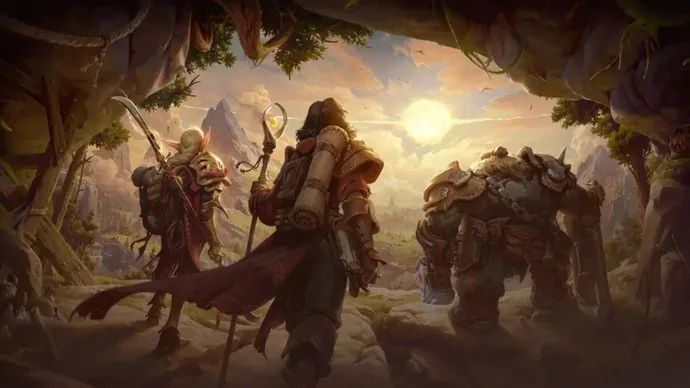
Xbox has exited a deal to fund and publish IO Interactive's online fantasy RPG, codenamed Project Fantasy. The shift could trigger redundancies at IO Interactive, making the contract unwind a board-level risk event.
Xbox has exited a deal to fund and publish IO Interactive's online fantasy RPG, codenamed Project Fantasy. That exit is not framed as a small pause or a simple renegotiation. It is described as the deal ending, and it comes with an expectation of redundancies, meaning job losses are likely.
For decision-makers, this is the kind of headline that reads like contract housekeeping but lands like an operational shock. The original promise of external funding and publishing support matters because it often determines whether a studio can keep multiple workstreams running at once: production, live-ops groundwork, hiring plans, and long lead-time art and engineering. If Xbox is no longer funding and publishing Project Fantasy under that arrangement, IO Interactive is left to cover the gap or stop parts of the project to preserve runway.
Project Fantasy being an online fantasy RPG also changes the risk profile. Online games, even those with big single-player aspirations, typically require a longer tail of investment than traditional boxed releases. They need infrastructure, content pipelines, community tooling, and ongoing updates. When an external partner backs out, the immediate effect is not just “less money.” It can be a cascade across hiring velocity, vendor commitments, and the timing of when the studio can confidently say it is building toward something shippable.
From Xbox's perspective, ending a funding and publishing deal can be a way to reallocate capital and attention. Publishing arrangements are a bet on both creative outcomes and market timing. If leadership decides that the risk is too high, the project portfolio is too crowded, or resources are better spent elsewhere, exit becomes a leverage move. The source does not provide Xbox's internal rationale, but the direction is clear: the deal has been exited, and that means the relationship has moved from “partnering for scale” to “no longer backing this specific effort.”
For IO Interactive, the second-order effect is that redundancy risk is a signal about how budgets were structured around the deal. Redundancies expected suggests staffing levels likely assumed Xbox support. In the real world of game development, studios rarely carry excess burn when they do not have to. Headcount reductions often follow when revenue confidence drops, especially with online projects where costs are ongoing, not one-time.
There is also a broader industry context to consider. The game sector has been through multiple cycles of high investment, consolidation, and portfolio reshuffling. Partnerships between platform holders and studios are one of the key mechanisms to share risk, particularly when a studio is developing a genre that demands both creative credibility and a long operational commitment. When those partnerships unravel, the burden of risk shifts back to the developer, and boards at studios have to answer quickly: What is the cash plan? What gets cut? What is the smallest credible path forward?
Regulatory framing is not usually the headline in publishing deal exits, but there is still an important compliance angle for executives. When public or semi-public entities are involved, material changes can ripple into disclosure practices. Even without discussing regulators directly, governance teams think about how major partner exits affect financial statements, forward-looking statements, and employment obligations. The source specifically points to redundancies expected, which means the human impact will be a governance focus too, not just a finance footnote.
Strategically, the stakes extend beyond IO Interactive. Other studios and publishers watch these deal exits because they influence what partners will underwrite next. If Xbox walks away from funding and publishing for a project, other developers may recalibrate how they structure milestones, how they price risk, and how they negotiate terms that protect headcount when expectations change. For executives sitting in studios building online RPGs, or in companies betting on long-lived live games, this is a reminder: partner backing can make or break a project timeline, and when it disappears, the org chart is usually the first casualty.
This story's Key Insights and Take-aways are locked.
Create a free account to unlock Executive Actions for one credit.
Register to UnlockAlways free for Executives Club members. Join the Club
More in Business

A flaw in PHP just forced governments to pull their own sites offline
European agencies from Belgium to Germany took websites dark to patch a critical weakness in the language behind almost 70% of the web, and the blast radius extends far beyond government portals.
BioWare shuts down, Mass Effect 5 dead after $55B EA buyout
The legendary RPG studio's closure lands months after a $55 billion investment group buyout of EA, raising tough questions for gaming's biggest acquirers.

Musk barred from the room as Tesla, SpaceX boards weigh $3.5 trillion merger
The CEO of both companies is a 'conflicted party' watching independent directors negotiate a tie-up that would create a $3.5 trillion giant he would own about a third of.