

Xpeng unveils Mona L03 in Munich, using Europe’s car heartland to signal permanence
The Mona L03 launch at Munich is Xpeng’s high-stakes message: not just sell in Europe, build there too.

Xpeng unveiled its Mona L03 compact SUV in Munich, in what the report describes as arguably the largest launch staged in Europe by a Chinese carmaker. The move is aimed at convincing Europe that Xpeng is here to stay, highlighted by chairman He Xiaopeng’s promise to bring products and build them for the region.
On Thursday, Xpeng made its European ambitions painfully clear by unveiling the Mona L03 compact SUV in Munich, Germany. Munich is not a random backdrop, it sits in the heart of Germany’s car industry, where reputations are built slowly and foreign arrivals are judged fast. According to the report, this launch was arguably the largest event ever staged in Europe by a Chinese carmaker. In other words, Xpeng did not treat the first act as a small test. It treated it as a statement.
The subtext was even more direct. The report frames the launch as more than introducing a new model, it was also about convincing Europe that Xpeng is here to stay. Xpeng chairman He Xiaopeng put the strategy in plain terms: “We are here not only to bring our products to Europe, but also to build them for Europe.” That single sentence captures what many decision-makers in the industry are trying to figure out right now: are Chinese EV makers entering Europe as temporary traders, or as durable competitors who will localize production and stick around.
To understand why this matters, you have to look at how the EV market in Europe has been moving. Europe is both a premium automotive market and a high-control policy environment. That combination tends to reward companies that can match local expectations on manufacturing, compliance, and supply chain resilience. Even when a car is excellent, the question becomes whether the operator behind it can win trust with sustained investment and execution. A launch event staged at scale can be an attention grabber, but it also pressures the company to match that publicity with operational follow-through.
Munich helps Xpeng underline that follow-through. Launches are normally designed to impress journalists and dealers, but they also send signals to regulators, unions, suppliers, and incumbents. By choosing “the heart of Germany’s car industry” for the Mona L03 reveal, Xpeng is implicitly answering an unspoken concern that follows most new entrants from outside Europe: Will they build local capacity, or will they sell in the short run and retreat when margin pressure shows up?
He Xiaopeng’s framing points toward the latter part of that question. “Build them for Europe” is not a throwaway line. For executives on both sides, it is a promise that local production will be part of the business plan, which changes how governments and industry stakeholders evaluate the company. When you build locally, you typically get a different relationship with the rules and the workforce. It also affects supply chain positioning, procurement relationships, and the ability to adjust to changes in European standards over time. In short, localization is not just marketing. It is operational commitment.
There is also a competitive message aimed at European automakers. The report calls this launch “arguably the largest ever staged in Europe by a Chinese carmaker.” That phrasing matters because it is a measure of how serious the company is willing to be publicly, not just how technically strong the product is. European incumbents and fast-followers now have to plan for a Chinese EV maker treating Europe as a primary market rather than a peripheral one. When a company invests in a headline-grabbing launch in a high-status location, it signals capacity to spend and appetite to defend market share.
Board-level implications follow quickly. For European suppliers and partners, the question shifts from “will they sell cars?” to “will they require components at scale, and will they keep ordering through cycles?” That impacts procurement commitments, production planning, and investment decisions up the chain. For Xpeng’s own leadership team, the scrutiny increases as well. A big launch raises expectations, and expectations tend to become benchmarks for future performance, from delivery timelines to local readiness. In markets where policy and consumer sentiment can turn, credibility is a currency.
Put together, the Mona L03 unveiling in Munich reads like a two-part play. First, Xpeng introduces a new compact SUV to a key European audience at a symbolic location. Second, it tries to collapse uncertainty about whether the company will be a lasting operator by stating it intends to “bring our products to Europe” and “build them for Europe.” For decision-makers watching this space, the stake is clear: the next competitive era in European EVs may be shaped less by which company can launch fastest, and more by which company convinces Europe it will remain long enough to matter.
This story's Key Insights and Take-aways are locked.
Create a free account to unlock Executive Actions for one credit.
Register to UnlockAlways free for Executives Club members. Join the Club
More in Business

Uber buys Delivery Hero for nearly $15B, vaulting to top food delivery outside China
The deal doubles Uber's dual-services footprint and pushes a ride-and-eats bundling play into 50 more markets.

Epic and Google drop settlement bid, forcing rival Android app stores by July 22
Google told the court it is ready to carry third-party app stores starting Wednesday, July 22.
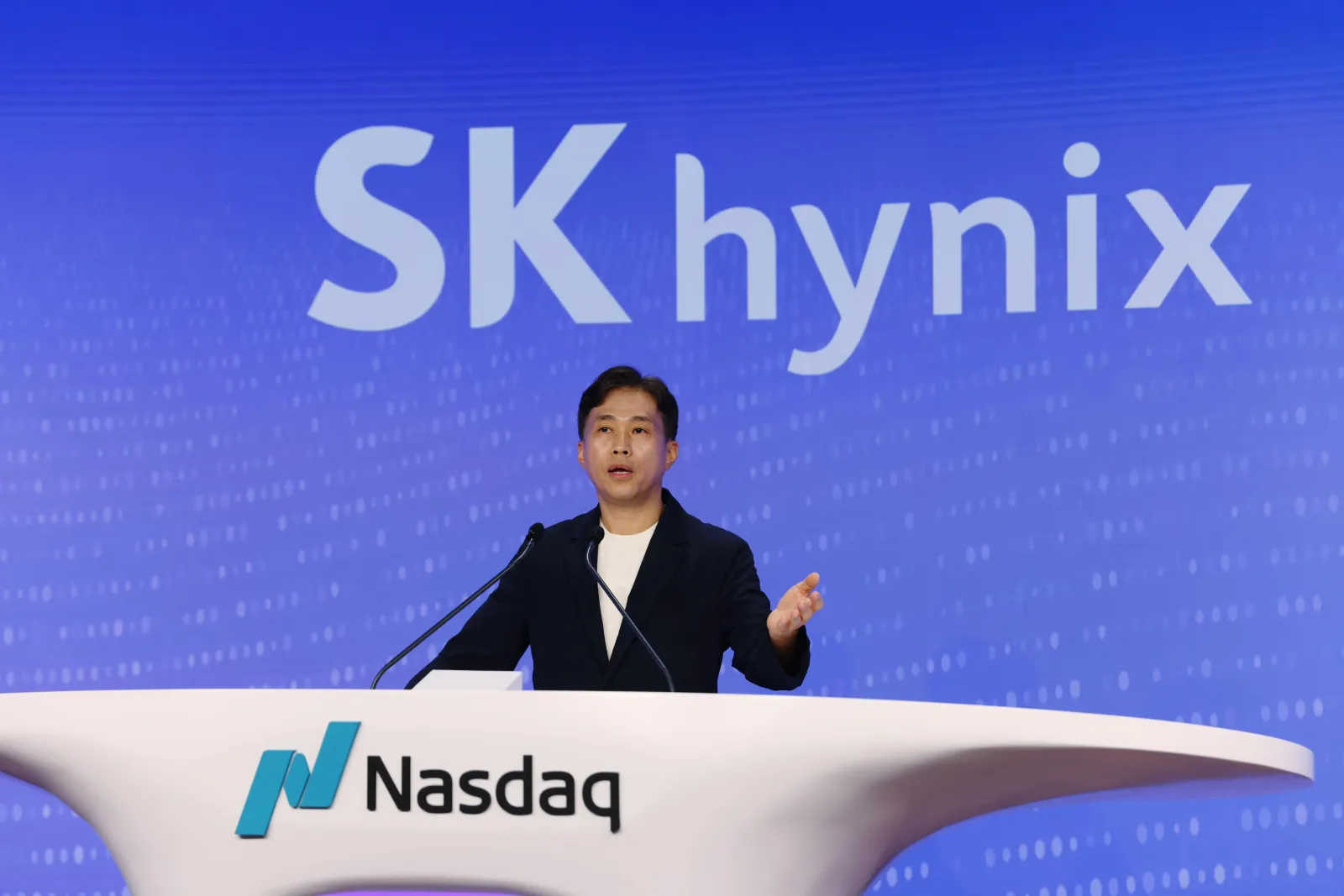
SK Hynix opens at $170, raises $26.5B, and tops foreign IPO records
In Friday's Wall Street debut, SK Hynix turns AI RAM demand into a $26.5B fundraising moment that rewrites comps.