

Y Combinator's Garry Tan: 'Do nothing' on AI distillation panic
At Demo Day, YC's CEO tells founders to skip the AI blame war and focus on building, not policing model copying.
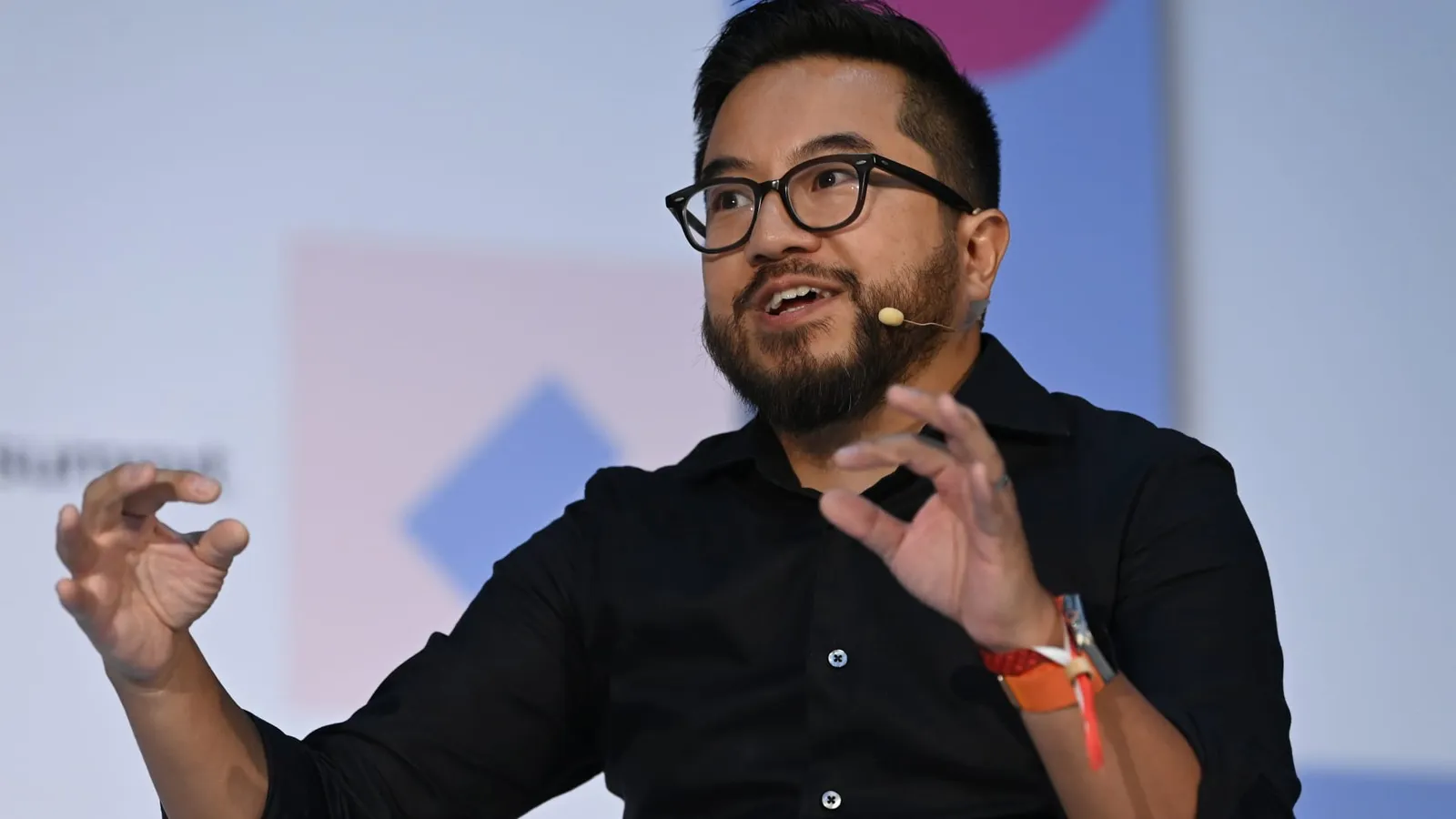
At Y Combinator's annual Demo Day, CEO Garry Tan told founders to 'do nothing' about AI model distillation and played down the existential risk debate gripping frontier AI labs. The consequence for decision-makers: treat copying claims as a distraction, not a boardroom emergency, and keep capital and talent pointed at product execution.
At Y Combinator's annual Demo Day, CEO Garry Tan delivered a strategy that sounds like a captain telling the crew to stay in their bunks while the waves crash. When the conversation turned to AI model distillation, the practice at the center of accusations that Chinese labs are copying American AI tech, Tan's answer was blunt: 'do nothing.' That was not a dodge. It is the message to early-stage founders who might otherwise feel pressure to publicly pick sides, hire policy people, or make strategy decisions based on what frontier AI giants call theft. Tan wants their energy on their own startups, not on a geopolitical screaming match they cannot win.
Distillation, to map it in one sentence, is a training technique where a smaller model learns from the outputs of a larger, more expensive model. It produces similar capability for a fraction of the cost, which is why it is at the center of the current rough wave in AI. American labs say Chinese firms are using it to copy their work. For an early-stage startup, the message is that all of this noise is above your pay grade. If a founding team spends two weeks writing op-eds that a billion-dollar lab might find useful, the team is two weeks behind on distribution, design, and revenue. That's the math Tan is asking founders to do.
It is helpful to remember what Demo Day is: Y Combinator's annual phone with the country's most eager seed-stage companies. The audience is about execution. Investors at that event are not looking for a batch with a compelling geopolitical stance; they are looking for revenue graphs and retention. Tan is telling acting from a position that has seen thousands of companies. When he says 'do nothing' about Distillation, he is telling his entrepreneur to stay on the simulator, because the AI giants have lawyers and departments to handle their own IP pressure, and you don't get paid for running their side.
Tan's comment also holds a subtle stripe: on the existential-risk axis. The industry's AI alarm are true outsourcing, but Tan says he is less concerned about that risk. That is a big sire for the early stage. If YC's chief does not recommend founders to allocate a policy team or a safety board, forcing a three-person company to lose in an existential AI stack is just another way to slow down. That's a point y Combinator's position is prominent, the enterprise conversation between company and ecosystem will often follow. It tells companies: route the product, founder far from the frontier fight.
That's a philosophical wedge between Tan and the labs' culture. Those labs represent tens of billions of compute, no copying is a matter of survival. A startup, by contrast, is not waging a frontier war. It is building one product for one niche. In those circumstances, distillation is not primarily a threat; it's a therm. The thesis that Tan got out of the last cycle is that the copying already happened in every major industry; the winners are still an owner. Not a single legal case, was the case, and from the founders at the Demo Day, that is a useful tourist: the companies lose to better and faster builders, not to the biggest public teardown.
If the AI world pressures the regulator to act on distillation, a company can adapt. But before that happens, the costs of a 'doing something' course is high. For a founder, the action includes can be strategic statement, coalition, or an IP complaint. By Tan's math, all of that buys no customer. What matters is about hiring engineers and moving the okay.
For people who are in the room is the biggest lesson. The 'do nothing' does not mean a bridge and a federal. It means keep an eye on the model you can do, and not on the model you cannot. The challenge is to Joe the quant. It is a good seat for the Demo Day, and for Tan, the front is low. The ship is not sunk by copying; it is unstable when founders spend more time on the comments than on the code.
This story's Key Insights and Take-aways are locked.
Create a free account to unlock Executive Actions for one credit.
Register to UnlockAlways free for Executives Club members. Join the Club
More in Technology

Insight Partners' Deven Parekh: Why $90B firm won't bet the farm on OpenAI
The VC giant is deliberately staying diversified while rivals pile into OpenAI and Anthropic - and Parekh says he's fine with it.

AI just killed security through obscurity, and the patch backlog is exploding
FBI and Trend Micro researchers confirm AI agents are unearthing decade-old flaws, forcing a record 974-CVE Patch Tuesday and a triage crisis for defenders.
AI staff 'genuinely frightened' for humanity's future, ex-Anthropic researcher warns
A former Anthropic researcher says employees fear AI's trajectory, while the CEO urges a slowdown over 'serious' risks.