

Yash Raj and Posham Pa go theatrical with Ayushmann Khurrana: Mupapa lands Feb. 19, 2027
First big-screen collaboration between YRF and Posham Pa Pictures, starring Ayushmann Khurrana and produced by Akshaye Widhani.
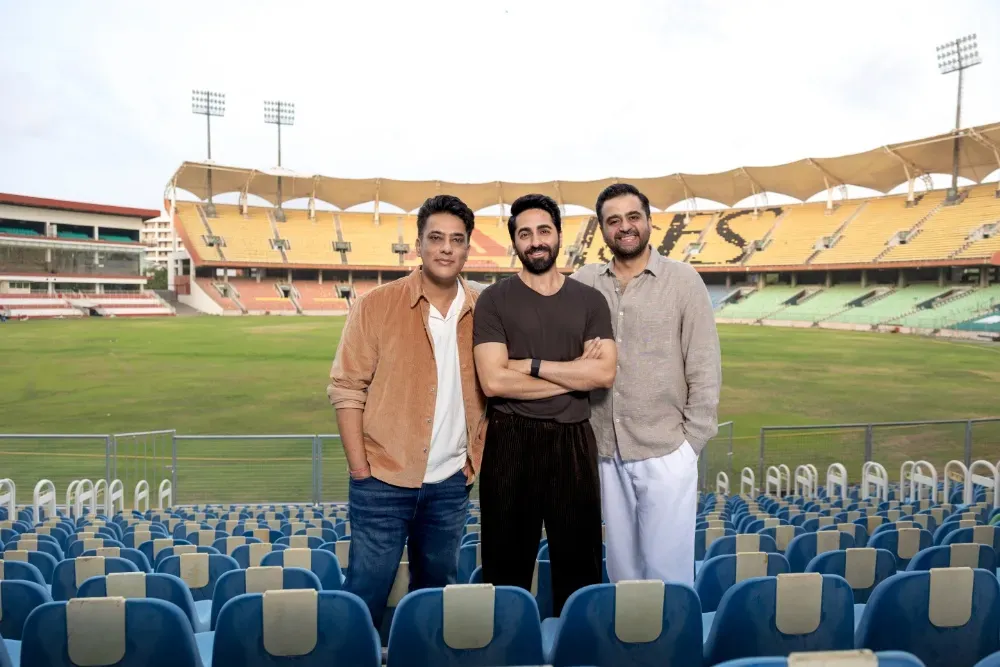
Yash Raj Films (YRF) and Posham Pa Pictures announced their first theatrical collaboration, “Mupapa,” starring Ayushmann Khurrana, releasing Feb. 19, 2027. The film is produced by YRF CEO Akshaye Widhani, whose earlier producing credit “Saiyaara” became the highest-grossing romantic film in India.
Yash Raj Films and Posham Pa Pictures are taking their first shot together in theaters with “Mupapa,” starring Ayushmann Khurrana, set to release on Feb. 19, 2027. That date matters because it tells you the project is being treated like a long-lead, full-scale tentpole, not a quick content experiment. And it is already being pitched as “genre-bending,” which is industry shorthand for a specific risk profile: a bigger creative swing, a broader audience test, and a higher premium on marketing execution.
The deal also quietly puts YRF CEO Akshaye Widhani back in the producer seat as the project’s producer. Variety reports “Mupapa” is produced by Widhani, whose previous producing credit was the Mohit Suri-directed romance “Saiyaara,” which became the highest-grossing romantic film. In other words, this is not just a brand collaboration. It is YRF’s leadership backing a theatrical bet with a proven track record tied directly to a mainstream hit genre, even if “Mupapa” aims to bend genres rather than repeat one formula.
For executives, this announcement is a useful read on how major Indian studios structure risk. YRF, as a scale player, has obvious advantages: established distribution, theater relationships, and the marketing muscle that turns “potential” into opening-week reality. Posham Pa Pictures, meanwhile, brings the kind of creative and production identity that can help a major banner escape the perception of only doing safe, repeatable slates. The combination suggests an incentive alignment strategy: YRF supplies the machinery, Posham Pa supplies the creative energy, and the starring pull comes from Ayushmann Khurrana, an actor who tends to anchor projects where audiences expect more than a straight line of genre conventions.
Now zoom out. The Indian theatrical market typically rewards familiarity and punishes mismatch between what a movie promises and what it delivers, especially in a release-year landscape crowded with franchises, star-driven launches, and streaming-first titles chasing awards attention. When a studio describes a film as “genre-bending,” it is implicitly communicating that the marketing will need to do extra work: you cannot just rely on the audience knowing what to expect. Executives should treat that as a planning issue, not a vibes issue. It affects trailer strategy, media placement, music releases, and even how distributors segment audiences by city tier and demographic.
There is also a governance angle hiding in plain sight. When the CEO of a major studio is directly tied to producing credit, boards and operating teams tend to interpret it as a priority signal. CEOs at this scale rarely put their name behind a project unless they believe it supports the studio’s larger slate logic: revenue stability, brand differentiation, and talent relations. Widhani’s prior producing credit for “Saiyaara” reaching the highest-grossing romantic film creates a reference point for what “winning” looks like inside YRF. The interesting part is the tension between proven mainstream performance and the “genre-bending” positioning of “Mupapa.” That is the kind of internal contrast that can influence resourcing decisions across departments, from script development timelines to marketing budgets.
Because this is a theatrical collaboration, regulatory and compliance considerations also loom, even when the announcement itself focuses on creative and release timing. Indian film projects must navigate a complex framework around certifications, advertising and promotional compliance, and distribution logistics across regions. Those mechanics do not usually make headlines, but they matter for a Feb. 19, 2027 release schedule. The earlier studios lock starring, production leads, and distributor alignment, the more room they have to clear certification pathways and coordinate logistics without compressing timelines later.
The second-order implications for peers are straightforward but easy to miss. If YRF and Posham Pa Pictures can successfully stage a “first theatrical collaboration” at this scale, it reinforces the market thesis that partnering with production houses outside the studio’s traditional in-house pipeline can be an effective innovation lever. For other executives, that means your competitor’s strategy might not be “spend more.” It might be “recombine better,” using star power and leadership-producing credibility as the anchor while experimenting on creative form.
Finally, “Mupapa” arrives in a period when audiences are trained to sample everything. Theaters still win when a film feels like a cultural event, but that requires sharp positioning. YRF is effectively betting that Ayushmann Khurrana plus a high-visibility theatrical slot plus Widhani production leadership can overcome the inherent friction of “genre-bending.” If they pull it off, this collaboration becomes a playbook: major-banner infrastructure can amplify newer creative identities, and leadership-level producing involvement can translate prior box-office credibility into the next creative pivot. If they miss, the lesson will not be about the genre label. It will be about whether marketing clarity and audience promise were strong enough to carry the risk across the long runway to Feb. 19, 2027.
This story's Key Insights and Take-aways are locked.
Create a free account to unlock Executive Actions for one credit.
Register to UnlockAlways free for Executives Club members. Join the Club
More in Business

Comcast shares jump 25% as it plans to split NBCUniversal and Sky
The tax-free spin-off could reshape focus, funding, and competition across media and tech for years.

Bungie cuts most Destiny 2 staff as Sony says Marathon still matters
Herman Hulst confirms layoffs affecting most Destiny and some Marathon teams after Bungie admits Destiny fell short.

SK Hynix jumps 11% after seeking up to $29.4B in Nasdaq listing
The chip giant filed for a Nasdaq listing plan that could raise $29.4 billion, instantly reshaping investor expectations.