
Zach Golden at UMPG Audio Branding wrote FIFA World Cup 2026 theme song twice
A Brooklyn creative director turns FIFA’s emotion briefs into a stadium-in-your-living-room soundscape.
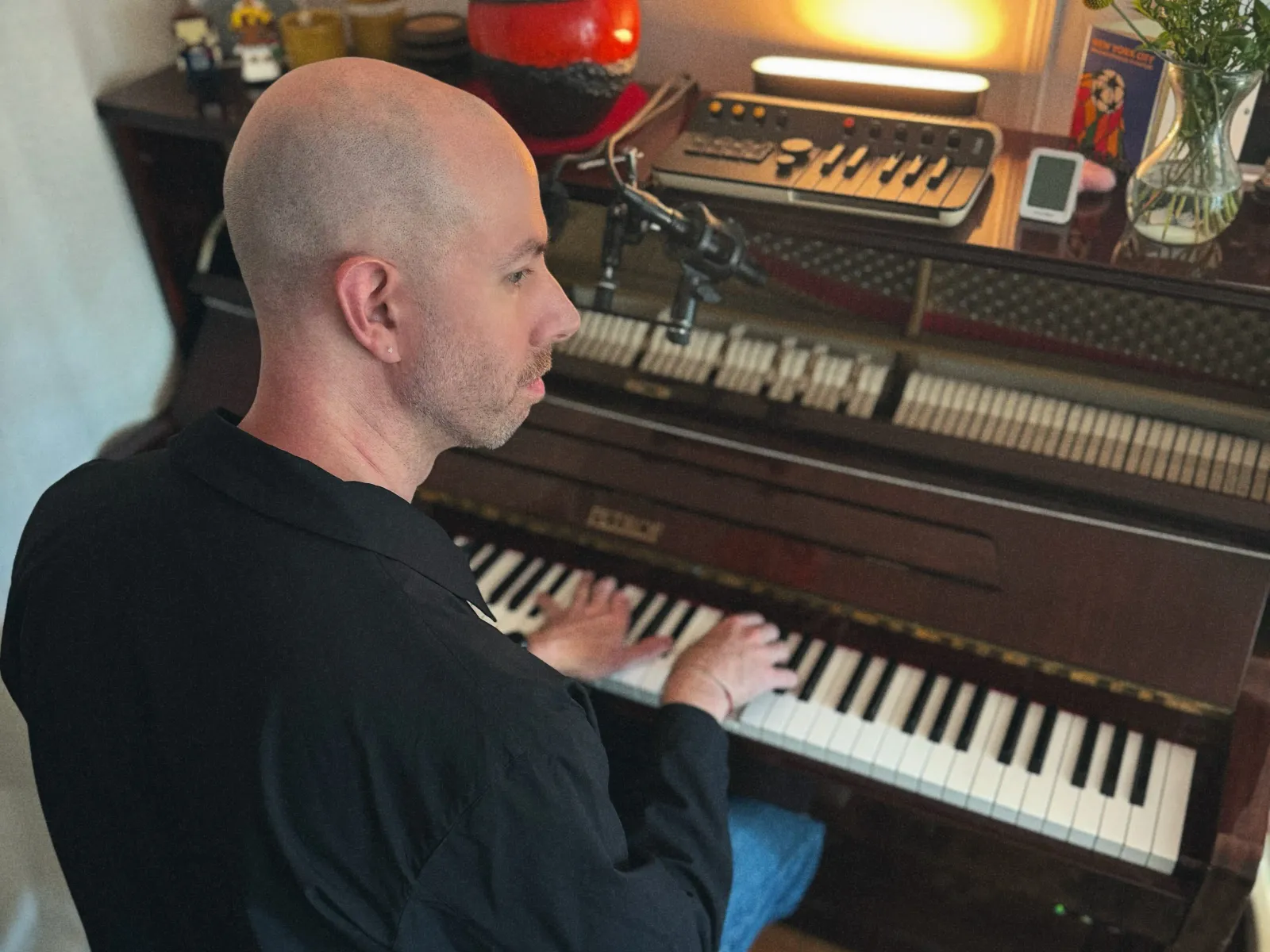
Zach Golden, a 37-year-old creative director at UMPG Audio Branding (formerly ELIAS), led the composition of the FIFA World Cup 2026 theme song. He says the goal was to make listeners feel transported to the stadium, building the excitement, breaks, and battle moments of the tournament.
On Jan. 2024, Zach Golden got the call on a Zoom meeting that his composition had been chosen by FIFA as the 2026 World Cup theme song. Golden is a 37-year-old creative director at UMPG Audio Branding (formerly ELIAS), and the wild part is not just winning once. He says he effectively did it twice, because FIFA also approached UMPG Audio Branding for the 2022 World Cup.
Golden’s pitch, in plain English, was simple: make the theme song feel like you are at the match. He describes designing the music so listeners would hear it and feel as if they were watching in person, surrounded by tens of thousands of fans waiting for the game to start. After the first game of the 2026 World Cup kicked off, he got everything set up in his living room, because he knew he would be hearing the theme song he spent months composing. That personal setup is the emotional hook, but it also reveals the job: the music is not background. It is a broadcast tool that has to land at scale, in real time, in millions of homes.
Golden’s path matters because it explains how an “audio branding” creative becomes a global event composer. He says he has always loved music, starting in high school bands and then at Berklee, where he focused on audio engineering and jazz composition. He describes taking on an entry-level job at UMPG Audio Branding, after his friend told him about tasks like data management and file renaming, as his “in” into the industry. Over time, he worked his way up to creative director and lead composer. For executives and boards, this is a reminder that the talent pipeline in audio branding is not always a straight line from “composer” to “global theme.” It can be years of operational mastery and creative iteration inside a specialized studio.
The FIFA side of the process is where the stakes get interesting. Golden says UMPG Audio Branding was approached by FIFA in 2020 to put together a theme song composition for the 2022 World Cup in Qatar. For that round, FIFA wanted localization: they asked for the music to have the correct style and instrumentation for Qatar and the MENA region, and Qatari instrumentalists were recorded to deliver that sound. Golden frames it as a loop with FIFA to understand what the music needed to sound like, then composing with guardrails until FIFA and the team landed on something they liked. The key operational point: localization here is not a stylistic afterthought. It is a deliverable with constraints, performance requirements, and specific instrumentation decisions.
Ahead of the 2026 World Cup, FIFA approached UMPG Audio Branding again and asked them to go through their process of creating a sonic identity to find a theme that sounded like FIFA. Golden says there were other composers involved too, including a mix of people who work within UMPG Audio Branding and freelancers, and FIFA would decide which composition to use from the options offered. Before any actual composing, the group had to establish creative parameters. FIFA described the music through a series of emotions and descriptive words, but Golden calls out the real challenge: translating those ideas into sound because everyone interprets words differently. His method, he says, was to explore songs and sounds already in the UMPG library and go back and forth with FIFA to establish the guardrails of what the team could create.
Then came the part that reads like sports psychology turned into music. Golden wanted a melody that made listeners feel they were at a match, transported to a stadium, with tens of thousands of fans waiting for the game to start. He says the theme needed excitement, buildup, breaks, and darker battle moments, basically mirroring the emotional arc of matches. He concludes he finally landed on a melody that did it all. This is also a quiet lesson for anyone running creative services contracts: when the buyer is describing outcomes in emotion-language, the supplier’s job is to convert that into repeatable, testable musical decisions. “Everyone hears these descriptive words differently” is not just an artistic frustration. It is a governance issue, and guardrails are how you manage it.
Golden says FIFA informed the team on a Zoom call in January 2024 that his composition had been chosen. He describes being blown away and celebrating, and also admits he has a second-guessing voice that always asks whether the work could have been better. His emotional payoff is not only personal validation, it is the durability test: “This composition was good enough, because I now hear it every time I watch a World Cup game.” In other words, the theme is not a one-time deliverable. It becomes embedded in recurring broadcast touchpoints.
The longer tail is also clear in his social media feedback: a parent says their kid sings the song all the time, and a son tells him he has been watching the World Cup with his dad, with the melody bringing back the memories they make together. Golden ties that directly to what music does, and why he has always loved music: it provides an emotional connection. For executives and investors watching media, sponsorship, and brand partnerships, that is the second-order implication. When an audio brand becomes part of a global ritual, it can turn into a personal soundtrack, which is exactly the kind of cultural stickiness most businesses chase. And now, as the World Cup is nearly over, Golden says his melody will not be played every week for the whole world to hear, meaning the team will have to let go of the spotlight while holding onto the proof of concept: lightning struck twice for a guy in Brooklyn who no one knows, he says, wrote the World Cup theme song twice.
This story's Key Insights and Take-aways are locked.
Create a free account to unlock Executive Actions for one credit.
Register to UnlockAlways free for Executives Club members. Join the Club
More in Entertainment

12TB Steam 'teraleak' goes beyond Valve: GTA 3, Mafia 2 prototypes exposed
A 12-terabyte dump of Steam data reveals prototypes and builds of third-party classics like GTA 3 and Mafia 2, plus unreleased Valve content, rewriting game history.

LinkedIn's romance problem: 1 in 4 workers say dating on it is fair game
A new survey shows a quarter of U.S. employees treat the professional network as fair game for romance, even as LinkedIn bans it and removes hundreds of thousands of offending posts.

Enhypen's first No. 1 album breaks K-pop's Billboard 200 streak
The K-pop group's 98,000-unit debut tops the chart while Dolly Parton's catalog reentry shows how death reshapes streaming.