

New nonprofit aims to make rare-disease gene therapy routine instead of bespoke
It wants to standardize treatments for conditions pharma historically avoided, changing incentives for developers, payers, and regulators.
By Hessa Al-Faleh·· 3 min

Curating from trusted global sources…
Curated from trusted global sources, refined into briefing-grade analysis with executive summaries, insights, and bullet-point takeaways.
It wants to standardize treatments for conditions pharma historically avoided, changing incentives for developers, payers, and regulators.

NISAR teams begin continuous access to L-band and S-band products, turning glacier stress into signal-level science.

Modeling says Greenland runoff can turbocharge AMOC weakening, yet the circulation can recover if emissions stop or meltwater stops.
A compact, multiview particle-detection instrument could turn CubeSats into near-Earth science platforms without sacrificing data quality.
New primate evidence suggests our “geometric intuition” may not be uniquely human, with knock-on effects for labs and AI research.

New study identifies smell-based pheromone control of fertility, replacing the old “bullying” idea.

Summer Farmen turned an ALK-positive diagnosis into a six-year survival case study on targeted therapy and patient power.
A multi-institution study in Scientific Reports finds modern zoo care is extending elephant lifespans, decade by decade.

SpaceX will help Orion beam high-definition video and data-heavy downlinks through Starlink lasers into Houston.

A rare dip in 2025 raises immediate questions for regulators and investors tracking deforestation risk in Brazil.
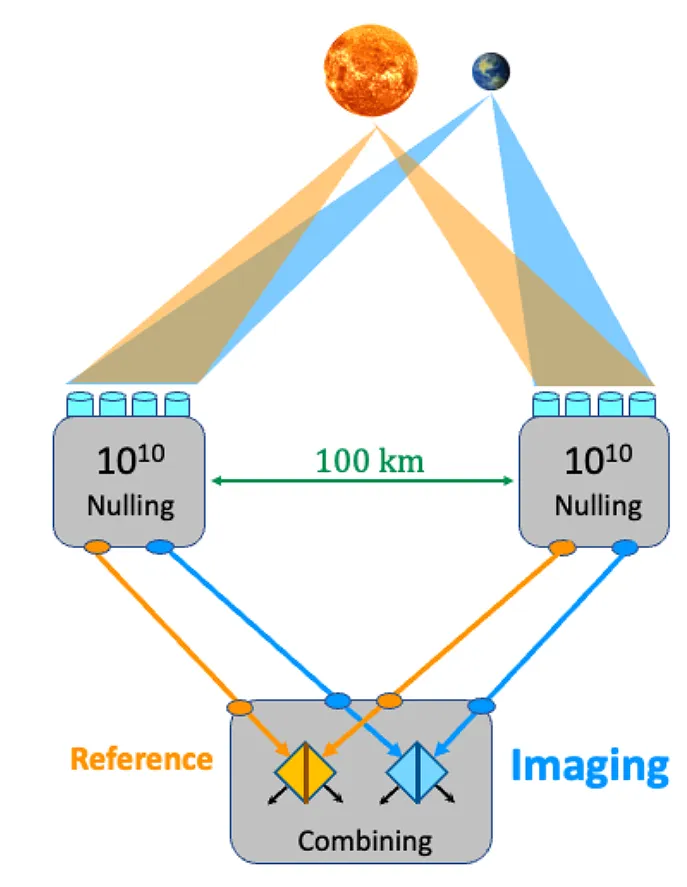
A new nulling interferometer and a 100 km space baseline aim for 10^10 star-planet contrast and surface-feature resolution.

Two supernova remnants, 30 to 50 light-years apart, appear to be the first twin-explosion system.