
103 Democrats voted to kill Israel aid; AIPAC cut off donations to endorsed supporters
A post-vote punishment: when more than a dozen AIPAC-endorsed Democrats backed nixing aid, online giving went dark fast.

In a vote where 103 Democrats eliminated aid to Israel, more than a dozen had been endorsed by AIPAC, the pro-Israel lobbying group. The consequence was immediate: AIPAC quickly closed off online donations for those lawmakers.
AIPAC did not just watch the House floor. After 103 Democrats voted to eliminate aid to Israel, it moved quickly against some of its own endorsed candidates.
Here is the key detail that matters for anyone who touches party politics, fundraising, or coalition-building: of those 103 Democrats, more than a dozen had been endorsed by AIPAC. And when those lawmakers supported nixing Israel aid, AIPAC quickly closed off online donations for them.
That sequence is the whole story. A vote changes a policy outcome. AIPAC endorsement helps move campaign money and momentum in advance. Then, when endorsed Democrats cast a ballot against AIPAC's preferred outcome, the group turns off the money lever, starting with online donations. For decision-makers, the lesson is not abstract. It is operational: alignment is expected, and enforcement can be fast.
To understand why this is a big deal, you have to look at how modern political money flows. Online donations tend to be the fastest and most scalable channel for supporters and small donors to translate political preference into cash. When a major pro-Israel lobbying organization closes off that channel for specific candidates, it does not merely signal displeasure. It reduces the ease with which those candidates can replenish campaign war chests, fund ground operations, and build advertising or voter outreach in the short term.
Endorsement itself is also not just symbolism. AIPAC-backed endorsements typically communicate to voters and donors that a candidate is aligned with a priority set. That alignment becomes a fundraising narrative. When endorsed lawmakers vote to eliminate aid to Israel anyway, the fundraising narrative starts to break. The immediate response, cutting off online donations, is a way to stop that narrative damage and deter similar defections.
This is where coalition dynamics get messy. Parties are broad coalitions with competing priorities across districts and ideologies. In Congress, policy votes like eliminating aid to Israel reflect those internal tensions. Some members may be balancing district preferences, personal ideology, or broader foreign policy philosophies. But for candidates who were endorsed by a powerful lobbying group, their policy vote creates a direct conflict with the endorsement bargain.
And that is exactly what the source describes: more than a dozen among the 103 lawmakers were endorsed, then AIPAC punished them by rapidly closing off online donations. It is not presented as a slow-burn “we will consider our options later.” The emphasis is speed and direct financial consequence.
Second-order implications follow quickly for boards, campaign executives, and donors who live inside the incentives. When you reduce funding channels in response to policy votes, you train the political system to behave differently. Candidates learn to treat certain policy outcomes as non-negotiable, not because of debate schedules or committee work, but because fundraising can be cut off quickly after the vote. That can affect how campaigns prioritize messaging, how staffers assess risk, and how leaders coordinate endorsements and voting discipline.
There is also a credibility angle. Lobbying groups build influence partly by demonstrating they can reward alignment and punish defection. If punishment is too slow or too symbolic, it loses deterrence. If it is too abrupt or too broad, it risks backlash. In this case, the source indicates a specific, fast mechanism: online donations were quickly closed off. That suggests a system designed for enforcement, not just persuasion.
For other executives and decision-makers looking at similar power structures, the strategic stake is straightforward. In a world where endorsements, donations, and votes are linked, governance and fundraising are not separate tracks. They are one feedback loop. When lawmakers defy an endorsed policy position, the penalty can show up immediately in how money moves. That is the kind of loop that shapes future candidate behavior long before Election Day.
So while the headline fact pattern is simple, the practical meaning is not. The vote happens in Congress. The endorsement happens in campaigns. The punishment happens in the donation pipeline. Put together, this is a reminder that in U.S. politics, financial access is an enforcement tool, and it can change overnight after a single roll call.
This story's Key Insights and Take-aways are locked.
Create a free account to unlock Executive Actions for one credit.
Register to UnlockAlways free for Executives Club members. Join the Club
More in Politics
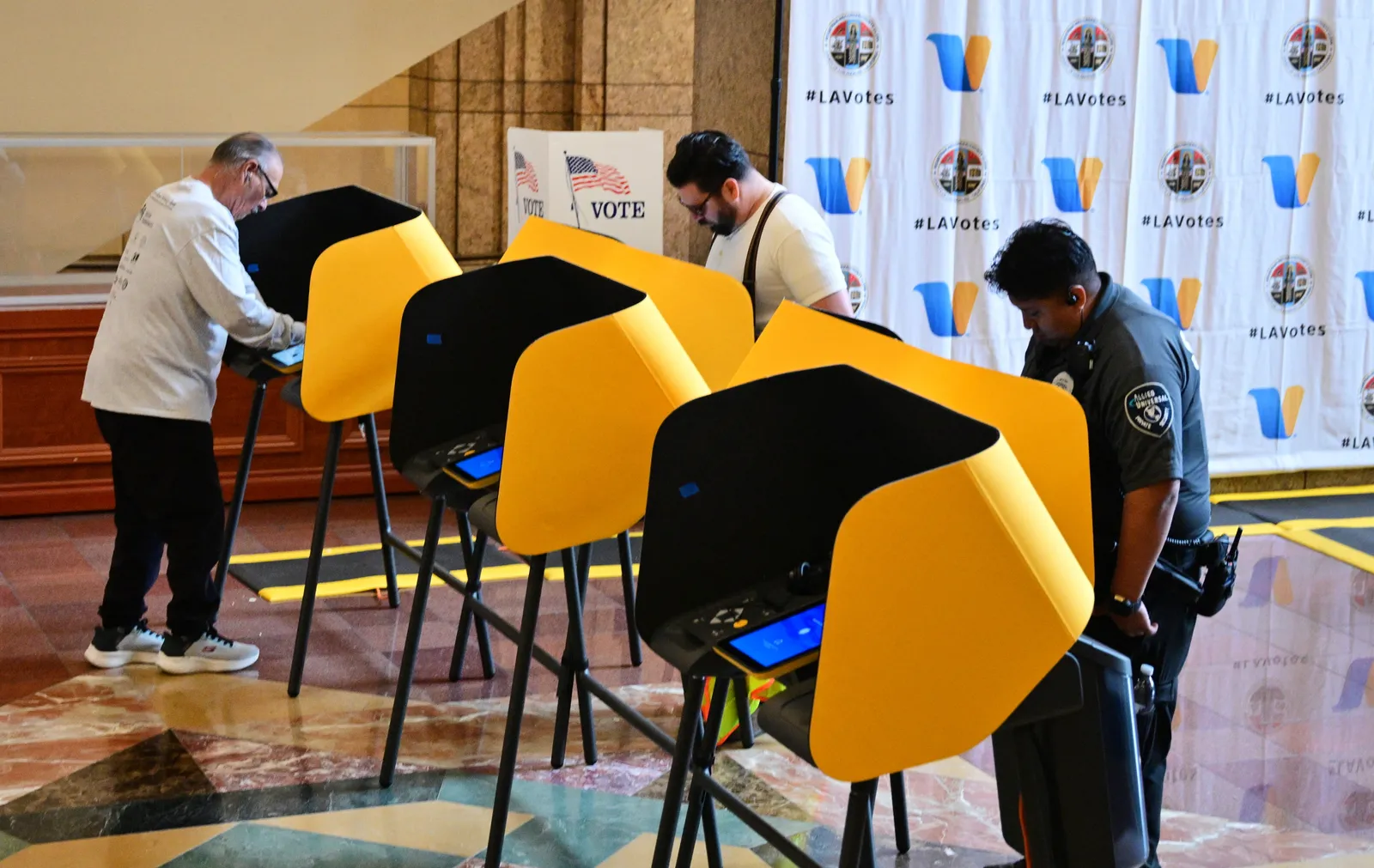
LA County: DOJ's 20,000 'noncitizen' voter list is 'unreliable,' includes U.S.-born
Preliminary review by Los Angeles County election officials finds errors in the federal list, raising the stakes for voter roll integrity ahead of November.

Trump's $1.5B Pentagon chip investment lands in North Carolina
A $1.5 billion defense infusion for North Carolina chipmaking signals a new era of Pentagon-backed reshoring - here's what it means for the industry.

Nigeria confirms first Ebola case in Abuja, a woman just off a Uganda flight
Health Minister Muhammad Ali Pate says the patient flew in from Uganda, putting Africa's latest outbreak on Nigeria's doorstep.