
110 quadrillion kilometers of fungal threads could reach almost a billion suns
A Science study maps arbuscular mycorrhizal networks globally, quantifying their length, mass, and carbon storage impact.
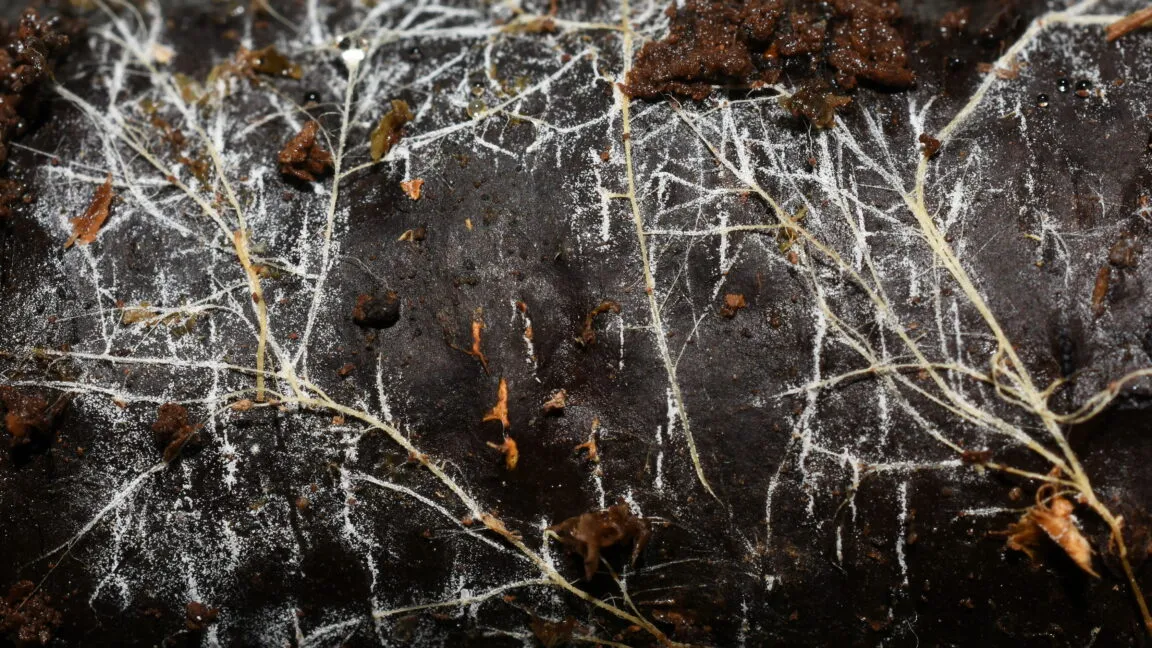
A new Science paper, led by SPUN (Society for the Protection of Underground Networks), estimates the global extent and mass of arbuscular mycorrhizal fungal networks. The result gives decision-makers a much clearer picture of how much underground carbon these systems sequester and where they are densest.
If you could lay underground fungal threads end-to-end, researchers estimate they would stretch roughly 110 quadrillion kilometers. That is not just a big number. The study says it would reach almost a billion times the distance between the Earth and the Sun.
This matters because these threads are not decorative. They are arbuscular mycorrhizal fungal networks that form intimate relationships with plant roots. In exchange for carbon, the fungi provide nutrients like phosphorus and nitrogen, and previous research has found that they sequester 1 billion tons of carbon underground every year. The logic is simple and high-stakes: if the fungal networks were not storing that carbon underground, it would be warming the atmosphere.
Until now, though, nobody had actually mapped these networks globally. The new study, published in Science on Thursday, is an attempt to do exactly that, quantifying both the length and the mass of the systems worldwide and identifying where they are densest. In other words, it moves mycorrhizal fungi from “important in theory” to “measurable at planet scale,” which is a meaningful shift for anyone thinking about climate, land management, or the scientific basis behind nature-based carbon strategies.
The work was led by the Society for the Protection of Underground Networks, or SPUN, an organization founded to map mycorrhizal fungi networks. According to the study description, the team used a combination of approaches to estimate distribution and mass: a literature review, soil samples from around the globe, machine learning, and laboratory testing. That mix is doing the heavy lifting. Literature review helps establish what is already known about fungal presence and behavior, soil samples ground estimates in observed reality, machine learning helps interpolate or infer patterns at scale, and laboratory testing verifies parts of the biological and physical picture.
Why should executives care about the methodology? Because mapping creates leverage. Investors, boards, and operators who touch climate policy, agriculture, forestry, or environmental compliance need numbers that can be connected to reality. A global map of where these fungal networks are densest can translate into more targeted land-use decisions. If you know where the networks are concentrated, you can better understand where interventions might strengthen the plant-fungus nutrient exchange that supports carbon storage, or where disruption might have outsized effects.
There is also a governance and regulatory angle hiding in plain sight. Environmental frameworks and reporting regimes increasingly ask for measurement, additionality, and defensible baselines when it comes to carbon and nature-related claims. A network that sequesters carbon underground is relevant to those frameworks, but only if the underlying systems can be characterized. This study’s contribution is not a policy proposal, but it does help close the measurement gap that often makes nature-based claims harder to audit.
The second-order implication is that underground ecosystems may become a bigger part of climate conversations, not because they are trendy, but because they are quantifiable. The fungi are described as storing carbon underground annually, and they are linked to essential plant nutrient cycling, including phosphorus and nitrogen. If future research expands on this global mapping, it could influence how land managers think about soil health, crop resilience, and the climate relevance of below-ground biology. That, in turn, affects how risk is priced across supply chains tied to agriculture and land use, from insurance perspectives to financing terms.
For leaders at companies and institutions that operate at the intersection of climate, land, and science, this is the kind of paper that can quietly reorder assumptions. The headline figure, 110 quadrillion kilometers, is dramatic. But the strategic stake is more practical: finally understanding the scale, mass, distribution, and densest regions of arbuscular mycorrhizal fungal networks means the “underground carbon” story has a stronger empirical backbone. And in a world where boards are asked to justify sustainability claims with numbers, stronger maps beat stronger narratives.
This story's Key Insights and Take-aways are locked.
Create a free account to unlock Executive Actions for one credit.
Register to UnlockAlways free for Executives Club members. Join the Club
More in Technology

Nvidia's $89B data center quarter: the 9 companies cashing in
The AI buildout is minting fortunes beyond GPUs, and memory, cloud, and cooling suppliers are riding the same wave.

A YouTuber dissected the iPhone Duo and thinks he found crackgate's cause
CuriousHagi's teardown of Apple's foldable reveals a gear-like hinge that may explain why screens crack in the same spot within hours.

Google quietly links your phone number to every Android account on your SIM
Adding a SIM now ties your phone number to all Google accounts - and future accounts inherit it. Here's the security and privacy stakes.