
12 state AGs rush a TRO to freeze the $110B Paramount-Warner merger
California AG Rob Bonta says Paramount and Warner declined to pause closing while courts review the case.
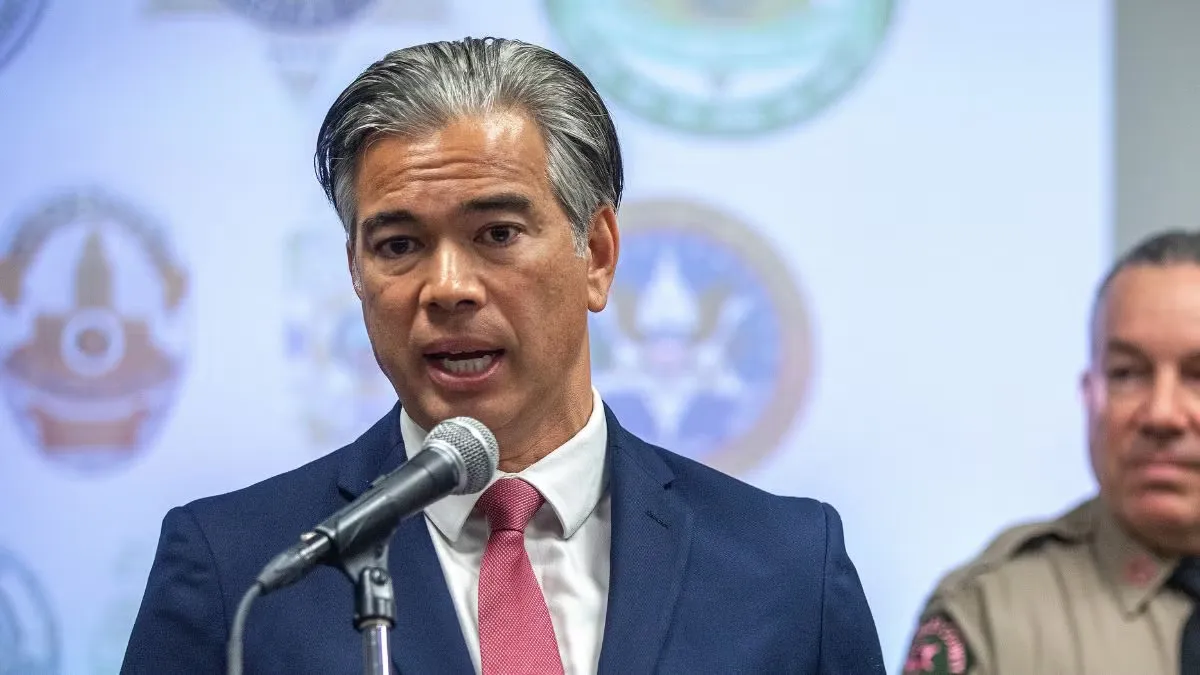
Twelve state attorneys general asked a federal judge for a temporary restraining order to block Paramount Skydance's proposed acquisition of Warner Bros. Discovery. The request follows a fresh lawsuit aimed at stopping the $110 billion deal until litigation is resolved.
Twelve state attorneys general moved fast on Monday, asking a federal judge for a temporary restraining order to freeze Paramount Skydance’s proposed acquisition of Warner Bros. Discovery. The filing seeks an immediate stop to closing, and it also asks the court to halt any steps to integrate or consolidate operations while the case plays out.
California Attorney General Rob Bonta underscored the urgency on CNN, saying his office’s request was coming “imminently” to “make sure that the proposed merger is halted during the pendency of the litigation.” He explained that his office asked Paramount and Warner to agree not to close the deal during the court review, but “They declined to do that,” and that is what triggered the TRO filing in the hours that followed.
The stakes are obvious and unusually concrete for an antitrust fight: the proposed transaction is priced at $110 billion, and the filing is designed for speed. The states are not asking the court to decide the merits years from now. They are asking the court to act before the companies can complete the deal and lock in a new reality.
In the document TheWrap obtained and reviewed, the attorneys general requested “a temporary restraining order against Defendants Paramount Skydance Corp. (‘Paramount') and Warner Bros. Discovery, Inc. (‘Warner Bros.') temporarily enjoining and restraining Defendants from closing or consummating Paramount’s proposed acquisition of Warner Bros. or taking any steps to integrate or consolidate their operations,” plus “an order for Defendants to show cause as to why a preliminary injunction should not issue.” In plain English, the states want the merger to stop right now, and they want the judge to require the companies to justify why an even longer block should not follow.
This is not coming out of nowhere. The move arrived hours after the state AGs first sued to block the $110 billion deal. That timing matters. In these kinds of disputes, delay can be the difference between a court reviewing a live, refundable transaction and reviewing a completed corporate combination, where undoing harm becomes far harder. That is why TROs exist at all: they are meant to preserve the status quo until a judge can weigh a preliminary injunction.
The filing’s named states show just how broad the coalition is. The attorneys general are from California, Arizona, Colorado, Connecticut, Massachusetts, Minnesota, Nevada, New Jersey, New Mexico, New York, Oregon and Washington. A coalition like this signals a shared concern that goes beyond one local market. It also creates political and legal weight: when more states coordinate, the request is harder for defendants to treat as a niche dispute.
There is also a governance angle for the boards and executives at both companies. Once a merger is “proposed” at this scale, integration planning often becomes an internal momentum machine. Legal teams, finance leaders, and deal managers typically prepare for post-close realities, including systems alignment and organizational design. The TRO request specifically targets that risk, asking the court to stop “any steps to integrate or consolidate their operations.” That is a direct attempt to prevent what lawyers would call irreparable changes before the court has a chance to rule.
For decision-makers in media, tech-enabled distribution, and any industry where consolidation is accelerating, this is a live case study in how deal execution can be challenged even after a transaction is announced and moving. The AGs are trying to force a pause while litigation proceeds, and the companies’ refusal to agree to a closing pause, according to Bonta’s CNN comments, is what pushed the states to escalate.
In practical terms, the path now goes through court speed. The states are asking for the TRO, and also for defendants to show cause as to why “a preliminary injunction should not issue.” A preliminary injunction is the next level of protection that can extend the block beyond the short TRO window. Until then, the immediate question for executives is operational: what can they do, and what must they stop doing, while waiting for a judge to decide whether the merger can proceed.
For peers watching from the sidelines, the second-order implication is clear: the combination of a high-dollar deal, coalition building by state regulators, and a willingness to seek emergency relief can change the timetable as much as the legal arguments. If you are on the board or in the C-suite of a company eyeing a major acquisition, this kind of filing is a reminder that “closing” is not just a milestone. It can become a courtroom deadline.
This story's Key Insights and Take-aways are locked.
Create a free account to unlock Executive Actions for one credit.
Register to UnlockAlways free for Executives Club members. Join the Club
More in Business
SK Hynix opens at $170, raises $26.5B, and tops foreign IPO records
In Friday's Wall Street debut, SK Hynix turns AI RAM demand into a $26.5B fundraising moment that rewrites comps.

China lands a reusable Long March booster, a first that matches SpaceX and Blue Origin
A barge landing and net-based recovery move China from theory to proof, reshaping the reusability race and satellite ambitions.

AstraZeneca $27B wipeout as Wainua late trial misses cardiovascular target
A failed late-stage heart study triggered a swift market punishment, forcing investors and boards to reset timelines and risk.