
23-year-old Noah Shinn raised $250M for Instinct, a $2.5B Meta rival
An invite-only AI assistant went viral this summer, putting a college dropout in direct competition with Mark Zuckerberg's Muse.

Noah Shinn, a 23-year-old college dropout, raised $250 million at a $2.5 billion valuation for his invite-only AI assistant Instinct. The startup now competes directly with Meta's AI agent Muse, signaling that the AI race has shifted from chatbots to autonomous assistants.
Noah Shinn is 23, a college dropout, and now the founder of a $2.5 billion AI startup that is squaring off against Mark Zuckerberg. His invite-only assistant, Instinct, raised $250 million in a round announced August 26, just months after it soft-launched this summer with a bare-bones website and no launch video. The funding, reported by Business Insider, came on top of $100 million Shinn had previously raised, and it has turned the former Northeastern University undergrad into one of the hottest young founders in AI.
The stakes go beyond one startup's valuation. Instinct's breakout captures a new phase of the AI race: after years of competing over which company could build the smartest chatbot, the battle is shifting toward assistants that can actually get things done, like booking hotels, scheduling meetings, and canceling subscriptions. That puts Shinn directly in Zuckerberg's path. Meta launched its own AI agent, Muse, weeks after Instinct, and it quickly rose to the top of the app store. Meta's AI chief, Alexandr Wang, has mockingly dubbed Instinct 'Insect' and posted that Muse is much faster - and 'hotter.' Shinn responded with a smiley face.
Shinn dropped out of Northeastern in 2023 to become one of the first employees at Sierra, the customer support AI startup led by OpenAI chairman Bret Taylor. Before that, he had already made a name for himself in AI research. Weeks after ChatGPT launched in November 2022, Shinn answered a LinkedIn post from MIT professor Ashwin Gopinath, who was 'kind of bored' over Christmas and wanted to tinker with the new technology. Over three months, the pair and four others wrote a paper introducing a technique called Reflexion, which lets AI agents learn from their mistakes by remembering prior failures. The paper was presented at NeurIPS, one of the world's most prestigious AI conferences, and laid out a fundamental technique that many have since reinvented.
His professors remember him as unusually driven. Arjun Guha, a Northeastern computer science professor, noted that 'virtually zero students can write research papers as undergrads. Even fewer can do it without any assistance.' Another professor, Steven Holtzen, described Shinn as quiet but highly attentive, sending late-night emails full of detailed questions. In a recommendation letter, Holtzen wrote that Shinn has 'immense drive and independence, capable of identifying and executing on research questions on his own with little supervision.' Taylor, who worked with Shinn at Sierra, called him 'an incredible engineer and entrepreneur.'
Instinct's rise also reveals a competitive streak that's a hallmark of Silicon Valley. The company's soft launch was deliberately low-key: invite-only, targeted at venture capitalists. That proved to be a 'brilliant' idea, according to Trace Cohen, cofounder of Six Point Ventures. VCs began bragging on social media about the cool new AI agent doing their work for them. But when Shinn heard that two of his biggest investors were also funding a rival Andreessen Horowitz-backed agent startup called Town, he complained. Index Ventures and Conviction abruptly pulled their funding from Town, according to a report from Upstarts Media. The Instinct spokesperson said the company is 'unable to confirm the opinions of others.' Neither Conviction, Index Ventures, nor Town's CEO Jean-Denis Greze responded to requests for comment.
Now the bigger fight is with Meta. Zuckerberg pledged to build a 'personal superintelligence' last year, a project known internally as Hatch. Meta launched Muse weeks after Instinct, and Zuckerberg said in a Threads post that the company had held Muse back due to concerns about AI safety and security. There were also practical concerns, such as making sure Muse actually followed user instructions and didn't buy products without permission, a person familiar with the matter told Business Insider. Meta's advantages are enormous: computing power, cash, and distribution to billions of users.
Instinct, which is free, has had significant lag due to high demand and depends on investor cash. But it is already in talks to raise at a $10 billion valuation, according to The Information. While the ultimate winner of this race is unclear, Instinct has proven that the next great AI assistant doesn't have to come from Big Tech. That is a warning shot for every incumbent, and a reminder that in AI, speed and taste can matter as much as scale.
This story's Key Insights and Take-aways are locked.
Create a free account to unlock Executive Actions for one credit.
Register to UnlockAlways free for Executives Club members. Join the Club
More in Business

Royal Caribbean just spent $3B to own half of Sandals
The cruise giant is buying a 50% stake in the all-inclusive resort chain for $3 billion, a bet that land-based vacations are the next growth engine.

Paramount's Ellison: Merger Clearance Done, WBD Deal by Oct 1
David Ellison says the Paramount-WBD merger has full clearance after settling with state AGs, clearing the path for an October 1 close.
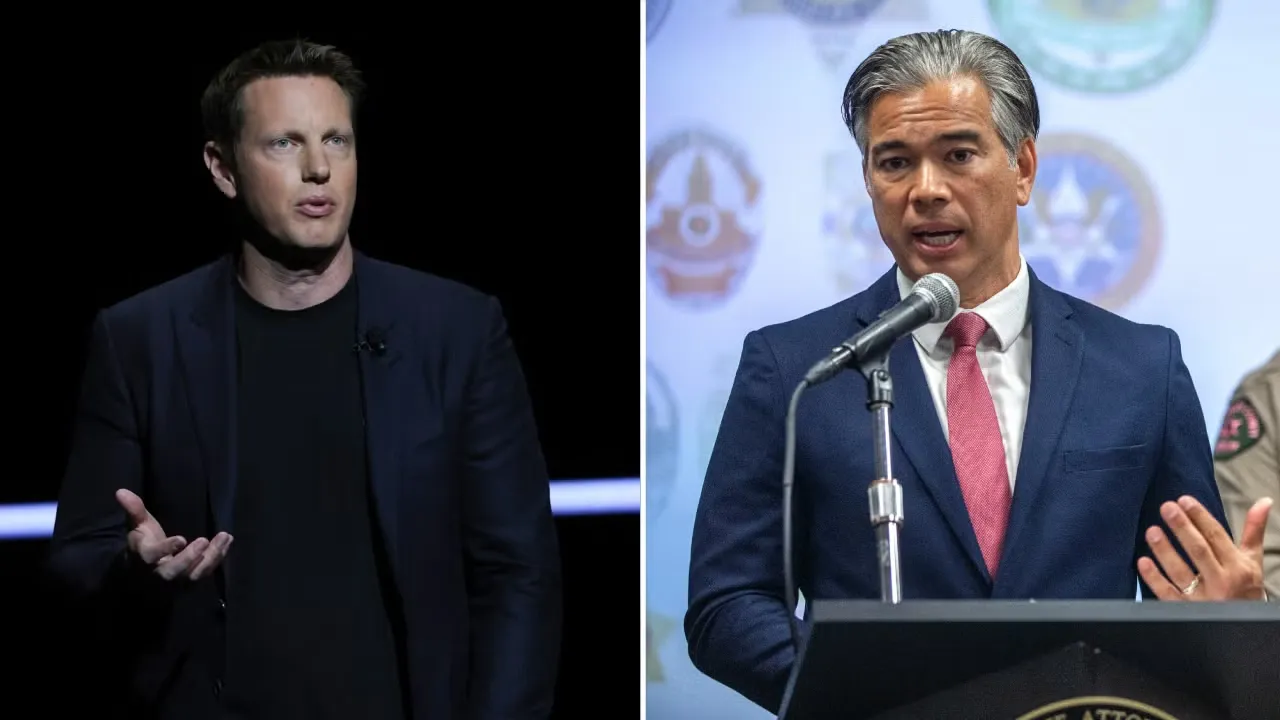
Paramount settles with 12 states, $110B Warner merger clears final hurdle
David Ellison's studio avoids a March trial and a $7M-a-day ticking fee by settling with state AGs over local job losses.