

57% of enterprises traced “confidently wrong” AI agents to missing or inconsistent business context
The fix is not bigger models. It is a governed context layer that keeps definitions and documents aligned.

A VB Pulse June 2026 survey of 101 qualified enterprises with more than 100 employees found 57% traced a confident but wrong AI agent answer to missing or inconsistent business context, with 31% reporting it happened more than once. For decision-makers, the implication is blunt: confident errors are a systems design problem, and the budget is shifting toward governed semantic context layers.
In a VB Pulse June 2026 survey of 101 qualified enterprises with more than 100 employees, 57% said they traced a “confident but wrong” AI agent answer to missing or inconsistent business context. And it gets worse operationally: 31% reported the same failure happened more than once. The model itself was not necessarily the culprit. The context it was given was.
That one detail matters because it changes how boards and execs should interpret “AI quality.” If the agent sounds certain while using stale metric definitions or a retrieval system that never pulled the right document, then the error is not a mysterious reasoning failure. It is an input integrity failure. The enterprise systems story behind agent errors is now measurable, and the stakes are immediate: a confident wrong number can be a bad decision made faster, not a bad model trained slower.
So what actually creates this failure mode? Retrieval over documents is the default way enterprises get business context for 38% of them, nearly double the next closest approach, according to the same research. But retrieval is often selected on the wrong optimization axis. Ease of ingestion and operational simplicity drive the choice, while retrieval accuracy tends to lag. That means problems tend to show up only after the system is already live, when someone has to debug why the agent kept answering with certainty.
The “known fix” is a governed context layer that agents read instead of guessing. The concept is straightforward even if the implementation is not: build a shared, governed model of what business data actually means, once, and then reference it consistently instead of letting every agent re-derive meaning on the fly. VentureBeat research suggests enterprises are intrigued but not finished with the transition. Seventy-five percent do not have an agentic context layer yet. Twenty-five percent have one in production, 34% are building one right now, and 41% have not started.
There is also a sharp pattern in who feels urgency. Among companies already building or running a governed context layer, 78% report a confident-wrong failure: the agent answers with total certainty and is still wrong. Among companies with no plans to build a layer, only 20% report the same kind of failure. The research reads like an adoption curve with scars: companies that have already been burned are much more likely to be building the fix, while those that have not yet hit the problem tend to see less urgency.
Meanwhile, vendors are racing and not converging. DataHub treats catalog metadata and years of analyst query behavior as a living knowledge source. Microsoft Fabric IQ is building a business ontology that agents can query over MCP. Couchbase pushes agent memory and context retrieval down to the edge, arguing the operational database is the more natural home than bolt-on search or analytics. Pinecone’s Nexus compiles structural logic into the metadata layer ahead of runtime. Snowflake runs a two-layer system, Horizon Context for customer-managed definitions and Cortex Sense for context the platform infers on its own. Oracle’s Unified Memory Core folds vector, graph, and relational data into one transactional engine to reduce the chance that a separate sync layer goes stale. Google’s Knowledge Catalog mines query logs and usage patterns to curate semantic context automatically. AWS’s Context service also bets on a knowledge graph that gets smarter from how agents actually use it, rather than from manual re-curation.
Analysts largely converge on the diagnosis even while their preferred architectures differ. Constellation Research VP and principal analyst Michael Ni framed the stakes in blunt terms: “Whoever controls runtime context controls the AI decision layer for enterprise data.” He also drew a boundary on what any single component delivers: “Vector memory isn't business meaning, business meaning isn't governance and governance isn't execution.” In a narrower but concrete way, BARC analyst Kevin Petrie pointed out that many context platforms concentrate on structured tables, which can supply trusted facts, but miss harder messy context locked in documents and unstructured content, the stuff businesses actually run on daily. HyperFRAME Research practice leader Stephanie Walter argued that “Agents don't just need more tokens or better models. They need governed, current, low-latency context,” and noted Nexus “shifts knowledge work from runtime chaos to pre-compiled structure,” but that it is an evolution of RAG architecture rather than a full reinvention. Gartner analyst Arun Chandrasekaran, reviewing the same launch, described agentic AI shifting from pure information retrieval toward reasoning architectures, where long context behaves like short-term memory and a vector database behaves like deep storage beneath it.
This is not just a technical debate. It is a production and governance problem, and it shows up most at the practitioner level where separate tools for retrieval, memory, and access control were never designed to agree. HyperFRAME CEO and principal analyst Steven Dickens called it “fragmentation fatigue,” adding that managing a separate vector store, graph database, and relational system just to power one agent is “a DevOps nightmare.” Moor Insights and Strategy analyst Matt Kimball put the operational reality in plain terms: getting an agent working is not the hard part; running it in production is, where the goal becomes removing the distance between data and execution rather than adding another layer.
For enterprises evaluating the next step, VentureBeat’s research distills the “what this means” into three points. First, retrieval alone will not close the context gap, and adding more documents or a bigger index does not fix inconsistent definitions across systems. Second, the semantic context layer is where budgets are moving even before it ships: 58% of enterprises are engaged in building or producing it, but only 25% have gotten a layer live. Third, no single vendor owns the architecture yet, so buyers should expect integration work rather than clean point-solution selection for at least the next several quarters.
And the decision timeline is already here. Fifty-seven percent of enterprises plan to switch or add a retrieval or context platform within the next twelve months. The intent is not spread evenly. Enterprises that reported a repeat confident-wrong failure plan to switch or add a provider at roughly 81%, versus 32% among enterprises that never hit the problem. Translation: the shopping carts are already running, because the agents are already in production, and the context underneath them is still being built. VB will carry this into VB Transform 2026 in Menlo Park on July 14 and 15, focused on the context gap enterprises are racing to close and the emerging approaches to governed semantic layering.
This story's Key Insights and Take-aways are locked.
Create a free account to unlock Executive Actions for one credit.
Register to UnlockAlways free for Executives Club members. Join the Club
More in Business
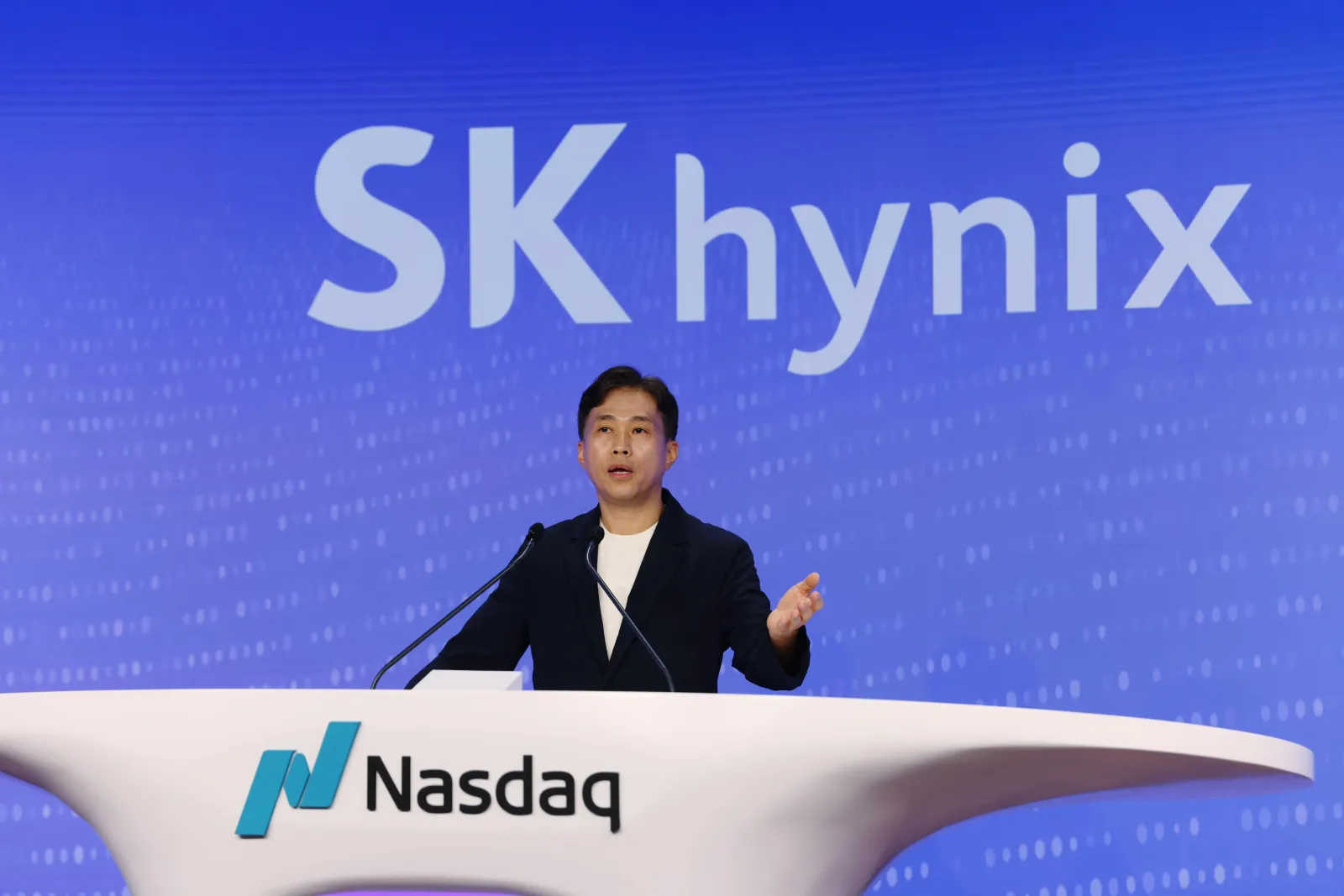
SK Hynix opens at $170, raises $26.5B, and tops foreign IPO records
In Friday's Wall Street debut, SK Hynix turns AI RAM demand into a $26.5B fundraising moment that rewrites comps.

China lands a reusable Long March booster, a first that matches SpaceX and Blue Origin
A barge landing and net-based recovery move China from theory to proof, reshaping the reusability race and satellite ambitions.

AstraZeneca $27B wipeout as Wainua late trial misses cardiovascular target
A failed late-stage heart study triggered a swift market punishment, forcing investors and boards to reset timelines and risk.