

A 250-foot Trump arch bumps Washington’s height limit, and a panel may rewrite “yes”.
The proposed height would break the usual reading of the law, but the panel led by allies is eyeing a different interpretation.
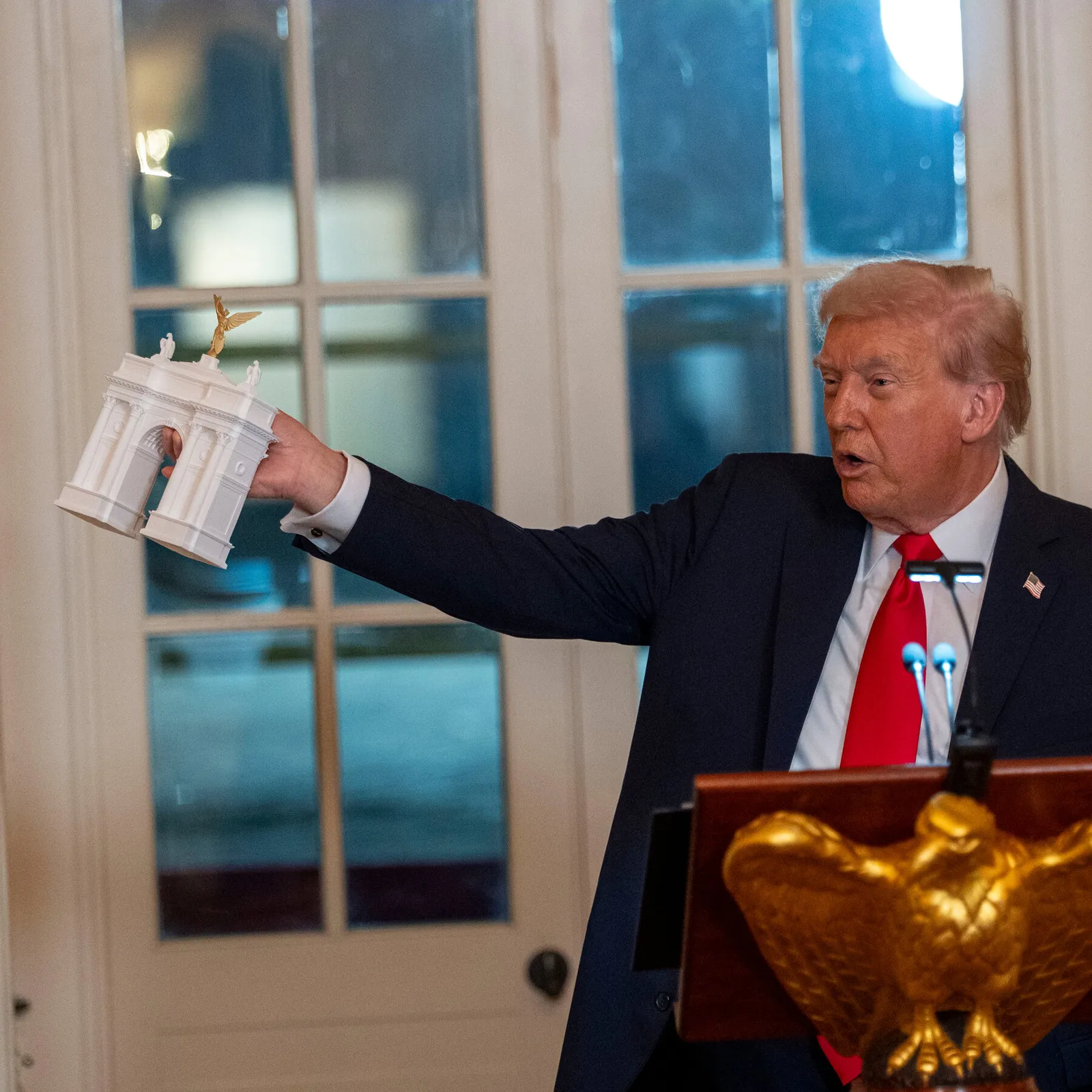
A proposed 250-foot arch would violate the height limit for Washington structures under the traditional reading of the law. A panel now led by the president’s allies is exploring an alternative interpretation that could unlock approval despite the apparent rule conflict.
A proposed 250-foot arch is set to collide with Washington, D.C.’s height limits for structures, at least under the traditional reading of the governing law. The tension is not theoretical, either. The original premise is straightforward: at 250 feet, the project would violate the height limit as it is normally understood.
But here is the part that matters for anyone tracking how major political projects get approved: a panel now led by the president’s allies has “other ideas.” In other words, the legal and procedural path is not just about whether the arch is tall. It is about whether the law will be read the way it usually is, or whether the panel will steer interpretation toward a workable outcome.
To understand why this is such a big deal, it helps to recognize how these height limits function. In Washington, rules about structure size are meant to preserve sightlines, skyline character, and the physical symbolic balance of the city. When a project comes in above a height limit, the default assumption is that the law is a hard constraint, not a suggestion. That is the traditional reading described in the reporting. And when the traditional reading says “no,” the only remaining route is either a change in the rules or a reinterpretation by the body empowered to apply them.
That is where the panel dynamics come in. The New York Times reports that the panel is “now led by the president’s allies,” signaling a political shift in who has influence over how the decision is framed. Panels like this typically hold sway over whether regulators treat ambiguities as barriers or as openings. When the same text can be read multiple ways, the people steering the process can effectively change the outcome without changing a single line of legislation. For executives, boards, and investors, that is a reminder that regulatory approvals are not only about engineering and economics. They are also about interpretive control: who defines what the rules mean in practice.
The stakes extend beyond the arch itself. A high-profile precedent can change how future projects are evaluated. If a tall structure clears a height limit through a “different interpretation,” it signals to developers and political operators that the threshold may be more flexible than it looks on paper. Conversely, if the arch is stopped or interpreted narrowly, it reinforces that the traditional reading is binding and that creative legal arguments will not save oversized plans.
The second-order effect is that this becomes a governance test. Boards and leadership teams evaluating similarly regulated projects often plan for predictable “yes-or-no” pathways, but they may need to plan for interpretive variability. Even without inventing new facts about what the panel will ultimately do, the reporting makes the key point clear: there is enough ambiguity or discretion for the panel to consider a path to “yes” that the traditional reading would block.
There is also a communications and coalition component. When a project runs into a clear rule, the narrative challenge becomes, “Is the law being followed, or is it being bent?” A panel led by the president’s allies implies that the project’s political champions may push harder on the case that the law’s purpose supports approval, even if the literal traditional reading points against it. For decision-makers in adjacent industries, it is a live example of how governments can use process, panels, and interpretation to move quickly or differently than outsiders expect.
So why should peers in the C-suite and boardroom care? Because the arch is a proxy for a broader reality: in political approvals, the decisive variable is often not just the project, but the reading of the rules and the identity of the decision-makers. When the traditional reading says the 250-foot plan violates the height limit, and yet the panel led by the president’s allies is exploring other ideas, executives should treat regulatory outcomes as something shaped by both law and leadership. The strategic takeaway is simple: if you are building or funding anything that touches interpretation-heavy regulation, you cannot only model compliance. You also have to map discretion, governance, and who controls the lens through which “yes” gets defined.
This story's Key Insights and Take-aways are locked.
Create a free account to unlock Executive Actions for one credit.
Register to UnlockAlways free for Executives Club members. Join the Club
More in Politics

Glacial collapse, not rain, killed 180 in Nepal's Himalayan flood
The Himalaya's extreme geography hid the true cause of Nepal's catastrophic flood, a glacial collapse that turned a geological battleground into a mass-casualty zone.

Iran’s Esmail Baghaei says Oman talks start shipping via Hormuz, not US talks yet
Temporary route plans with Oman aim to restart commerce while Tehran says Washington dialogue is not on the table.

Standards watchdog opens probe into Reform UK deputy leader Richard Tice over interests
The parliamentary standards commissioner says it began an investigation on 28 July into a possible undeclared interest.