
A Toronto goldfish keeps beating World Cup prediction chatbots
While chatbots forecast the tournament, an unlikely fish-tank rival is still outperforming them, and it matters more than you think.
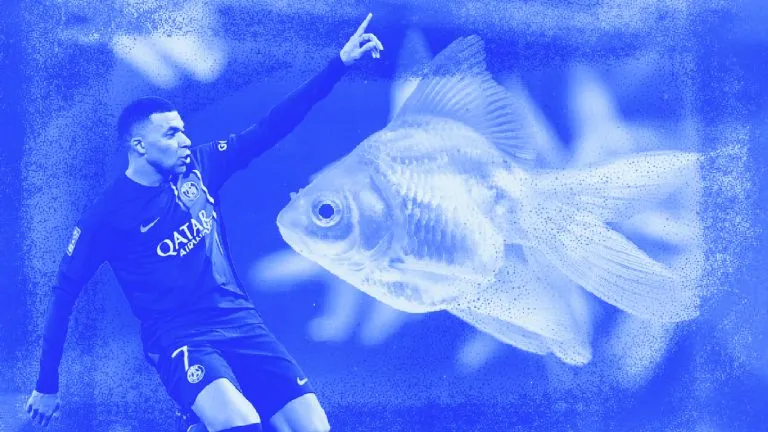
Rest of World reports that as chatbots compete to forecast the World Cup, a Toronto goldfish from a fish tank continues to outperform them. For decision-makers, the real consequence is a warning about over-trusting AI predictions without understanding what they are actually optimizing.
Picture this: a World Cup knockout stage is underway, and the internet is doing what it always does during high drama. It is asking for predictions. Specifically, chatbots are being pitched as tournament crystal balls, generating forecasts like they are destined to become the new betting consultant.
And then, somewhere in Toronto, a goldfish keeps showing up in the results. Not as a metaphor, not as a meme, not as a “wouldn’t it be funny” aside, but as an actual rival continuing to outperform the chatbot forecasts in this contest of prediction accuracy. The hook is the same every time it gets mentioned: AI is competing to forecast the tournament, yet the fish tank keeps beating it.
To understand why this story lands, you need to know what chatbots are doing in these scenarios. They are not acting like a football scout who watches every training session, studies matchups, and tracks injuries minute by minute. They are producing answers using patterns from what they have seen before, and then they generate probabilistic-looking outputs that feel confident because language models are built to sound fluent. In other words, the output can look like expertise even when the underlying process is not the same as tournament-specific forecasting.
Meanwhile, the “goldfish” angle is useful because it reframes what executives and board members should care about. Prediction markets and model benchmarks are only as meaningful as the ground they are measured on. Here, chatbots are being compared directly in a practical prediction contest. The fact that an unlikely baseline from a fish tank can stay ahead in that specific benchmark suggests something uncomfortable: fluency is not the same as forecasting power.
There is also a second-order implication that is easy to miss when a story is framed as cute. When AI systems are evaluated through convenient metrics like “who predicted better,” teams tend to optimize for what is measurable today, not what will hold up tomorrow. In a fast-moving environment like a tournament, small changes in conditions can cause models that are good at sounding right to fall behind. That does not mean the models are “fake.” It means the measurement loop, the incentives, and the data realities matter.
Now zoom out to the broader AI regulatory and governance context. Globally, regulators and policymakers are increasingly focused on transparency, documentation, and risk management for AI systems. The core theme across many regimes is that high-performing performance in one narrow evaluation does not automatically translate to safe or reliable behavior in real-world decisions. In the World Cup forecasting example, you can see the same governance question in miniature: What exactly are you trusting, and under what conditions?
For boards and leadership teams, this kind of benchmark embarrassment has an organizational cost. It forces a shift from “the system can generate an answer” to “the system is accountable for how it performs in our use case.” In practice, that means insisting on clear evaluation protocols, understanding model limitations, and documenting how predictions are produced. It also means being careful about downstream decisions driven by AI outputs. If a chatbot can appear credible while underperforming a simple baseline, the risk is not just being wrong. The risk is being wrong with confidence, which can turn a dashboard into a misleading decision engine.
So why does a Toronto goldfish beat a chatbot matter to executives beyond sports trivia? Because it is a live stress test of a business pattern. Companies and consumers are eager to treat AI predictions as forecasts from an oracle. But real performance is contextual. The World Cup is dynamic, and forecasting is probabilistic, not magical. When the unlikely rival from a fish tank keeps outperforming the chatbot forecasts in this running comparison, it is a reminder that the safest way to use AI is to treat it like a tool that must be validated, not like a voice you automatically follow.
In other words, this is not just a funny story about chatbots and fish tanks. It is a compact lesson in AI oversight: measure the right thing, with the right benchmark, for the right time horizon. For leaders making decisions in areas that affect money, reputation, and risk, the strategic stakes are simple. If your organization is still trusting AI outputs as if they were expertise, the goldfish is handing you a test you may not want to fail.
This story's Key Insights and Take-aways are locked.
Create a free account to unlock Executive Actions for one credit.
Register to UnlockAlways free for Executives Club members. Join the Club
More in Technology

Google quietly links your phone number to every Android account on your SIM
Adding a SIM now ties your phone number to all Google accounts - and future accounts inherit it. Here's the security and privacy stakes.

Hijacker AI 'Skynet mode' runs 100,000 attack steps against exposed models
Symantec caught a criminal AI agent that borrows other models, steals data, and mines crypto; the only relief is no confirmed victims yet.

Nvidia's AI-financier shift faces its first big test as neoclouds stumble
A rout in neocloud stocks is forcing investors to weigh Nvidia's hidden exposure as both supplier and lender to the AI buildout.