

A VC now decides which experimental drugs Montana patients get
Montana's right-to-try law puts a private board run by biotech investor Niklas Anzinger in charge of approving unproven treatments, starting with a hearing-loss sound therapy.

Biotech investor Niklas Anzinger's privately run review board has approved Montana's first experimental treatment under a new right-to-try law he helped draft. The move creates a medical tourism test case that could reshape how unproven therapies reach patients nationwide.
Montana has handed a venture capitalist the keys to its experimental medicine program. Niklas Anzinger, a 37-year-old German biotech investor, created the five-member Montana Experimental Treatment Review Board, the only board so far authorized to approve unproven treatments under the state's new right-to-try law. Last month, the board gave its first green light: a Denver company called Parley Neurotech can now offer a 30-day treatment for hearing loss that combines an off-label antihistamine with a proprietary sound mix played for 60 minutes a day. The treatment has not been cleared by the FDA, and it was not reviewed by the state. Anzinger's private company, owned by his Infinita City Inc., operates the board and charges companies a $12,500 application fee to sell experimental treatments in Montana. Patients cannot actually receive the treatment yet, because Montana has not licensed an experimental treatment center, and two applications for centers are still pending, according to the state health department. But the approval itself marks a milestone in a broader push by libertarian-leaning biotech investors to bypass traditional clinical trials and turn states into medical tourism hubs. Anzinger is a key figure in Próspera, a private city on a Caribbean island off Honduras that has no drug regulator, where anti-aging startups can administer experimental treatments without government oversight. Próspera's investors include Peter Thiel and Marc Andreessen, and it gained attention last year when longevity influencer Bryan Johnson was filmed receiving a $25,000 gene therapy there in the Netflix documentary "Don't Die." Now Anzinger and his allies want to replicate that model in Montana, and they helped draft the state's law to do it. The Alliance for Longevity Initiatives, a Virginia-based biotech industry group, worked with Anzinger on the legislation, according to the alliance and the bill's sponsor, Republican state Senator Kenneth Bogner. Bogner said Anzinger came to Montana and asked what the law needed to look like to bring biotech companies to the state. "Anzinger took action," Bogner said. "He came out to Montana to learn how to make Montana a future home." The senator called the law a test case that he hopes will "spur changes to the U.S. health care system that, in my opinion, isn't sustainable." Montana's law is far broader than the right-to-try measures adopted by more than 40 other states. It allows patients who do not have life-threatening illnesses to access experimental treatments, as long as they give informed consent, have the money to pay, and have a provider's recommendation. Treatments must have passed small Phase 1 clinical trials, which establish that a product probably will not kill patients, not that it works. FDA rules, by contrast, limit experimental treatments to people with serious conditions. Anzinger argues that small biotechs cannot compete in a market dominated by large, expensive clinical trials, and that Montana's system will cut costs and provide a top-tier clinical space for Americans who currently travel abroad for treatments like psychedelics in Mexico, hair replacement in Turkey, and stem cells in Switzerland. "This is really kind of a potential paradigm change in how we do science instead of top down, more bottom up, but still in a controlled way with oversight and everything," he said on a recent podcast. Critics see something closer to gambling. Arthur Caplan, former head of the division of medical ethics at New York University Grossman School of Medicine, called the program a "risky endeavor" that facilitates access to novel experimental interventions for anybody who wants them. "It's like, you want to gamble? OK, go ahead," he said. The Montana law barely passed the state legislature last year amid intense opposition. The bigger question now is whether the Trump administration's FDA will take enforcement action against companies that participate. The biotech industry has reason for hope: Health and Human Services Secretary Robert F. Kennedy Jr. has pledged to increase access to longevity treatments like stem cell therapies, peptides, and chelation, and he has said he traveled to Antigua last year to receive a non-FDA-approved stem cell treatment for a neurological condition. Anzinger's venture fund, Infinita VC, has invested in longevity startups in Próspera, including Minicircle, which sells a gene therapy intended to increase muscle mass, and Unlimited Bio, which is testing a gene therapy for circulation, endurance, and hair growth. He has been promoting Montana inside Próspera, where a co-working space was decked with stickers reading "SB535. Montana's Longevity Law." Parley's CEO, Sam Budoff, said sales through the Montana program would help fund future clinical trials and allow access for patients who would not qualify for those trials. He declined to share the cost of treatment but said it would reflect out-of-pocket prices in the hearing aid market. He said the law struck the "right balance of regulation" and expressed confidence that the Phase 1 requirement and review board structure would keep out bad actors. For executives watching from the sidelines, Montana is now a live experiment in privatized medical oversight, with a VC-run board setting precedent for what counts as acceptable evidence, and the FDA's silence will determine whether other states follow suit.
This story's Key Insights and Take-aways are locked.
Create a free account to unlock Executive Actions for one credit.
Register to UnlockAlways free for Executives Club members. Join the Club
More in Business
Royal Caribbean just spent $3B to own half of Sandals
The cruise giant is buying a 50% stake in the all-inclusive resort chain for $3 billion, a bet that land-based vacations are the next growth engine.

Paramount's Ellison: Merger Clearance Done, WBD Deal by Oct 1
David Ellison says the Paramount-WBD merger has full clearance after settling with state AGs, clearing the path for an October 1 close.
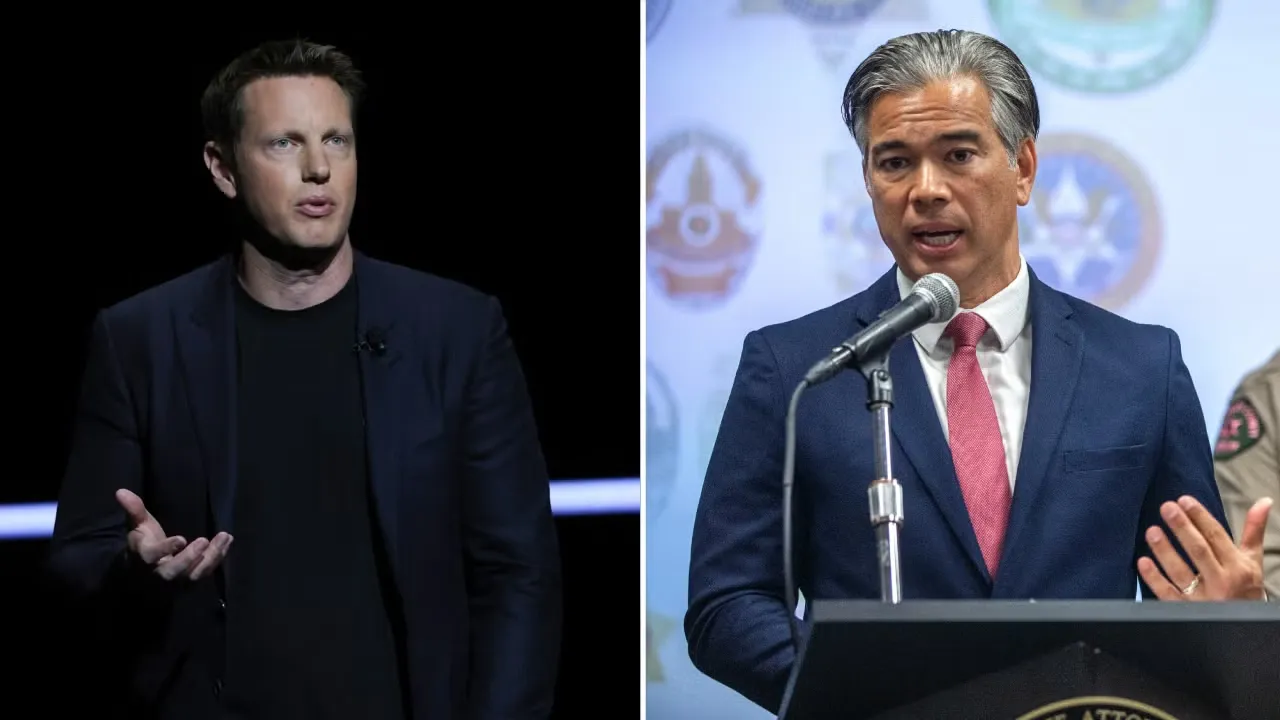
Paramount settles with 12 states, $110B Warner merger clears final hurdle
David Ellison's studio avoids a March trial and a $7M-a-day ticking fee by settling with state AGs over local job losses.