

Abigail Spanberger says Democrats need no single blueprint, just door-to-door coalition math
The Virginia governor’s Paris remarks lay out a pragmatic moderates playbook: trust, coalition building, and everyday problem solving.

Virginia Governor Abigail Spanberger, elected alongside Democratic Socialist NYC mayor Zohran Mamdani last November, explains her pragmatic Democratic Party approach in an interview with François Picard. For decision-makers, her message signals how moderates aim to translate coalition-building and institutional trust into electoral and governance outcomes.
Virginia Governor Abigail Spanberger says there is “no single blueprint for Democratic Party,” and she backs that line with a practical political method: coalition building grounded in institutional trust, plus governance that tackles voters’ everyday concerns. In a wide-ranging interview with François Picard during a stop in Paris, Spanberger positions herself as a rising star among Democratic Party moderates, and she frames electoral success as something earned by showing up, not something inherited from a brand.
That “showing up” part is not vague. Spanberger argues that electoral success begins with engaging directly with people, going door to door and listening to what they prioritize. If you are an executive, investor, or operator watching politics like it is an externality on markets, this matters because it is essentially a repeatable operating model: find the highest-friction customer needs, build coalitions around them, and communicate through institutions people already trust.
Spanberger’s framing also anchors in timing. She was elected the same night last November as Democratic Socialist New York City mayor Zohran Mamdani. Put differently, moderates like Spanberger and more ideologically aggressive progressives like Mamdani surged in the same election cycle, which raises a real question for the broader party apparatus: how does a coalition hold together when its internal “winning theory” differs? Spanberger’s answer, as reflected in the interview, is not to settle ideological scores. Instead, she emphasizes solving voters’ everyday concerns through practical governance rather than ideological confrontation.
That approach is not just campaign tone. It implies how governing coalitions form, and how they survive implementation. Coalition building, in her view, is a deliberate process, and institutional trust is the currency that keeps that process from collapsing into permanent conflict. Translating that into boardroom terms, it is closer to stakeholder management than messaging. You do not win by escalating. You win by aligning enough actors around outcomes, then using the institution itself as the delivery mechanism.
There is also a subtle but important governance contrast embedded in her comments. When she emphasizes coalition building and institutional trust, she is effectively arguing that Democratic politics should behave like an institution, not like a factional battlefield. In markets, institutions are where uncertainty gets converted into rules and predictable behavior. In politics, institutions do the same job for voters: they take abstract promises and turn them into stable expectations, including which processes get followed when interests collide.
For decision-makers, the second-order implication is that “moderate” strategy is not merely about ideology. It is about reducing operational volatility. Door-to-door listening is a feedback loop. Practical governance is the implementation layer. Coalition building is the risk management layer. Institutional trust is the governance framework that keeps the whole system from turning into a constant re-roll of priorities and promises.
If you zoom out, the story is also a reminder that elections are not only about who controls the agenda. They are about which narrative can coordinate action across different constituencies without burning the institution down. Spanberger’s remarks, as reported in the interview, suggest a model where ideological conflict is treated as a distraction from day-to-day delivery. That can influence how party leaders think about platform drafting, committee assignments, and messaging discipline, because every internal conflict costs time, bandwidth, and trust.
And the stakes are immediate for peers in similar roles. Spanberger is essentially laying down the thesis that moderates can achieve electoral success through coalition-building mechanics and governance credibility. If that resonates, it can shape how other Democratic governors and local leaders set their priorities, how they select issues that can unify coalitions, and how they frame their relationships with institutions voters already rely on. In a party as large and internally diverse as the Democrats, the ability to argue convincingly that there is “no single blueprint” while still offering a concrete method is its own kind of power.
This story's Key Insights and Take-aways are locked.
Create a free account to unlock Executive Actions for one credit.
Register to UnlockAlways free for Executives Club members. Join the Club
More in Politics
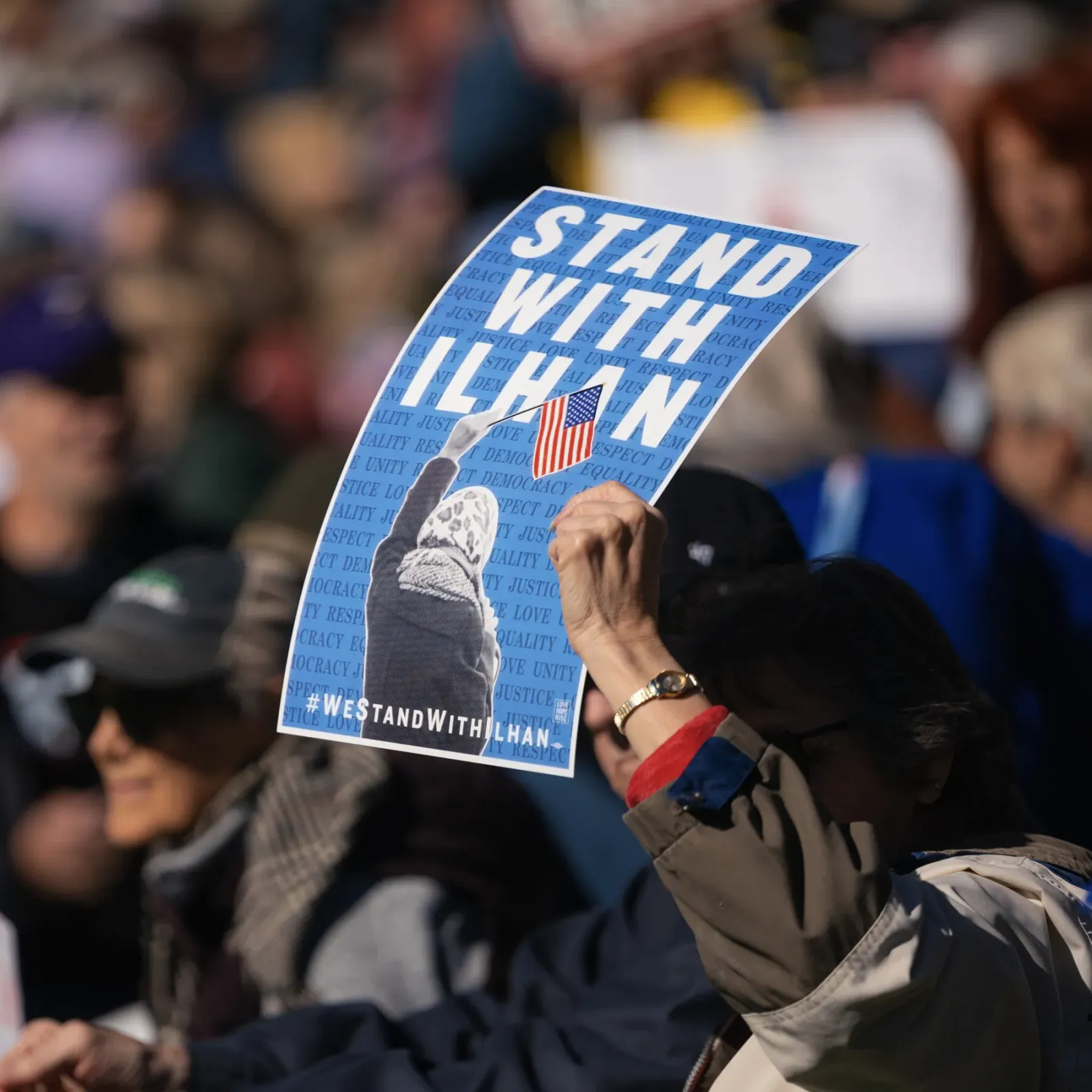
Obama Defends Ilhan Omar After Agents Search Her Home in Trump Inquiry
The former president's intervention raises the stakes in a federal probe into immigration paperwork that has put a prominent progressive lawmaker in the crosshairs.

Blair-era minister: cut welfare to fund youth job support
Alan Milburn's call for welfare cuts to fund employment support opens a Labour fight over benefits and the Neet crisis.

Hot September CPI: energy costs surge, voters feel the squeeze before midterms
The latest inflation print lands as Trump campaigns for GOP control of Congress, putting cost-of-living worries at the center of the midterm fight.