
Accidental find: Oxford pond microbe breaks the genetic code's near-universal rule
A previously unknown protist uses two 'stop' signals to build amino acids, upending a rule biologists thought was nearly universal and reopening questions for synthetic biology.
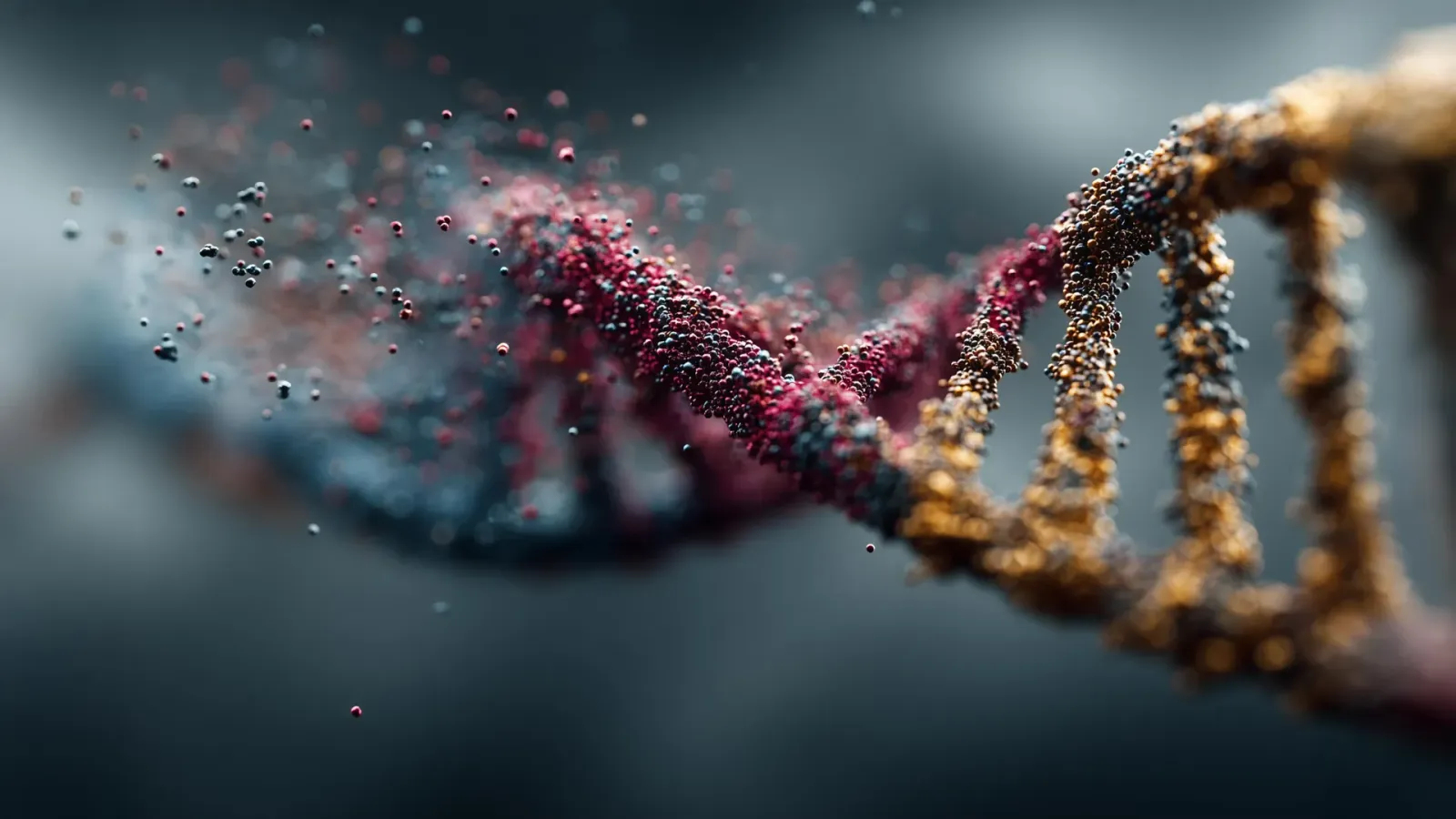
Researchers at Oxford University, testing a new DNA sequencing technique, accidentally discovered a previously unknown protist whose genetic code breaks a near-universal rule of life. The finding challenges core assumptions about how genes are read, with implications for synthetic biology and genetic engineering.
The rule was supposed to be nearly universal: in the genetic code, certain signals always mean 'stop.' But researchers at Oxford University, testing a new DNA sequencing technique, accidentally found a previously unknown protist from a freshwater pond on campus that uses two of those stop signals to encode two entirely different amino acids instead. It is a quiet breach of a rule that underpins how every living thing reads its genome, and it happened in an organism no one was looking for.
The discovery is particularly remarkable because those two signals were previously thought to evolve together. Biologists assumed that if one stop signal changed its meaning, the other would change with it, keeping the code locked in step. This organism decoupled them, which suggests the genetic code can be edited piece by piece rather than only wholesale. For anyone building on biology, from gene-editing startups to drug developers, that is a meaningful crack in a wall thought to be solid, and it raises fresh questions about how far the code can be pushed.
Here is the plain-English version of what happened. DNA is read in three-letter units called codons. Most codons specify amino acids, the building blocks of proteins, while a small set act as stop signals that tell the cell's machinery to end the protein. In nearly all known life, those stop signals are punctuation, not content. This protist treats two of them as content, folding them into proteins as amino acids. That is not a minor tweak; it is a fundamental change in how a genome is translated into a living organism. To be clear, this is not a change in one organism's DNA sequence; it is a change in the meaning of the sequence itself. The same letters that say 'stop' everywhere else say 'build this amino acid' here. That distinction matters because the code is not just a set of instructions; it is an interpretive layer that can itself evolve.
The organism itself is unglamorous: a protist, a microscopic single-celled life form, collected from a freshwater pond at Oxford University. It was not the target of the research. It surfaced while scientists were testing a new DNA sequencing technique, a tool-driven accident rather than a hypothesis-driven hunt. That origin story matters. It is a reminder that the instruments we build to look at the world often show us things we were not expecting, and that the most valuable discoveries can arrive as byproducts.
For the synthetic biology and biotech community, the finding reopens a question many considered settled. Historically, researchers have explored ways to expand the genetic code, including engineering organisms to use non-standard amino acids. The standard assumption has been that the core code is essentially frozen, with stop signals too important to repurpose. This protist shows that nature has already done what engineers hoped to do, at least in part. That does not mean commercial applications are imminent, but it does mean the biological constraints were looser than the consensus believed.
The strategic lesson for executives and investors is broader than biology. Every industry runs on rules that seem universal until someone finds the exception. This one came from an ordinary pond, not a high-stakes lab program, and it arrived because someone was testing a tool rather than chasing a breakthrough. The organizations that keep funding the tools, and stay curious about the exceptions, tend to be the ones that see the next rule break first. For boards and CEOs, the takeaway is to protect the unglamorous research budgets and the exploratory projects that do not have an obvious near-term payoff.
None of this changes the code of conduct for a public company or the math on a term sheet today. But it is a useful calibration for anyone making long bets on biology. The genetic code is the operating system of every living thing, and this discovery shows that operating system has more flexibility than the manuals say. The next organism that breaks a rule could be sitting in a pond, a soil sample, or a patient's microbiome, waiting for the right tool to look at it. The companies that build those tools, or fund the people who use them, are positioning themselves at the edge of the next surprise.
This story's Key Insights and Take-aways are locked.
Create a free account to unlock Executive Actions for one credit.
Register to UnlockAlways free for Executives Club members. Join the Club
More in Science
France euthanized Félicette, the first cat in space, two months after her flight
Félicette's 1963 flight made France a space-race player, but her euthanasia and a crowdfunded statue reveal how high-risk programs are remembered.
Ultracold atoms just created a 'fractional Fermi sea' that breaks quantum rules
A new quantum state challenges decades of theory and hints at 'super-Fermions,' with real stakes for quantum computing and materials science.

Bangladesh's 202,000 measles cases are a 'real warning' to other nations
The world's worst measles outbreak is spreading as routine vaccination falters. Here is why every country's immunization program should pay attention.