
AI and chip tenants are the only ones lifting Zhongguancun office rents this year
Knight Frank says Beijing’s grade-A office market is uneven, but Zhongguancun stands out as the lone bright spot.

Artificial intelligence and semiconductor companies are driving demand for grade-A office space in Beijing’s Zhongguancun, according to Knight Frank. The result: Zhongguancun was the only Beijing submarket to post rent growth in the first half of the year, even as office markets nationwide still struggle.
Beijing’s office market is having a mixed year, and the surprise is not who is struggling. It is who is winning. In the first half of the year, demand for Beijing’s grade-A office buildings rose, and artificial intelligence and semiconductor companies made Zhongguancun the hottest pocket of space in the capital, even while many office markets across China were still struggling.
That matters because Zhongguancun was not just “doing better.” According to a report from property consultancy Knight Frank, it was the only submarket in Beijing to post rent growth. Beijing is China’s second-largest office market after Shanghai, so when one submarket bucks the trend, it sends a strong signal about where corporate capital is choosing to cluster right now.
To understand why this is such a live wire for executives, zoom out to how office demand typically works in a commercial real estate cycle. When broader demand softens, landlords usually have to offer concessions, buyers and tenants renegotiate terms, and new leases slow down. That is the backdrop in the source: office markets nationwide are still struggling. Against that pressure, it is notable that Zhongguancun behaves differently. The submarket is home to the capital’s densest cluster of hi-tech firms, meaning the tenant base is concentrated, specialized, and tied to fast-moving sectors.
Artificial intelligence and semiconductor companies bring a different kind of office pull than the “generic” tenant. Even if overall economic momentum slows, these companies often need space for engineering, product, testing, and talent-heavy teams. In a place where many peers already sit, new hires and expanding teams can find ecosystems, service providers, and competitors all within commuting distance. That is exactly the type of advantage a hi-tech district turns into rent durability. The source frames this as Zhongguancun being made “a hot property,” and the rent growth result from Knight Frank is the measurable consequence.
There is also a governance and planning angle that executives tend to care about, even if the source is focused on market data. Beijing’s most valuable corporate districts usually sit inside broader urban development strategies, where zoning, infrastructure access, and government-adjacent priorities shape which business clusters grow. When a specific district produces rent growth while the rest of the office market does not, it suggests that demand is not simply random. It is aligning with a sectoral playbook: where companies see long-term capability building, they are more willing to commit to office space.
For boards and CFOs, this kind of divergence is not just a real estate story. It is a risk signal and an opportunity map. If Zhongguancun is the only Beijing submarket with rent growth in the first half of the year, then the distribution of future leasing risk is skewing. Buildings that rely on broad-based demand may face more downside if nationwide softness persists. Buildings tied to specialized tech ecosystems may keep better occupancy momentum, because their demand drivers are less interchangeable.
Second-order, it changes how corporate leaders think about relocation and expansion timing. When a tenant cluster thickens in one district, it can create a competitive lock-in: candidates apply where the jobs are; suppliers follow where the clients concentrate; and expansion plans can become “stickier” due to network effects. Over time, even firms that are not strictly AI or semiconductors may feel pressure to be nearby, because partnerships, talent mobility, and buyer access are concentrated in the same geography.
Finally, the market takeaway is bigger than Beijing. If the source describes office markets nationwide still struggling, but Beijing has a single submarket with rent growth tied directly to AI and semiconductor tenants, it implies a broader pattern: sector-driven demand may outperform cycle-driven demand. For executives in real estate, investment, and corporate operations, that is a prompt to look past headline “market health” and interrogate who is actually signing leases, where they are signing them, and what industry logic is doing the heavy lifting.
In short: Zhongguancun is not thriving because the office market suddenly got easy. It is thriving because AI and semiconductor companies are clustering in Beijing’s hi-tech core, and Knight Frank’s first-half data says that translated into the only rent growth in the city’s submarkets. If you are making capital allocation decisions, that is the kind of divergence you want to understand early, not late.
This story's Key Insights and Take-aways are locked.
Create a free account to unlock Executive Actions for one credit.
Register to UnlockAlways free for Executives Club members. Join the Club
More in Business
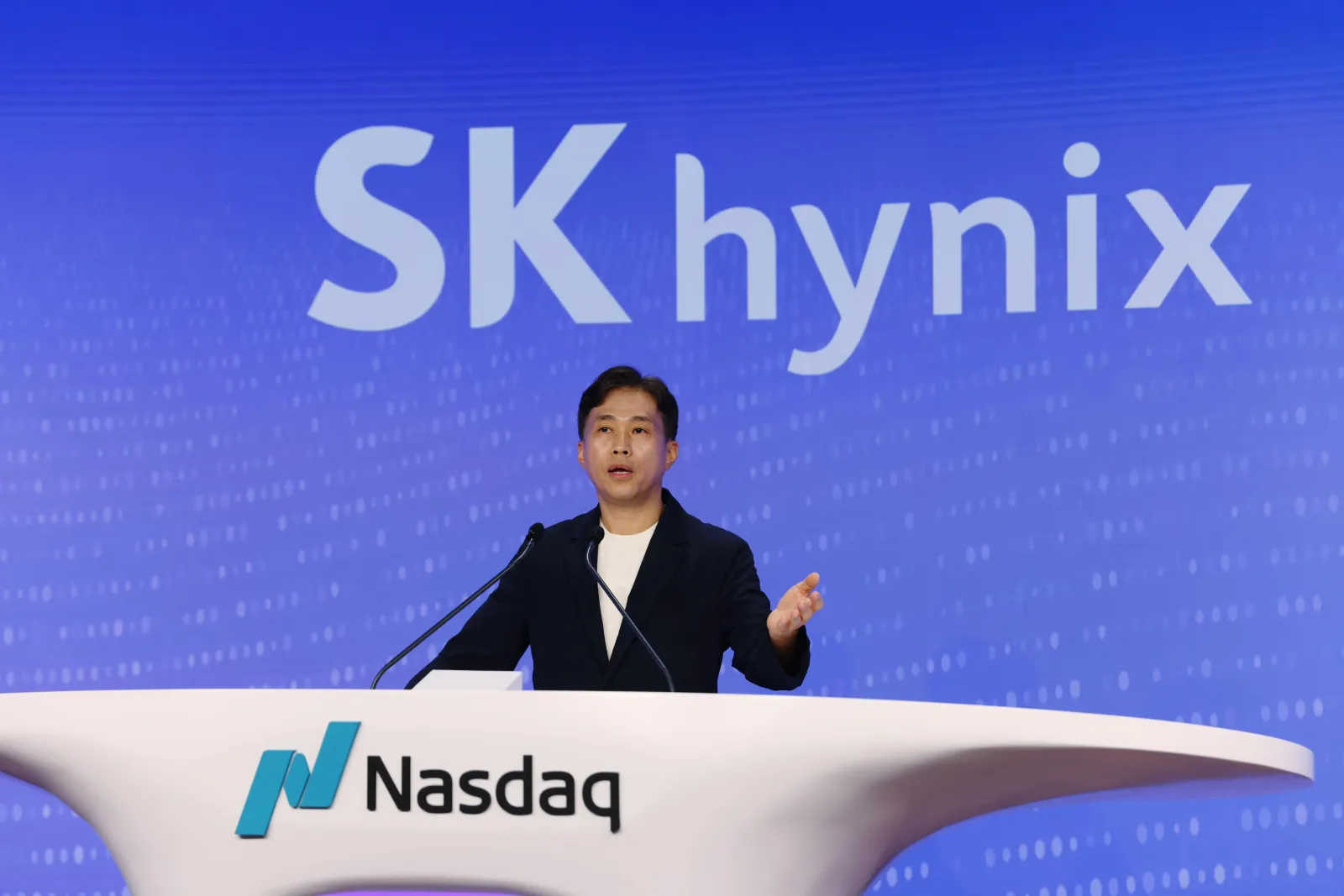
SK Hynix opens at $170, raises $26.5B, and tops foreign IPO records
In Friday's Wall Street debut, SK Hynix turns AI RAM demand into a $26.5B fundraising moment that rewrites comps.

China lands a reusable Long March booster, a first that matches SpaceX and Blue Origin
A barge landing and net-based recovery move China from theory to proof, reshaping the reusability race and satellite ambitions.

AstraZeneca $27B wipeout as Wainua late trial misses cardiovascular target
A failed late-stage heart study triggered a swift market punishment, forcing investors and boards to reset timelines and risk.