
AI data center spending just overtook housing investment in the U.S.
A $752 billion quarterly milestone shows the AI build-out is now reshaping the U.S. economy faster than the housing market can recover.
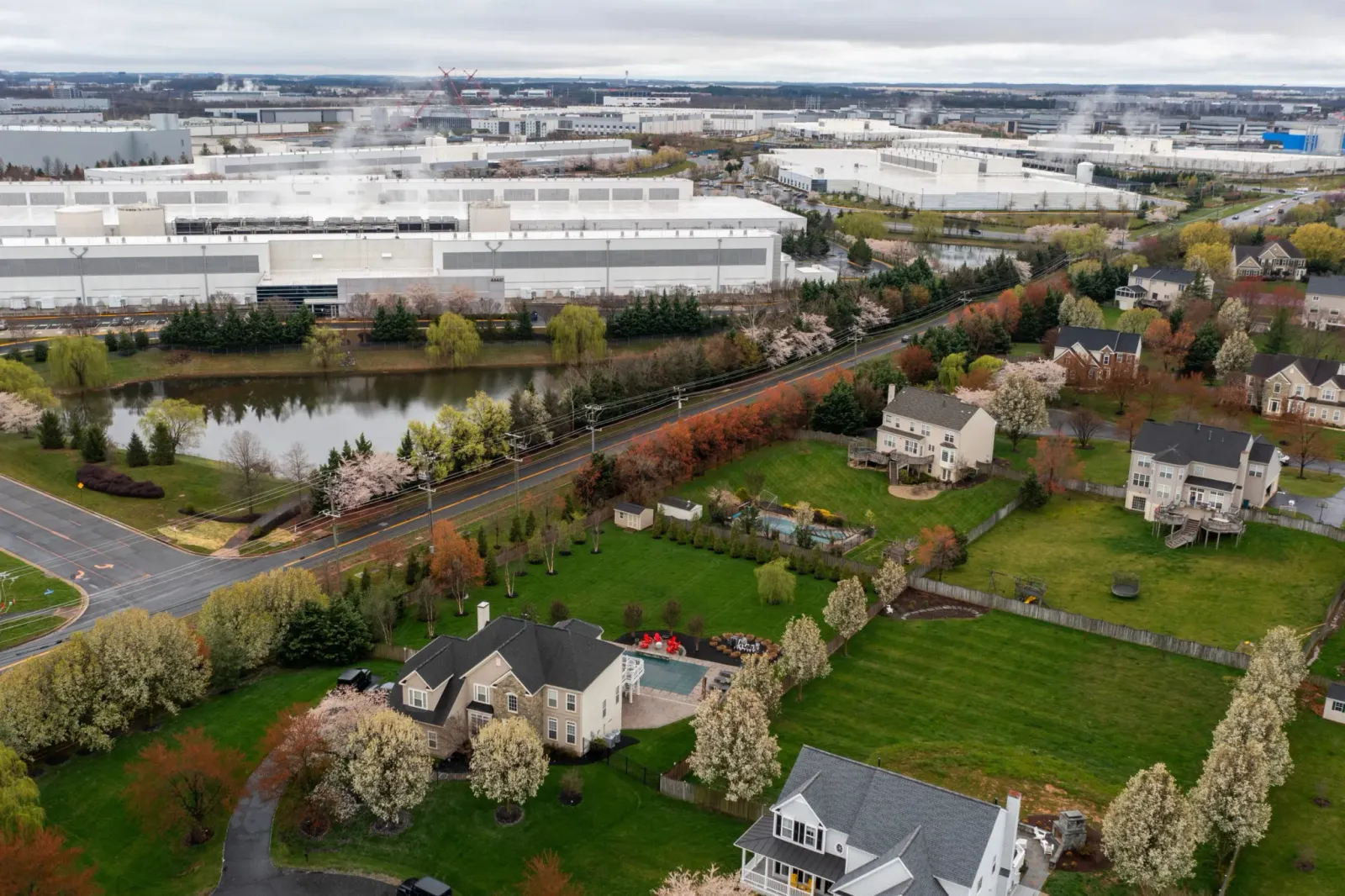
San Francisco Fed Vice President Adam Shapiro flagged a pivotal shift: inflation-adjusted spending on information processing equipment hit $752 billion in Q2, topping residential investment at $748 billion. For executives, the milestone signals AI capex is now a macro force that can outrun housing, with implications for rates, overcapacity, and political backlash.
The U.S. economy just crossed a milestone that would have been unthinkable a decade ago: inflation-adjusted spending on information processing equipment, including data centers and computer hardware, reached $752 billion in the second quarter, edging past real private residential fixed investment at $748 billion. That is the first time in the modern data series that AI infrastructure spending has overtaken housing investment, according to Bureau of Economic Analysis data cited by San Francisco Fed Vice President Adam Shapiro.
Shapiro, who posted the comparison on LinkedIn, called it 'a pivotal shift in the US economy: investment is shifting away from residential investment and towards computers.' The gap is not a fluke. Residential investment has fallen 18% from its early 2021 peak, while information processing equipment spending has soared 51% over the same span. The crossover is the clearest sign yet that the AI build-out is not just a tech-sector story but a macro force reshaping the composition of U.S. growth.
The milestone is the product of two diverging forces. On one side, hyperscalers have poured money into AI infrastructure as fast as possible. On the other, the housing market has been largely frozen since the COVID-era boom ended in 2022, when the Federal Reserve began an aggressive rate-hiking campaign to rein in inflation. Shapiro noted that residential investment is more sensitive to borrowing costs, which have climbed alongside Treasury yields. The benchmark 30-year mortgage rate is now nearly 7%, with the 10-year Treasury yield at its highest level since 2007.
AI investment, by contrast, has been less sensitive to interest rates, even as hyperscalers have started issuing more debt to supplement drawdowns of their cash piles. Alphabet, for example, reported negative cash flow earlier this year. Treasury Secretary Scott Bessent has highlighted the eagerness with which AI companies are offering debt, no matter the cost. 'We are also seeing big corporate issuance. And a lot of that corporate issuance, I would say, is almost yield-agnostic, because the build-out for AI, the returns on that, the companies believe they're going to be so high. They don't really care what they're paying,' he said recently.
The onslaught of AI spending is expected to keep ramping up. S&P Global estimated last month that capital expenditures from Alphabet, Amazon, Microsoft, Meta, Oracle, and SpaceX will exceed $1.3 trillion in 2027, up from a projected $870 billion in 2026 and $470 billion in 2025. The ratings firm added that the industry's capex is growing faster than revenue, warning that the aggressive build-out could lead to overcapacity if future demand doesn't pan out as expected. S&P sees 2028 as an inflection point, with revenue accelerating and capex flattening. Until then, however, operating cash flow from the six hyperscalers will collectively be negative in 2026 and 2027.
The breakneck speed of AI development has also generated immense political backlash that's rippling through the midterm election season. A new NBC News poll found that 64% of registered voters said they'd be less likely to support a candidate who's in favor of building a data center in their community. AI has also fed into the cost-of-living crisis as consumers grapple with higher electricity bills and prices for new smartphones and PCs. That's added to angst with home prices remaining out of reach for many Americans.
While increased housing supply would ease pressure on prices, availability has been limited. The supply of existing homes has been constrained by the 'lock-in' effect of homeowners with low mortgage rates reluctant to give them up amid today's high rates. New construction has been weak as high rates weigh on demand while building costs grow. Housing starts fell 2.6% in August to an annualized pace of 1.275 million, led by a drop in multifamily projects. While single-family homes rose, permits fell, signaling muted activity in the future. Meanwhile, the National Association of Home Builders reported builder sentiment fell to its lowest level in a year.
The divergence has a clear strategic takeaway for executives. 'The big picture remains that elevated and rising borrowing costs are holding developers back, supporting our view that the downward trend in housing starts has further to run,' Capital Economics said in a recent note. For leaders in tech, real estate, and finance, the crossover means AI capex is now a dominant force in the economy, but one that carries its own risks: overcapacity, negative cash flow, and a political climate increasingly hostile to data center construction. The next few years will test whether the AI build-out can deliver the returns that justify its yield-agnostic borrowing, or whether the housing market's pain becomes a template for the AI boom's own reckoning.
This story's Key Insights and Take-aways are locked.
Create a free account to unlock Executive Actions for one credit.
Register to UnlockAlways free for Executives Club members. Join the Club
More in Business

Royal Caribbean just spent $3B to own half of Sandals
The cruise giant is buying a 50% stake in the all-inclusive resort chain for $3 billion, a bet that land-based vacations are the next growth engine.

Paramount's Ellison: Merger Clearance Done, WBD Deal by Oct 1
David Ellison says the Paramount-WBD merger has full clearance after settling with state AGs, clearing the path for an October 1 close.
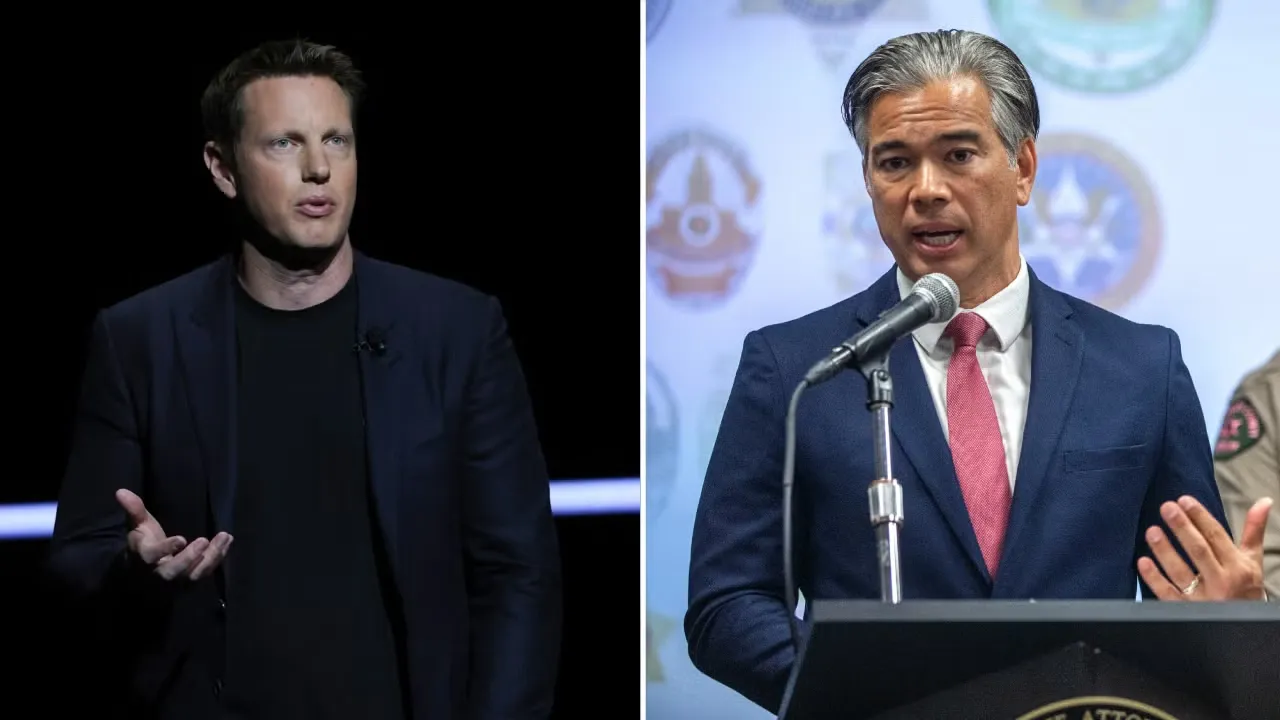
Paramount settles with 12 states, $110B Warner merger clears final hurdle
David Ellison's studio avoids a March trial and a $7M-a-day ticking fee by settling with state AGs over local job losses.