

AI exposure now swallows corporate credit and venture capital, not just stocks
Investors are boxed in as the AI theme spreads across markets, changing risk, pricing, and capital allocation.

AI exposure has become virtually impossible for investors to avoid, and the theme has expanded beyond the stock market. It has systematically swallowed up corporate credit and venture capital as well.
Exposure to the artificial-intelligence boom has become virtually impossible for investors to avoid. The AI theme has stopped behaving like a sector trade and started behaving like a gravity field. It has cornered the stock market. And, critically for anyone who thinks “stocks only” when they think about AI, it has also systematically swallowed up corporate credit and venture capital.
For decision-makers, the immediate consequence is simple: you cannot underwrite your way out of AI exposure just by owning the “right” assets. If your portfolio includes credit funds, private credit, or any venture-style allocations, AI is likely embedded there too. The theme has moved from being an investor preference to being a capital destination, pulling funding, risk appetite, and deal terms across multiple parts of the financial system.
This matters because investors do not just buy companies. They buy structures: bonds with covenants, loans with maturity profiles, venture instruments with liquidation preferences, and portfolio mandates with hidden concentration limits. When AI spreads across these structures, the same underlying bet can quietly show up in places you did not intentionally target. That is the crux of why “AI is so big” becomes more than a headline. It becomes a portfolio construction problem.
In markets, themes tend to follow liquidity. Stocks are where the story starts, where information moves fastest, and where sentiment aggregates. But once the narrative is established, capital starts searching for yield and for control of downside risk. Corporate credit is where that search often lands, because many investors chase returns beyond public equities without giving up the relative comfort of structured income. When that happens to AI specifically, the credit market becomes another channel for the same exposure. The result is a cross-asset embedding of the AI bet.
Venture capital is a different animal, but it is not immune. Venture is driven by early-stage risk-taking and by long-duration optionality. When an AI boom captures attention, funding patterns adjust. Companies that touch AI or its infrastructure can start to look like the default category for new capital. That does not mean every venture fund has a single AI mandate. It means the theme can become a common denominator across “generalist” venture portfolios, accelerator activity, and later-stage rounds where valuations and strategic narratives matter as much as product.
Regulatory framing is the background noise that makes this harder to manage. Even when regulators are not directly targeting AI as a single asset class, they influence how investors think about tech infrastructure, data handling, market power, and competition. Those considerations can affect corporate governance expectations, risk assessments, and disclosure habits across the companies that end up in public credit and venture deals. So while the source you provided highlights how broadly AI exposure has spread, the broader implication is that compliance, scrutiny, and oversight may also propagate through the same channels.
Second-order implications are where boards and executive teams get surprised. If AI exposure is pervasive, risk is more correlated than it looks. Corporate credit performance and venture outcomes can begin to move in tandem with equity sentiment, even if no one is explicitly “making a bet” on stocks. Correlation can rise quietly, then show up as drawdowns that do not behave like a diversified portfolio. That is the trap: diversification by asset type does not guarantee diversification by theme.
There is also an operational angle for executives: capital allocation decisions become harder to isolate. If your company is raising money, issuing debt, or refinancing, the broader market appetite for AI-linked risk can affect terms, timing, and leverage norms. If your investors are saturated with the theme, they may be more willing to fund AI initiatives. They may also be more sensitive to valuation narratives, liquidity windows, and regulatory headlines that change perceived downside.
For peers in similar roles, the strategic stake is that AI exposure is no longer a niche portfolio tilt. It has moved into the core pipes of institutional capital. That means governance and risk teams need to treat AI as a cross-asset exposure variable, not a single line item. And it means finance leaders should be able to answer a blunt question quickly: where, exactly, is the AI bet showing up in our current holdings, and how is it affecting risk, liquidity, and expected returns across the book?
This story's Key Insights and Take-aways are locked.
Create a free account to unlock Executive Actions for one credit.
Register to UnlockAlways free for Executives Club members. Join the Club
More in Business

Epic and Google drop settlement bid, forcing rival Android app stores by July 22
Google told the court it is ready to carry third-party app stores starting Wednesday, July 22.
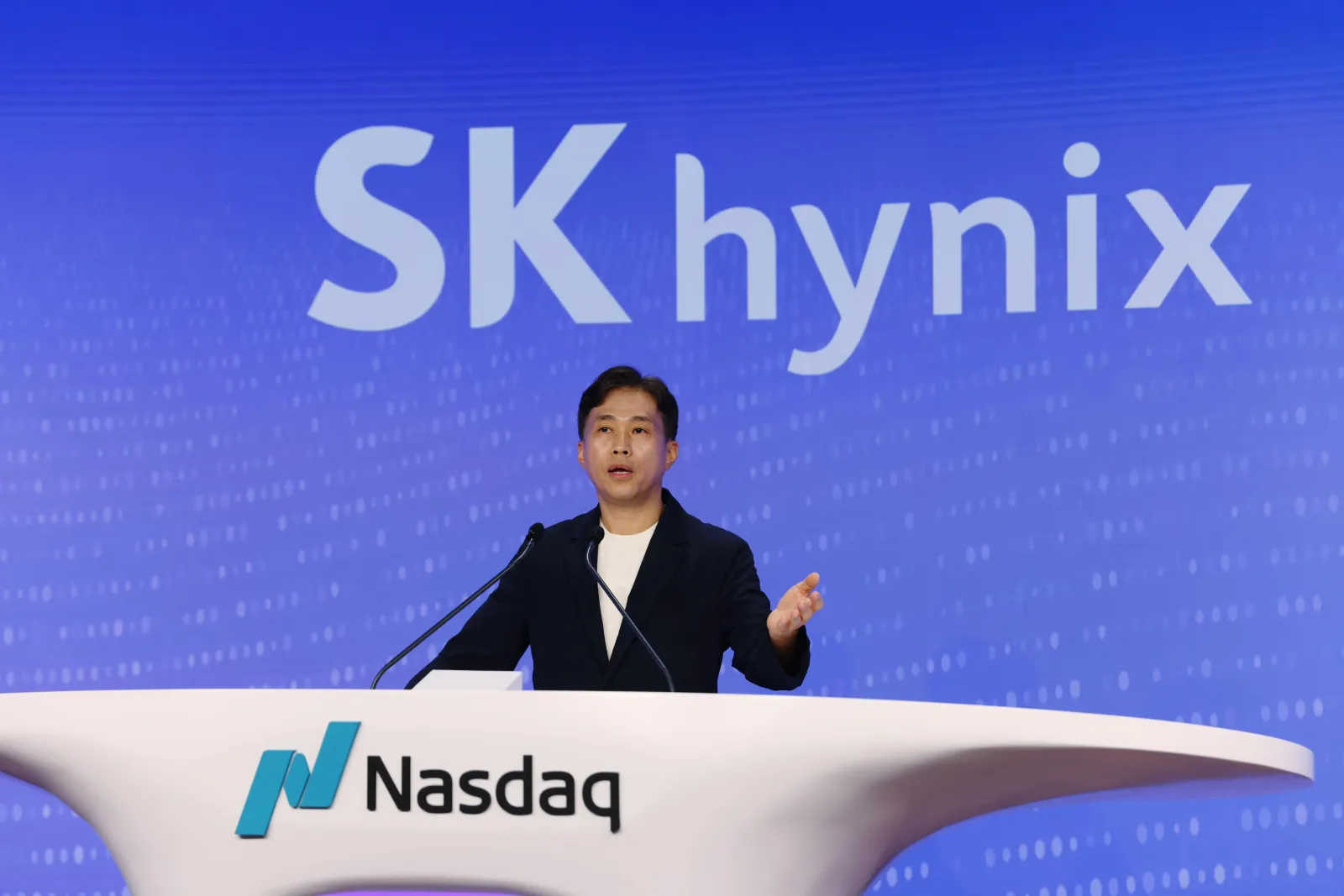
SK Hynix opens at $170, raises $26.5B, and tops foreign IPO records
In Friday's Wall Street debut, SK Hynix turns AI RAM demand into a $26.5B fundraising moment that rewrites comps.

China lands a reusable Long March booster, a first that matches SpaceX and Blue Origin
A barge landing and net-based recovery move China from theory to proof, reshaping the reusability race and satellite ambitions.