

AI nudes hit 1 in 6 female MEPs. One just spoke out
Austrian MEP Lena Schilling found deepfaked nudes of herself online and is demanding EU action as a new report quantifies the scale.
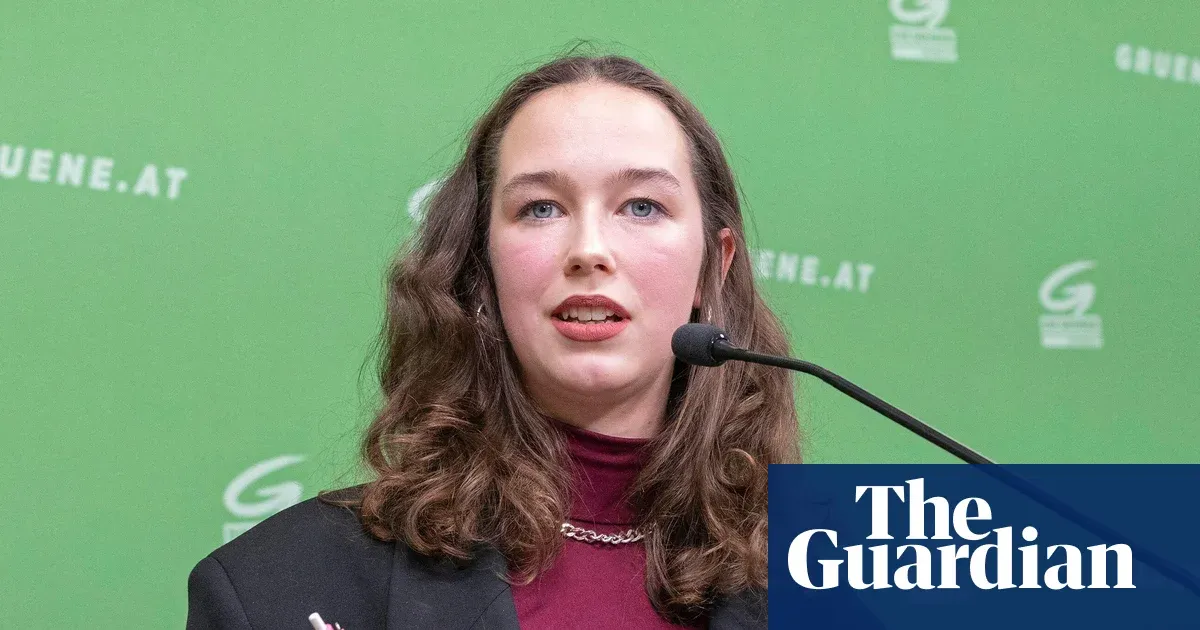
Austrian MEP Lena Schilling (Green party) revealed that nude deepfakes of her were circulating online, and she is urging EU action. A report found one in six female MEPs have been targeted by sexualised AI-generated content, making this a systemic threat to democratic participation.
One in six female members of the European Parliament has been targeted by sexualised AI-generated content, according to a new report. That means roughly 17% of women serving as MEPs have had deepfake nudes or similar material created without their consent, a figure that has prompted calls for urgent EU action.
One of those women is Lena Schilling, an Austrian MEP from the Green party, who has now gone public. Schilling said she learned last month that nude deepfakes of her were circulating online. When she opened the links, she found images from one of her first ever press conferences, digitally altered to remove her clothing. She described the experience as "digital violence against women" and called it "a threat to democracy."
The report lands as the EU is already wrestling with how to police AI-generated content. For context, the bloc's AI Act includes transparency obligations for deepfakes, but enforcement is still taking shape. Schilling's case exposes a gap: the technology to create these images is cheap and accessible, while legal remedies for victims are slow and uneven across member states. Deepfake creation tools have become widely available in recent years, with "nudify" apps and websites offering to strip clothing from photos in seconds. Researchers have documented a sharp rise in non-consensual intimate images, and women in public life are the primary targets. The report, which surveyed female MEPs, highlights a problem that is often hidden, as victims may fear retaliation or further humiliation.
The personal toll is severe. Schilling described the images as a violation that strips women of their dignity and their safety in public life. The report's findings indicate that this is not a fringe problem but a systemic one, affecting a significant share of women in elected office. For Schilling, the experience was not just humiliating; it was a calculated attempt to undermine her credibility and silence her voice. She is one of the few to speak openly, but the report suggests many others have suffered in silence. For context, once such images are online, they can be nearly impossible to fully remove, compounding the harm and extending the trauma.
Schilling called the images "a threat to democracy" because they are designed to drive women out of public life. When women are afraid to speak, hold office, or run for election, the quality of democratic representation suffers. This is not just a personal violation; it is a structural attack on political participation. The EU, which has positioned itself as a global leader in AI regulation, now faces a test of whether its rules can protect the people they are meant to serve.
The implications extend beyond Brussels. Women in politics, journalism, and business are increasingly targets of sexualised deepfakes, which are used to silence, humiliate, or discredit them. For executives and boards, this is a governance issue: companies that build or deploy AI tools must consider how their products can be weaponised, and what safeguards they have in place. The same technology that powers productivity gains can be turned against individuals, and the damage is often irreversible.
Schilling is urging the EU to act. What that action should look like is still undefined, but the report's numbers give lawmakers a clear mandate. Options could include stricter platform liability, faster takedown procedures, and criminal penalties for creators of non-consensual intimate images. For context, the EU's Digital Services Act already requires platforms to remove illegal content, but deepfakes often fall into a grey zone. Some member states have introduced specific laws against deepfake pornography, but the patchwork approach leaves many victims without adequate protection. A coordinated EU-wide response would not only protect victims but also deter potential perpetrators, sending a clear signal that this abuse is unacceptable.
For decision-makers, the lesson is that AI's risks are not hypothetical. Schilling's decision to speak out is a reminder that the human cost is real, and that regulatory pressure will only intensify as more victims come forward. The strategic stakes are clear: any organisation that ignores the deepfake problem does so at its own peril. Whether it is a company's own employees being targeted, or its platforms being used to spread such content, the reputational and legal risks are mounting. The question is not whether this issue will reach your boardroom, but when. Boards should treat deepfake risk as part of their broader AI governance framework, alongside issues like bias, privacy, and misinformation.
This story's Key Insights and Take-aways are locked.
Create a free account to unlock Executive Actions for one credit.
Register to UnlockAlways free for Executives Club members. Join the Club
More in Technology

AI weed tech could cut herbicides, but the costs are steep
A new University of Mississippi and Cornell review finds precision weed tools can replace chemicals and labor, yet adoption comes with serious financial and operational hurdles.

SpaceX and Tesla form merger committees, Musk steps aside
Independent director panels will explore a deal between the two companies, with the CEO recused from both.
AlphaGo builder's new London lab bets LLMs can't be trusted to reason
Thore Graepel, who helped build DeepMind's AlphaGo, is applying game-winning search techniques to general reasoning. His warning: LLMs can't be trusted to reason.