
Albania’s Flamingo Revolution hits 54 days as Rama approves Trump-family resort
A luxury island plan backed in 2024 becomes a referendum on secrecy, oligarchs, and who gets to profit.

Ivanka Trump and Jared Kushner’s Sazan development in Albania, preliminarily approved by an investment committee led by Prime Minister Edi Rama in 2024, has sparked mass anti-corruption protests. The uprising, called the Flamingo Revolution, keeps piling pressure on Rama and turns Albania’s development model into a political flashpoint for investors.
Ivanka Trump and Jared Kushner’s planned luxury resort on Sazan is now trapped in the real-world kind of politics money can’t buy: Albania’s “Flamingo Revolution” has reached 54 consecutive days of protests, and today is being marked as day 54.
The trigger is specific. Three years after Ivanka and Jared were on the Mediterranean yacht that led them to discover the island, an investment committee led by Albanian Prime Minister Edi Rama gave preliminary approval to the couple’s plans about two months after Donald Trump’s reelection in 2024. The project is not just about a pristine island. It also reaches nearby land next to a coastal lagoon that serves as “a crucial habitat for flamingos, sea turtles, and other species,” which is exactly why protesters have turned the whole fight into a visible wetlands battle. They carry inflatable flamingos and placards with drawings, and the name of the uprising comes from the birds that breed in the wetland habitat.
To executives and board members, what matters is the mismatch between how development proposals are usually sold and how they are now being received. Ultra-luxury projects typically rely on a tidy narrative: attract investment, upgrade infrastructure, create jobs, and let the market do its work. This one, however, is being processed through Albania’s political memory. The article traces why that sensitivity is high. Albania was ruled by the Communist dictator Enver Hoxha from the end of World War II until 1985, a period that produced paranoia about foreign invasion and an estimated 173,000 bunkers. After Communism was abolished in 1991, the transition to a market economy was brutal: “shock therapy” and breakneck privatization drove mass unemployment, and in 1997 pyramid schemes collapsed and wiped out the life savings of about two-thirds of Albanians. When a small cadre of politicians competes for control, people become attuned to the signs of autocracy.
Now the protests are aimed at Rama, even though the Trump-family development sparked the uprising. That is the part that should make every governance person sit up. The protesters are not only saying “we dislike the branding of this resort.” They are attaching the project to a broader accusation: decisions made “in secret, for the benefit of the few, motivated by money linked to oligarchs.” The article puts a face on that critique through Fatos Lubonja, a writer and dissident who was imprisoned during Albania’s Communist dictatorship. He argues the landscape “belongs to all Albanians.” In other words, this is a legitimacy crisis, not a zoning dispute.
The development economics themselves add fuel. The couple’s partners include a pair of Qatari brothers who have financed ultra-luxury developments across the Middle East and South Asia, plus an Albanian conglomerate with holdings in energy, construction, infrastructure, insurance, and tourism. That kind of vertically and geographically broad network can accelerate deals, but it can also look like the opposite of transparency to a public already primed to suspect oligarch capture. In the article’s telling, the unrest has “it all,” including accusations of organized crime and drug trafficking, competing claims of foreign influence, and even a cameo by Kanye West. You can ignore the celebrity noise, but you cannot ignore what it signals: the story has escaped the boardroom.
Rama’s own framing suggests why he is not backing down with the usual persuasion strategy. The piece notes that in response to the idea that he might be lectured about policy details, he said “there is one thing that nobody can lecture me, which is beauty.” Rama is also portrayed as increasingly aligned with the Trump era, despite past skepticism. He was once a “vehement Trump critic,” greeting the prospect of Trump’s 2016 nomination with “God forbid!” and warning about harm to the “democratic world.” By 2024 he hailed Trump’s “remarkable victory,” and a year later he echoed claims about divine providence, adding that Trump was “saved Trump also to make Europe wake up and get its act together.” For context, he is also said to be one of the only European leaders to accept an invitation to the Trump-chaired Board of Peace.
That pivot helps explain why Albania’s debate is not simply local. The article spends time on a broader puzzle: why anti-Trump Europeans and Americans are not mounting more sustained demonstrations. It contrasts massive American mobilization, including “No Kings” protests, with the question of why the U.S. opposition is not always louder abroad. Then it pulls the reader back to the immediate ground truth: in Albania, they are. The Flamingo Revolution is positioned as one of the biggest social mobilizations since the end of Communist rule 35 years ago.
For executives and investors watching from similar jurisdictions, the second-order lesson is blunt. A project can be well-capitalized and still politically uninvestable if the community thinks the approval process is rigged and the benefits are being quietly pre-negotiated with insiders. Rama’s preliminary approval by an investment committee led by him, the multinational partner structure, and the environmental setting next to a coastal lagoon all create multiple angles for conflict: governance, foreign influence, and habitat protection. If you are on a board approving big development, this is the scenario you should stress-test: the day after the committee thumbs-up, can your stakeholders accept the process as legitimate, or will they treat it as another episode in a long story of secrecy and oligarch-linked money?
In Albania, the protest clock is already running at 54 consecutive days. That is the real metric executives should track, because it is how legitimacy becomes a financial variable.
This story's Key Insights and Take-aways are locked.
Create a free account to unlock Executive Actions for one credit.
Register to UnlockAlways free for Executives Club members. Join the Club
More in Politics
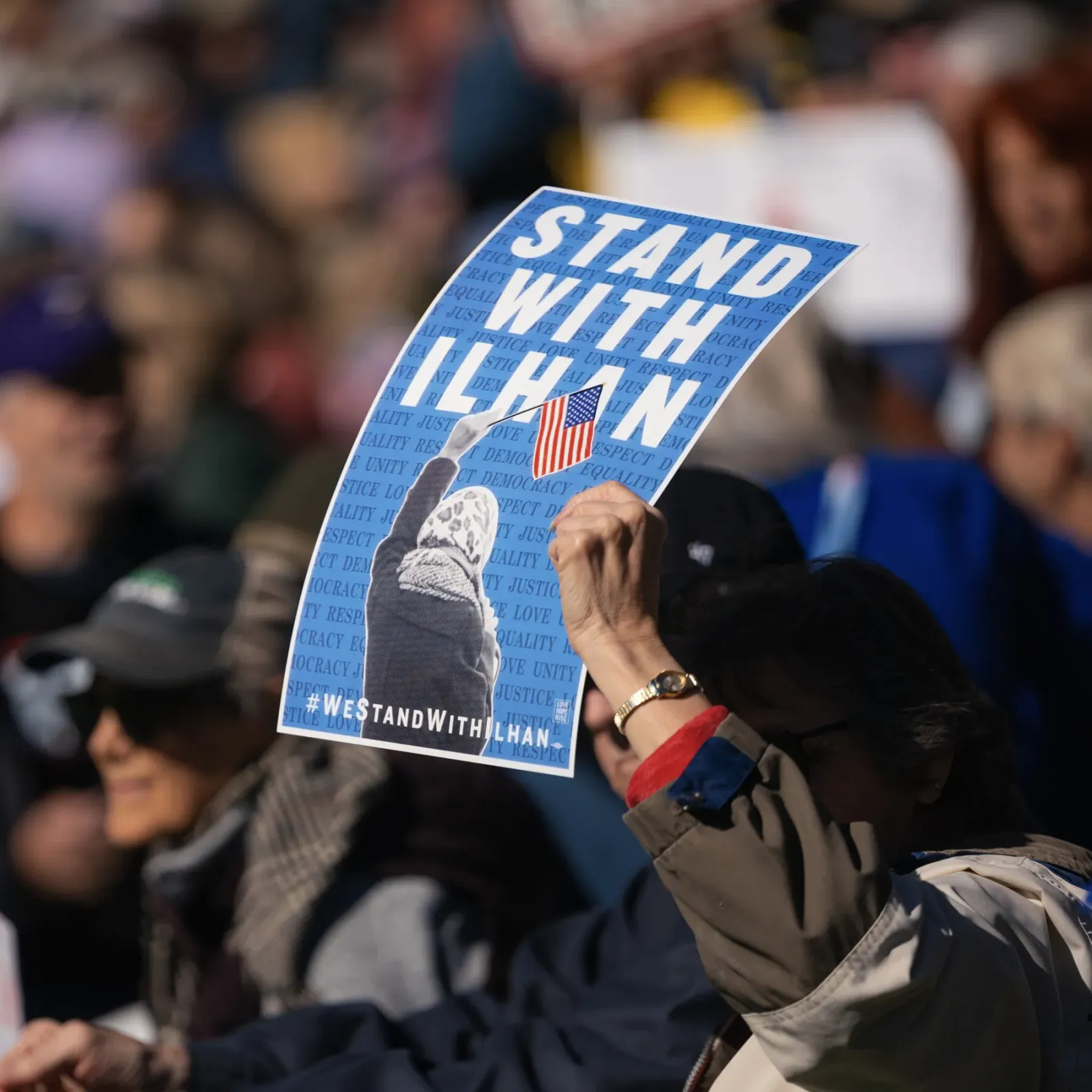
Obama Defends Ilhan Omar After Agents Search Her Home in Trump Inquiry
The former president's intervention raises the stakes in a federal probe into immigration paperwork that has put a prominent progressive lawmaker in the crosshairs.

Blair-era minister: cut welfare to fund youth job support
Alan Milburn's call for welfare cuts to fund employment support opens a Labour fight over benefits and the Neet crisis.

Hot September CPI: energy costs surge, voters feel the squeeze before midterms
The latest inflation print lands as Trump campaigns for GOP control of Congress, putting cost-of-living worries at the center of the midterm fight.