

Aldi’s $4 almond butter is the urban wedge in its $9bn US push
The German discount grocer leans into Manhattan-style hubs, betting its model can pressure US supermarket giants.
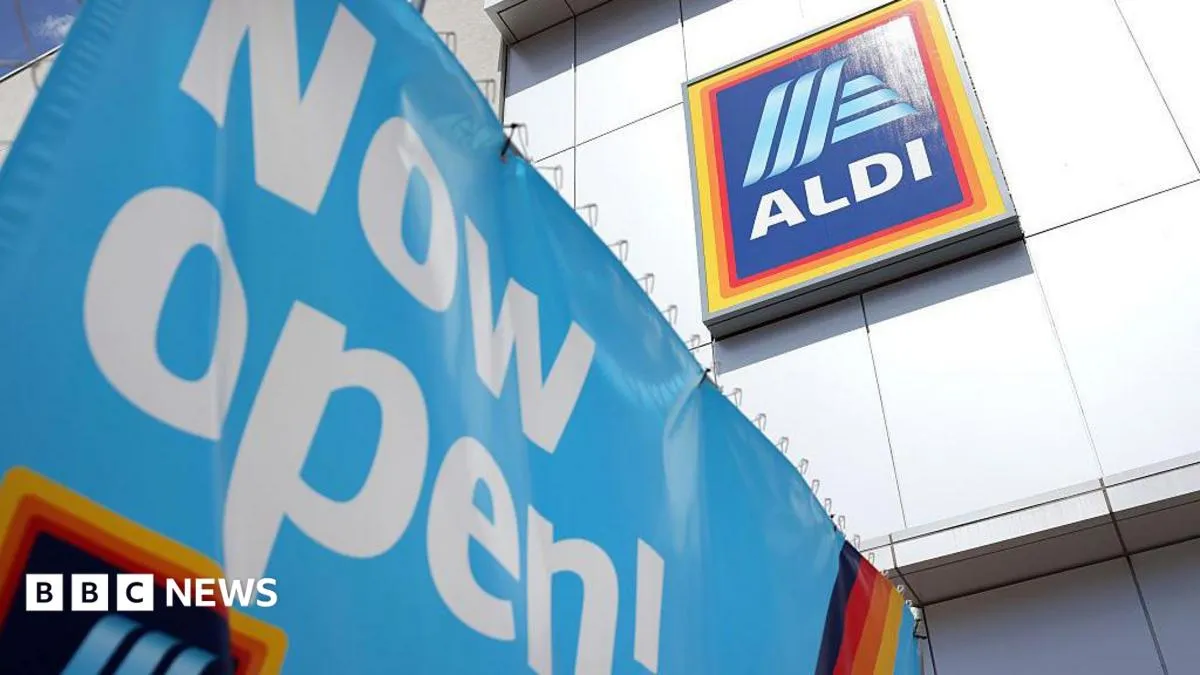
Aldi is taking on US supermarkets with its $4 almond butter as it drives a $9bn push in the United States, targeting dense urban hubs like Manhattan. For decision-makers, the question is whether Aldi's discount play can translate into real competitive force against entrenched leaders.
Aldi wants Americans to shop differently. In the middle of its $9bn push into the United States, the German discount grocer is using a very specific product signal: its $4 almond butter, positioned to compete in price-sensitive, high-density markets like Manhattan.
That pairing matters because it is not a generic “low-price” message. It is a calculated wedge. Almond butter is the kind of item that can carry a premium in US supermarkets, and Aldi’s move says it plans to apply its discount logic even to products that shoppers associate with higher-end pricing. If Aldi is taking on US supermarkets, the $4 almond butter is the kind of headline number you can actually picture in a basket, not just an abstract margin story. The stake for executives and investors is straightforward: can a discount model built on efficiency and tight assortment compete at scale in urban America, where convenience, brand loyalty, and retail real estate economics tend to favor incumbents?
To understand why this strategy is interesting, zoom out to how US supermarkets have historically competed. Traditional grocers have often leaned on wide selection, loyalty programs, and store-level merchandising. Discount operators, by contrast, typically win by stripping complexity. They reduce stock variety, negotiate aggressively, and standardize store operations. Aldi’s expansion plan, as described here, is essentially testing whether that playbook can travel into cities where shoppers face intense competition for their time and money. Manhattan is a useful test case because urban shoppers have less tolerance for hassle, and because store locations are expensive and limited. If a discount concept can make economics work there, the argument becomes easier to extend beyond one city.
There is also a bigger competitive reference point lurking in the background: Walmart. The competition question is not just “Will Aldi grow?” It is “Can Aldi match the pressure points that Walmart’s scale has already created across retail?” Walmart has long used its size, supply chain leverage, and distribution muscle to keep everyday prices down. Aldi is not Walmart, and it does not have Walmart’s omnichannel footprint. But it is aiming at the grocery part of the battlefield, and groceries are where customer loyalty can be built through habit and frequency. If Aldi’s model reaches more urban hubs successfully, it could force incumbents to defend pricing, promotions, and private-label strategies.
From an operator perspective, the most important variable is not just what Aldi sells, but how it keeps the system cheap without breaking the customer experience. Discount retail lives or dies by operational discipline. That includes store format, inventory turns, supplier terms, and how quickly the business can respond when shoppers push toward different product categories. Almond butter can be a useful proxy here: it is not always a high-volume staple item, so selling it successfully at $4 likely requires Aldi to manage assortment carefully, source efficiently, and ensure the product actually moves through stores at the price point.
Now add the investment lens. A $9bn push is not a small experiment. It signals a commitment to building out stores and capabilities at a meaningful scale. Large expansions in retail often come with second-order effects for boards and leadership teams. Competitors may respond not only by adjusting prices, but also by changing their product mix, accelerating private-label rollouts, or reallocating marketing spend toward promotions that defend basket share. If Aldi’s discount value proposition lands with urban shoppers, incumbents could face cost pressure and margin tradeoffs. Pricing games can quickly become brand strategy games, because customers can interpret frequent discounts as either a deal or a signal that quality is slipping. Boards therefore have to monitor not just revenue impact, but the longer-term health of margins, customer perception, and inventory discipline.
For executives at other supermarket chains, the key question is how to evaluate “discount threat” in a way that goes beyond sentiment. The presence of a clear $4 almond butter price suggests Aldi is willing to take public, easily compared positions on everyday items that matter to shoppers. For decision-makers, that means competitive analysis should focus on which categories Aldi is choosing to lead with, how its assortment supports repeat trips, and whether store expansion into places like Manhattan generates enough density to keep the model economically tight.
Aldi’s US push, targeting urban hubs and underscored by a literal $4 basket item, is essentially a test of whether discount retail can scale in the most punishing retail environments. If it works, it would raise the competitive bar for US supermarket players and force a rethink of how price value is defended in high-cost markets. If it does not, the lesson will still be valuable, because it will clarify where the discount model breaks, and why.
This story's Key Insights and Take-aways are locked.
Create a free account to unlock Executive Actions for one credit.
Register to UnlockAlways free for Executives Club members. Join the Club
More in Business

SK Hynix opens at $170, raises $26.5B, and tops foreign IPO records
In Friday's Wall Street debut, SK Hynix turns AI RAM demand into a $26.5B fundraising moment that rewrites comps.

China lands a reusable Long March booster, a first that matches SpaceX and Blue Origin
A barge landing and net-based recovery move China from theory to proof, reshaping the reusability race and satellite ambitions.

AstraZeneca $27B wipeout as Wainua late trial misses cardiovascular target
A failed late-stage heart study triggered a swift market punishment, forcing investors and boards to reset timelines and risk.