
Alex Karp blasts AI leaders for being “unlikeable” and calls OpenAI’s deployment plan “farce”
Palantir’s CEO says Silicon Valley’s AI labs are future-first, customers-first, and even self-aware last.
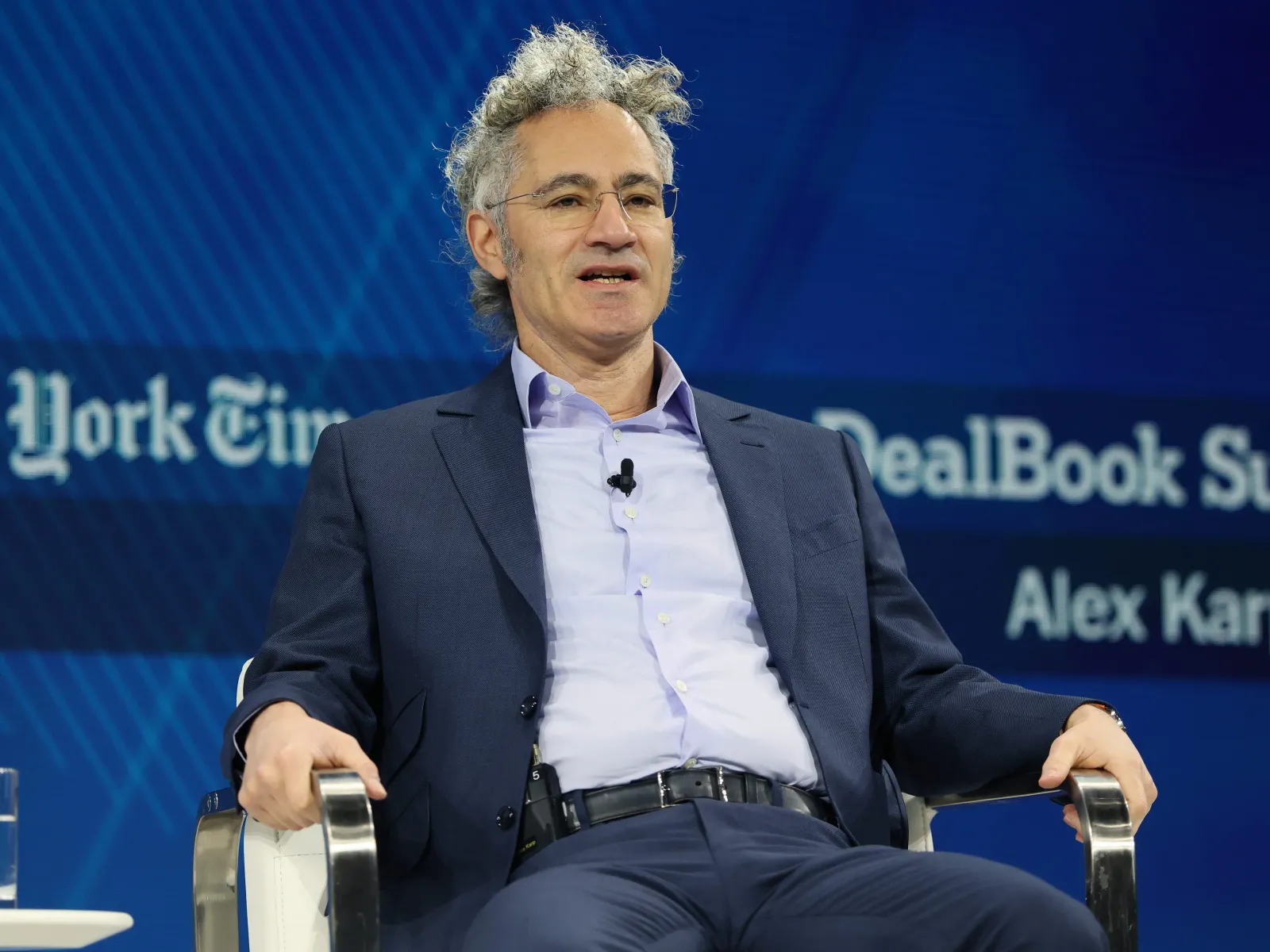
Palantir CEO Alex Karp told CNBC that AI leaders do not understand they are “unlikeable,” and that they talk past the realities customers face. He also called OpenAI’s “Deployment Company” a “complete farce,” while praising conversations with Sam Altman and Dario Amodei.
Palantir CEO Alex Karp used CNBC to deliver a pretty direct diagnosis of today’s AI power centers: AI leaders, he said, do not realize how “unlikeable” they are. “I told them this,” Karp said. “Most of them are chillaxing over their latte, reading a report about something that they don't understand,” he added. And then he escalated the critique from vibe to product and strategy, calling OpenAI’s “Deployment Company” a “complete farce” and an attempt to “replicate Palantir.”
For executives, the uncomfortable part is that Karp’s message is not just about tone. He argues the problem runs deeper: the AI labs, in his view, are too future-forward and rely on assumptions customers do not experience in real deployments. “It’s largely religious,” Karp said, referring to the belief that they “don’t have to solve your problem today” because it will be handled “tomorrow.” He also said AI products “don't actually work the way” customers expect and that they are “very expensive.” In other words, he is framing the current AI boom as a mismatch between lab confidence and operational reality.
To understand why this matters, zoom out to how AI companies typically sell. Many models start as impressive demos, then mature into systems that must integrate with customer data, workflows, security constraints, and budget cycles. Karp is essentially saying the industry is skipping the hard part. When he complains about teams “reading a report” about something they do not understand, he is pointing at a pattern where leadership discussions can get disconnected from the on-the-ground mess of deployment.
Karp also targets a specific narrative about timing and urgency. He criticizes the idea that the answer will arrive later, arguing instead for near-term problem solving. That stance is especially relevant because AI spending is moving from “experiment” budgets to “outcomes” budgets. Once a buyer is paying for something that must be reliable, expensive uncertainty becomes a board-level issue, not a tech concern. Karp’s “heaven on earth, not heaven in 20 years” line captures that framing: he says he believes “we need heaven on earth,” and that “we disagree on these things” with other AI leaders.
Still, it is not simply dunking on competitors. Karp explicitly clarified that his “unlikeable” comment does not mean he personally feels that way. He praised specific people as providing “some of the best and most interesting conversations I’ve had in business,” shouting out Sam Altman and Dario Amodei. He singled out Anthropic's Amodei as “a very, very important person,” and said Amodei “believes what he’s saying.” The subtext for leaders is important: Karp can argue with ideas and approach while maintaining high-level relationships with key counterparts. That distinction matters in a world where partnerships, talent movement, and platform dependencies can turn fast.
The OpenAI reference is where the stakes get more tangible. Karp called OpenAI’s “Deployment Company” a “complete farce” and described it as an attempt to replicate Palantir. He also said that OpenAI and other tech companies are embracing a forward-deployed model for AI. For context, forward deployment is usually about getting AI capabilities into the places where they are meant to operate, rather than treating AI as something that stays in the cloud or in a sandbox. Karp says Palantir popularized that model, and he claims the AI giants have done a “bad job of it” so far.
Why would an executive care about a CEO’s characterization like “farce”? Because labels are often shorthand for a deeper competitive claim: that one approach can win on integration, governance, reliability, and total cost of ownership. When Karp says customers expect one thing and receive another, he is implicitly warning that deployment is not just about model performance. It is about how systems behave under constraints, how quickly teams can get to value, and whether the solution fits the customer’s operational expectations.
There is also a strategic optics angle. In AI, leadership brand can influence hiring, partnerships, and enterprise trust. If Karp is right that many AI leaders underestimate how people experience them, then even strong technical capability can be undermined by misaligned stakeholder management. That connects back to his “unlikeable” framing. In boardrooms and enterprises, trust is not only a function of accuracy. It is a function of credibility, communication, and the ability to show you understand the realities your buyers live with. If other AI labs truly are “chillaxing” while decisions get made by people who have to run the business, Karp is describing a gap that competitors can exploit.
And finally, Karp’s critique doubles as a stress test for the entire category. As AI moves into deployment, regulators, procurement teams, and risk committees will ask harder questions about security, accountability, and cost. The Business Insider piece also notes OpenAI did not respond to a request for comment from Business Insider. For peers, the second-order effect is clear: when public scrutiny increases, silence or defensive positioning can magnify skepticism. If you lead an AI effort aimed at customers, the message is to close the loop between lab optimism and deployment discipline. In a market shifting from hype to implementation, Karp’s central claim is that self-awareness, and immediate problem solving, might be as important as breakthroughs.
This story's Key Insights and Take-aways are locked.
Create a free account to unlock Executive Actions for one credit.
Register to UnlockAlways free for Executives Club members. Join the Club
More in Technology

OpenAI says 10,000 agents cracked a 90-year math problem in 88 hours
The company's claim is audacious, but one mathematician is pushing back. Here's what it means for AI-driven discovery.

Meta still serves child sexual abuse ads on Instagram in India - BBC report
A new report following the BBC Eye investigation says the ads are still there - what it signals for every platform with a self-serve ad engine.

White House yanks 'Build the Wall' game after Tetris Company copyright warning
The administration's arcade game vanished in hours - and the takedown playbook every brand can learn from.