
Alleged bomb blast hits Kudrinskaya Square as guard stops woman outside Moscow restaurant
Russian officials say a woman allegedly carrying explosives was stopped, but the blast still went off near an upscale Moscow restaurant.
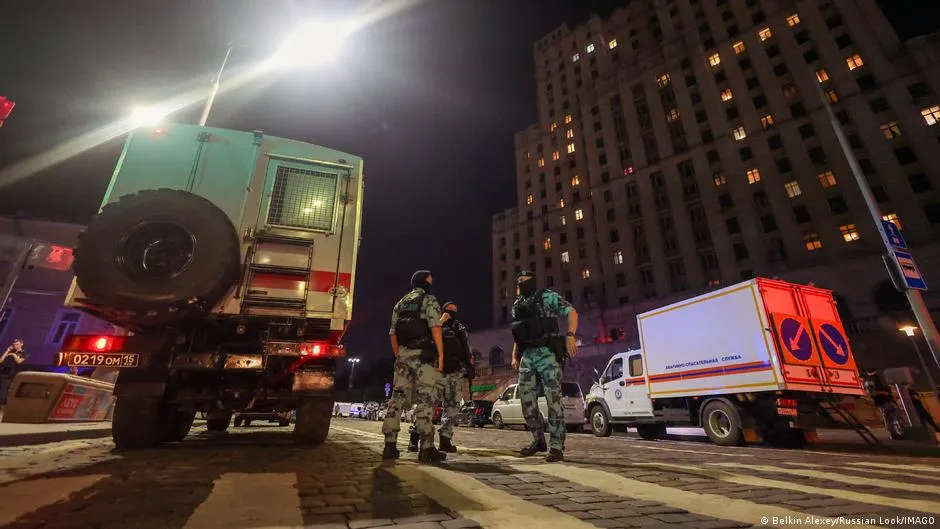
Russian authorities reported an explosion outside a restaurant on Kudrinskaya Square in Moscow. They said a woman allegedly carrying explosives was stopped by a security guard before the blast occurred.
Russian authorities say an explosive device went off outside an upscale restaurant on Kudrinskaya Square in Moscow. The key detail, as officials frame it, is that a woman allegedly carrying explosives was stopped by a security guard, yet the blast still happened.
That combination matters. It suggests that the incident is not just a “there was an explosion” headline. It is also a test, in real time, of how front-line security works when the threat is close, fast, and hard to verify. For operators of high-end venues, hotel brands, and other places that rely on layered safety procedures, the question is blunt: if a guard can stop someone, what still allows a detonation to occur nearby?
From an operational lens, the incident puts a spotlight on the friction points between threat detection and threat containment. Security teams typically aim to interrupt a path before an object is presented, concealed, or deployed. But when authorities describe a scenario in which an alleged carrier is stopped and an explosion still occurs outside the restaurant, it raises practical issues executives and boards care about: how quickly a guard can escalate to higher-response protocols, how procedures account for uncertain intent, and whether the environment itself, including crowd flow and physical layout, leaves too little buffer between a stop and an outcome.
For Russia-based businesses, the governance and compliance angle is also immediate, even when the underlying facts are still being reported. In many jurisdictions, after a security incident, regulators and public authorities can move from “investigation mode” to pressure mode. That can mean audits of security contracts, requests for incident reports, and heightened scrutiny of whether venue-level procedures align with broader public-safety expectations. Even if this specific report focuses on the blast and the alleged stop, the second-order effect for decision-makers is that the market will ask for proof of preparedness.
There is also a risk-management implication that reaches beyond one restaurant. When an incident hits a recognizable, high-footfall location like an upscale dining area, it can trigger reputational shocks that are not proportional to the physical damage. Executives often learn this the hard way: people do not distinguish neatly between “no injuries were reported” and “the area was targeted.” They simply see “blast near a restaurant,” then adjust behavior. That adjustment can hit revenue in the short term and increase security-related costs in the medium term.
Investors and boards, meanwhile, should treat this as an example of how security events can become governance events. It is not just about whether a specific guard acted correctly. It is about whether a company has the right oversight systems. That includes training standards, clear escalation authority, coordination with local law enforcement, and documentation that can survive scrutiny after the fact. When authorities describe a specific sequence, “woman allegedly carrying explosives was stopped by a security guard,” it creates a factual framework that future evaluations will likely reference.
Finally, there is a strategic stake for executives overseeing properties and operations in volatile environments. Threat actors adapt, and security models must assume that interruption is not the same as elimination. If a stoppage does not prevent a blast, boards should revisit their risk models using real incident learnings rather than check-the-box compliance. That means reviewing how procedures perform when the guard is the first responder, when time is measured in seconds, and when the physical distance between the intervention point and the target environment is minimal.
In short: Russian authorities report an explosion outside a restaurant on Kudrinskaya Square, with the reported sequence starting when a woman allegedly carrying explosives was stopped by a security guard. For decision-makers, the headline is only step one. The real work is understanding what the incident implies about layered security, escalation readiness, and how quickly companies must be able to prove they can protect people even when the worst-case outcome still occurs.
This story's Key Insights and Take-aways are locked.
Create a free account to unlock Executive Actions for one credit.
Register to UnlockAlways free for Executives Club members. Join the Club
More in Politics
Obama Defends Ilhan Omar After Agents Search Her Home in Trump Inquiry
The former president's intervention raises the stakes in a federal probe into immigration paperwork that has put a prominent progressive lawmaker in the crosshairs.

Blair-era minister: cut welfare to fund youth job support
Alan Milburn's call for welfare cuts to fund employment support opens a Labour fight over benefits and the Neet crisis.

Hot September CPI: energy costs surge, voters feel the squeeze before midterms
The latest inflation print lands as Trump campaigns for GOP control of Congress, putting cost-of-living worries at the center of the midterm fight.