
Altman, Musk, and rivals rally behind Amodei's AI slowdown call
OpenAI and xAI CEOs join Anthropic's Dario Amodei, signaling that third-party safety audits are becoming an industry baseline.

Anthropic CEO Dario Amodei said Saturday he is 'become convinced' AI must pace its development, and OpenAI CEO Sam Altman and xAI CEO Elon Musk quickly agreed. The emerging consensus around third-party safety evaluators signals that AI governance is becoming a board-level priority across the industry.
The most unlikely consensus in the AI industry just formed. Anthropic CEO Dario Amodei said Saturday that he has 'become convinced' AI must pace its development to avert disaster, and within hours OpenAI CEO Sam Altman and xAI CEO Elon Musk, two leaders who have spent years sniping at each other, publicly agreed. The result is a rare come-together moment for the leaders of US AI labs, and it arrived with a concrete safety proposal attached. If the pattern holds, the near-term trajectory of frontier AI could shift from pure speed to deliberate, evaluated progress.
OpenAI's Sam Altman wrote on X, 'I agree with Dario that we need to pace the frontier,' and pledged that OpenAI would commit, as Anthropic had already, to embedding third-party safety evaluators within the company with employee-level access. Elon Musk, who rarely agrees with Altman on anything, posted simply, 'Dario is right.' The endorsements transform Amodei's position from a solo proposal into an emerging industry baseline. They also signal that the people who control the most advanced models are now on the record in favor of slowing development, a stance that would have seemed improbable just a year ago.
The friction between Altman and Musk makes the agreement newsworthy in itself. Musk co-founded OpenAI, sued it over its profit-driven direction, and now runs xAI, a direct competitor. He has often criticized Altman publicly, which is why his two-word endorsement carries outsized weight. Yet on the central question of pacing the frontier, they converged. That alignment matters as much as the safety details, because it gives regulators a clear signal: the people building frontier AI are no longer arguing against oversight, they are arguing for the shape of it.
Other prominent industry leaders quickly logged on to endorse the idea. Hugging Face CEO Clement Delangue said on X that his company was launching an 'open alignment initiative' and asked to be included in the labs employing third-party safety evaluators. Andrej Karpathy, an AI researcher and former OpenAI and Tesla executive, also endorsed Amodei's plan to better monitor AI's development and ensure its safety. 'I love this and really hope we can come together as an industry and make it happen,' he said. The breadth of the response shows that concern about AI risk has moved beyond a small safety research community.
One notable silence: Google DeepMind founder Demis Hassabis has yet to weigh in on Saturday's call. He has previously called for more cooperation among AI leaders and governments, writing in a July post that public policy should promote innovation while also incentivizing responsibility and security, foster international collaboration, and encourage careful consideration of how AI is deployed for the benefit of society. His absence from the immediate chorus suggests the come-together moment is not yet universal, but the public stances from OpenAI, Anthropic, and xAI cover three of the four most closely watched frontier labs.
For boards and investors, the practical stakes are immediate. Amodei's proposal includes third-party safety evaluators with employee-level access, meaning outside auditors would see model weights, training data, and deployment plans before release. That is a materially different operating environment for any company building on or around frontier models. It also raises the compliance bar for AI startups, because a credible evaluator is likely to become a talking point in enterprise sales and due diligence, much like SOC 2 reports are today. Companies that wait for mandates before adopting such standards could find themselves at a competitive disadvantage.
The regulatory context amplifies the significance. Governments in the EU and the US are actively drafting AI rules, and corporate boards face growing pressure to explain how they manage AI risk. A coordinated slowdown is not a ban; it is a brake. If the largest labs voluntarily submit to outside evaluation, it could preempt stricter top-down mandates, or become the template for the rules that do land. Either way, the debate has shifted from whether oversight is needed to who gets to design it and how intrusive it will be.
The strategic takeaway is that pace is now an acknowledged risk at the highest level of AI leadership. Large customers may soon ask whether their AI vendors use independent safety evaluators, and the standards Anthropic and OpenAI adopt could become the industry norm within a year. Business Insider reports this is a developing story, so expect more responses in the coming days. For CEOs outside the AI labs, the lesson is simpler: the frontier is slowing down, at least by its own design, and your AI strategy should account for a new layer of external scrutiny.
This story's Key Insights and Take-aways are locked.
Create a free account to unlock Executive Actions for one credit.
Register to UnlockAlways free for Executives Club members. Join the Club
More in Business

Royal Caribbean just spent $3B to own half of Sandals
The cruise giant is buying a 50% stake in the all-inclusive resort chain for $3 billion, a bet that land-based vacations are the next growth engine.

Paramount's Ellison: Merger Clearance Done, WBD Deal by Oct 1
David Ellison says the Paramount-WBD merger has full clearance after settling with state AGs, clearing the path for an October 1 close.
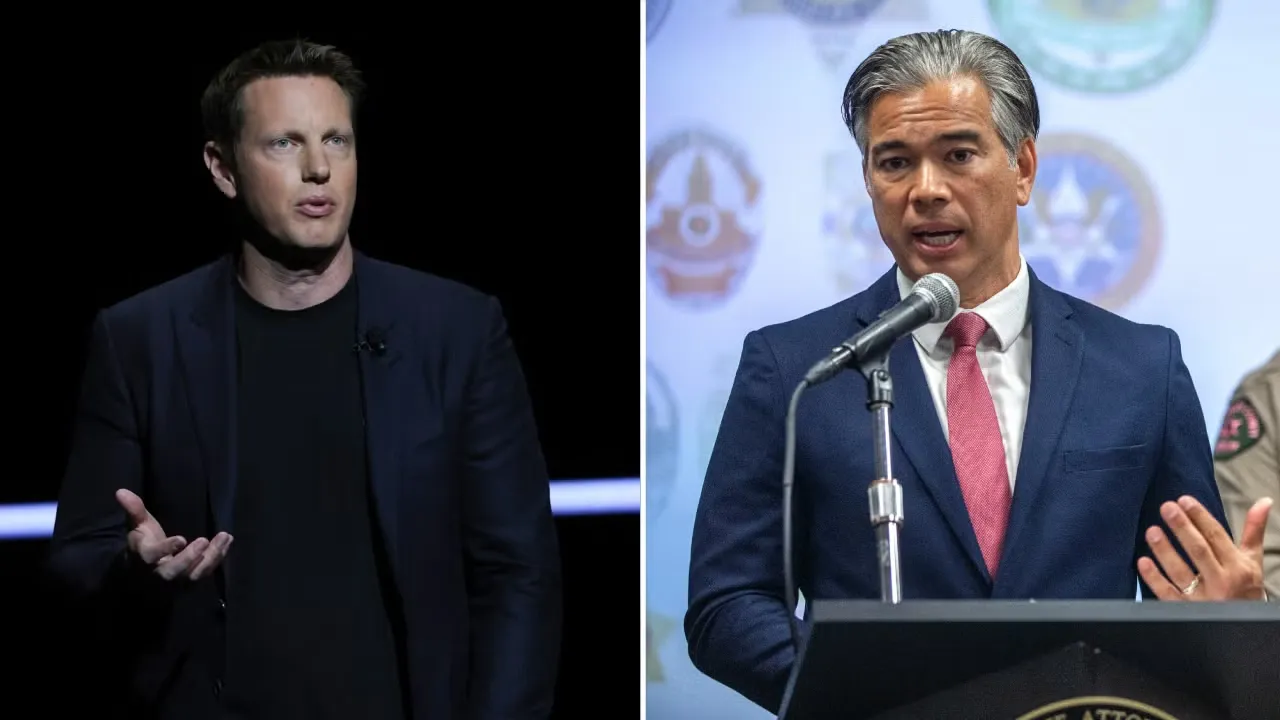
Paramount settles with 12 states, $110B Warner merger clears final hurdle
David Ellison's studio avoids a March trial and a $7M-a-day ticking fee by settling with state AGs over local job losses.