

Amazon's data center retreat shows why state races may decide the AI economy
Local officials control data center approvals, so midterm races for governor and county boards could matter more than the House or Senate for AI investment.
Amazon canceled a data center project in Virginia after local backlash, highlighting how state and local officials hold outsized sway over AI infrastructure. The winners of midterm races for governor and county boards may shape the economy more than control of Congress.
Amazon just walked away from a data center project in Loudoun County, Virginia, after local officials and residents pushed back. The retreat is a preview of what may be the most consequential economic story of the midterm elections: state and local races, not control of Congress, could determine where the AI boom gets built.
Thierry Wizman, global FX and rates strategist at Macquarie, put it bluntly in a note Monday: "For the direction of the U.S. economy, the composition and direction of governance at the state level may matter more than whether the Democrats win the House or the Senate." The stakes are enormous. JPMorgan estimates AI-related investment has driven about one-fifth of GDP growth over the past year, and ING analysts expect AI to account for a third of growth in 2026.
Amazon's Loudoun County reversal is a case study. The company bought property for $427 million in February, but the purchase reportedly blindsided county leaders already uneasy about the explosion of data centers. Amazon vowed not to build data centers on the land, will repurpose most of it for mixed-use and residential development, and will donate 25 acres for a community arts center and recreational facility plus $5 million to a housing fund.
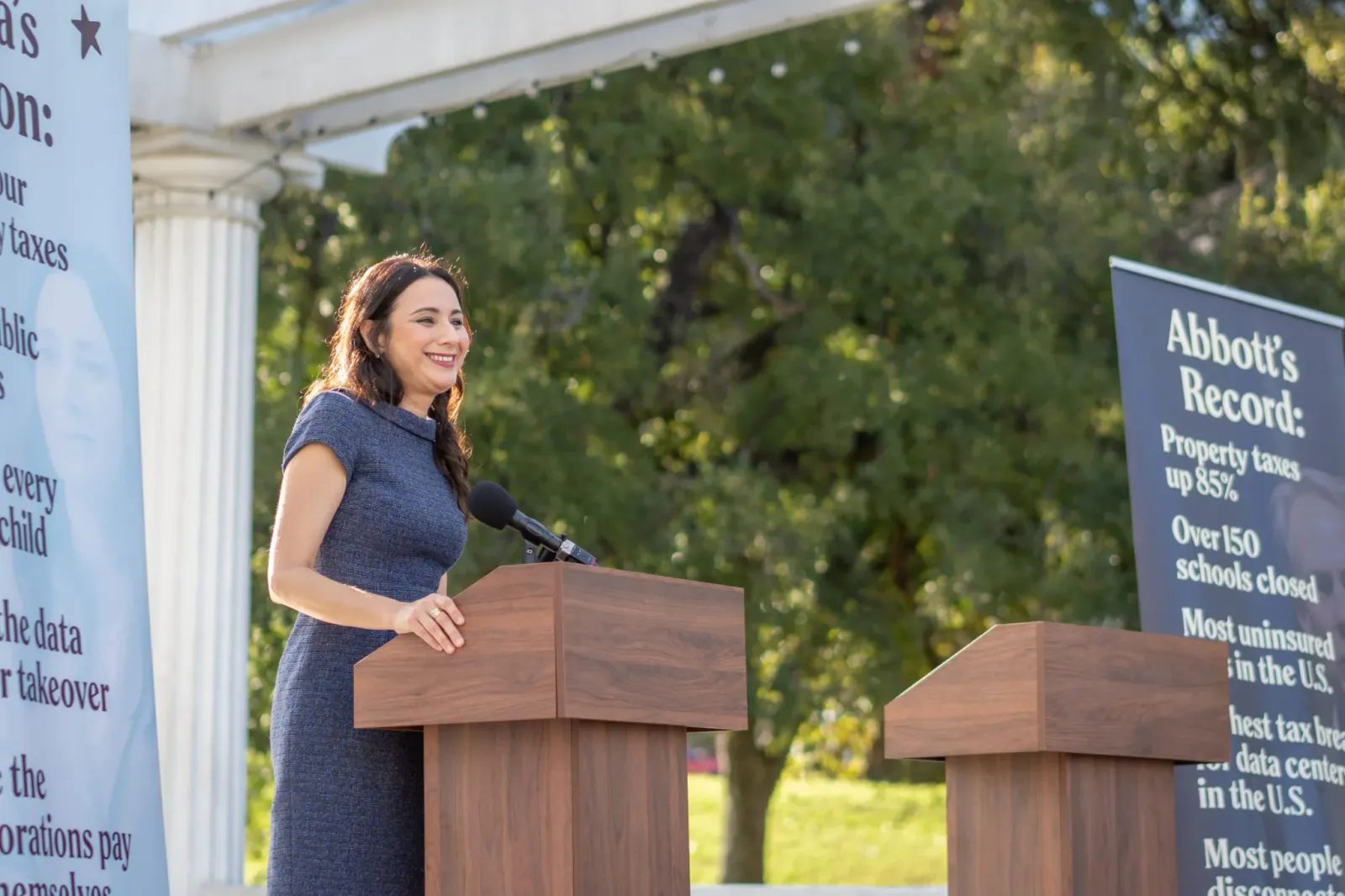
Texas shows the political shift. Republican Gov. Greg Abbott has turned from a data center booster to a skeptic as he faces a tough re-election race against Democratic state Rep. Gina Hinojosa. Michael Pearce, chief U.S. economist at Oxford Economics, said in a Thursday note that midterm races for state capitals and town halls represent a bigger risk to the data center buildout than Washington. The Trump administration has used regulations and executive orders to facilitate construction, but comprehensive legislation in Congress would be slow. Local officials pose more immediate threats via moratoriums, environmental reviews, and bottlenecks in connecting new data centers to the power grid.
Pearce identified Texas, the Carolinas, and Midwest states like Ohio, Illinois, and Wisconsin as the key midterm races for data centers. He also warned that the outcome could shape the 2028 presidential cycle. "If this year's elections show that an anti-data center stance wins political contests, it could put data center regulation at the heart of the 2028 campaign," he said.
In anticipation of a more hostile political climate, data center construction shifted sharply higher in the middle of the year, Pearce wrote. Developers can soften local opposition by showing that a data center will lower local tax bills or fund schools and roads. But even a moratorium won't immediately slow the economy. Most of the economic value comes from the computing equipment inside, and that spending lags construction by six to eight quarters. "This year's surge will keep supporting business investment over the next couple of years, whatever happens on the ground," Pearce predicted.
Morgan Stanley Wealth Management portfolio manager Daniel Skelly said in a Wednesday note that any slowdown in spending may actually be beneficial for the AI boom. Despite recent stock market volatility, the sector still enjoys solid growth and strong earnings, and the long-term AI investment cycle remains intact. "Also, ongoing power deficits, a shortage of people to build data centers, and political pushback against them may elongate the cycle and lower the odds of a blow-off top," Skelly added.
For executives and investors, the takeaway is that the AI economy's fate is increasingly local. The midterm elections are just over a week away, and early voting is already underway in many states. A "blue wave" at the state and local levels could usher in lawmakers opposed to data centers, which could weigh on the stock market, which has already sold off on fears the AI boom will go bust. The races to watch are not just for governor, but for county boards and utility commissions that control the power grid connections. That is where the next Amazon-style reversal could happen.
This story's Key Insights and Take-aways are locked.
Create a free account to unlock Executive Actions for one credit.
Register to UnlockAlways free for Executives Club members. Join the Club
More in Business

A flaw in PHP just forced governments to pull their own sites offline
European agencies from Belgium to Germany took websites dark to patch a critical weakness in the language behind almost 70% of the web, and the blast radius extends far beyond government portals.

BioWare shuts down, Mass Effect 5 dead after $55B EA buyout
The legendary RPG studio's closure lands months after a $55 billion investment group buyout of EA, raising tough questions for gaming's biggest acquirers.

Musk weighs Tesla-SpaceX mega-merger as boards form review panels
Special committees at both companies will examine a tie-up that could fuse electric vehicles and space launch, forcing a fresh look at governance and valuation.