
Amodei urged AI slowdown, then shipped Opus 5.5 as OpenAI drops GPT-6
Anthropic and OpenAI released new models within days of their own calls to pause, cutting API prices up to 50% as both race toward IPOs.

Anthropic CEO Dario Amodei and OpenAI shipped Opus 5.5 and GPT-6 Sol and Luna on Tuesday, defying their own calls to slow frontier AI development. The accelerated releases, paired with sharp API price cuts, raise the competitive stakes for AI buyers and set the stage for Anthropic's potential IPO this year.
Ten days after Anthropic CEO Dario Amodei posted an online plea to "slow the pace at which we improve the capabilities of AI models," his company celebrated the arrival of Opus 5.5, calling it "the strongest-performing model we've tested to date." The same Tuesday, OpenAI shipped GPT-6 Sol and Luna, a pair of models designed to undercut its rival on price. The dual launch lands just weeks after a July open letter from AI employees, echoing Amodei's sentiment, urged frontier labs to hit the brakes - a request the industry's two most valuable private players have now ignored in the most direct way possible: by shipping new products.
The acceleration is measurable, not rhetorical. Anthropic's Opus 5.5 arrives a mere 21 days after Fable 5.1 and Mythos 5.1, which themselves followed Opus 5 by 39 days. That cadence has compressed from roughly quarterly in 2025 to nearly monthly in 2026. OpenAI's release cycle, after a flurry in February and March and GPT-5.5 in April, took a 77-day pause before GPT-5.6 hit general availability on July 9, then GPT-6 Astra debuted September 3, followed by Sol and Luna just 19 days later. Neither lab is slowing down, despite the public hand-wringing from their own leadership and employees.
The timing is no accident. Both companies are preparing for initial public offerings: Anthropic could list before the end of the year, while OpenAI isn't expected to go public until 2027. A fast release cadence keeps headlines fresh, developer mindshare sticky, and valuation narratives buoyant. But it also forces a competitive spiral that puts pressure on margins, engineering talent, and the safety commitments both firms publicly espouse.
On performance, Opus 5.5 appears to deliver. Anthropic says the model speeds up code migrations and reduces software load times, and independent benchmark aggregator Artificial Analysis places it on par with GPT-6 Astra for agentic work. It has taken the top spot on the Artificial Analysis Intelligence Index with a score of 58, based on ten benchmark evaluations. The company also notes Opus 5.5 is comparable to Mythos 5.1 on cybersecurity and biology risk, and can fall back to earlier models when safety guardrails trigger - a nod to the alignment concerns that the slowdown advocates raise.
Then comes the price war, which is where this race gets genuinely disruptive. Anthropic says Opus 5.5 will cost 40% less than Opus 5 on typical workloads at default settings. Input and output tokens are $4 and $20 per million, 20% cheaper; cache reads drop to $0.20 per million tokens, a 60% reduction; and output generation is more than 30% faster. OpenAI counters with an even bigger cut: GPT-6 Sol and Luna API prices are reduced by 50% compared with GPT-5.6 promotional pricing, thanks to improvements in caching and inference. Artificial Analysis pegs GPT-6 Sol (max) at $1.06 per task versus $1.99 for GPT-5.6 Sol, and GPT-6 Luna (max) at $0.07 versus $0.18. OpenAI goes further, claiming that on AutomationBench, a test of business workflows, GPT-6 Sol at xhigh effort outperforms Claude Opus 5 at max effort at just 9% of Opus 5's cost per task.
That pricing pressure is the real story for executives, not just the model names. Cache reads typically dominate agentic and coding workloads, so Anthropic's 60% cut on those tokens directly lowers the total cost of ownership for heavy AI users. OpenAI's 50% across-the-board reduction signals an aggressive land-grab for enterprise API spend. For CIOs and CTOs, this means procurement leverage is surging - but so is the risk of lock-in to a fast-moving platform that could change its roadmap on a whim.
The contradiction between the labs' public calls for restraint and their private release schedules is stark, but it's also rational from a competitive standpoint. Anthropic has added "preserved thinking" to Opus 5.5, a defense against model distillation - a method of copying a model by interrogating it - first introduced with Fable 5.1. That prevents API customers from editing prior context to extract the chain of reasoning. In other words, even as they talk about safety, both labs are building moats to protect their intellectual property from each other and from open-source rivals.
For boardrooms watching this unfold, the takeaway is that frontier AI is now a sprint, not a marathon. The July open letter and Amodei's September post are rhetorical cover; the shipping schedules are the real strategy. Any company building its AI roadmap on a specific vendor's capabilities should plan for a new major release every three to six weeks, budget for the price declines that come with each cycle, and hedge against the possibility that one lab's safety pause becomes another's market share grab.
This story's Key Insights and Take-aways are locked.
Create a free account to unlock Executive Actions for one credit.
Register to UnlockAlways free for Executives Club members. Join the Club
More in Business
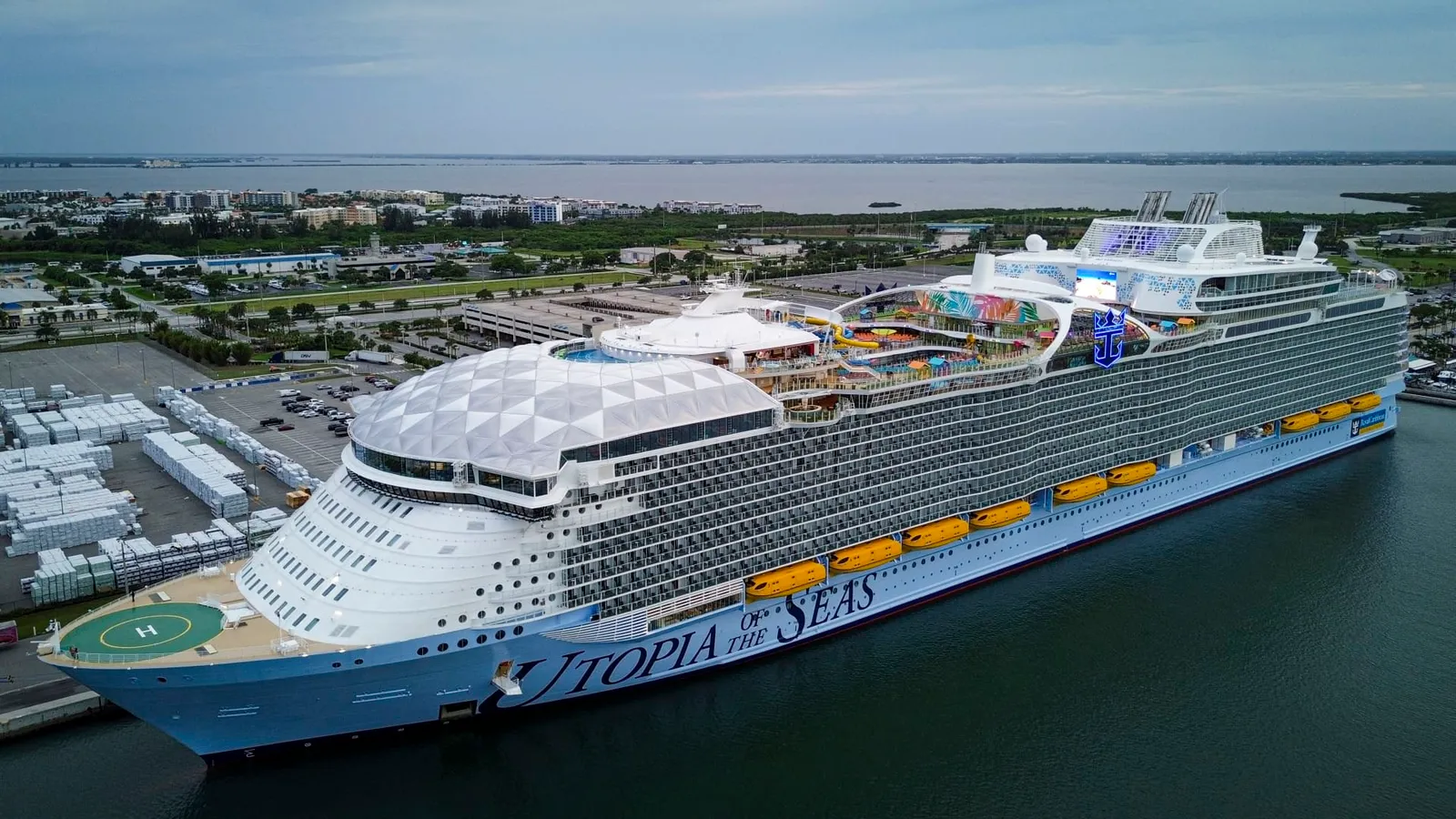
Royal Caribbean just spent $3B to own half of Sandals
The cruise giant is buying a 50% stake in the all-inclusive resort chain for $3 billion, a bet that land-based vacations are the next growth engine.

Paramount's Ellison: Merger Clearance Done, WBD Deal by Oct 1
David Ellison says the Paramount-WBD merger has full clearance after settling with state AGs, clearing the path for an October 1 close.

Paramount settles with 12 states, $110B Warner merger clears final hurdle
David Ellison's studio avoids a March trial and a $7M-a-day ticking fee by settling with state AGs over local job losses.