
Ancient DNA clears two Medici brothers of poisoning, finds malaria in their bones
A 500-year cold case gets a DNA verdict: malaria killed Cardinal Giovanni and Grand Duke Francesco I.
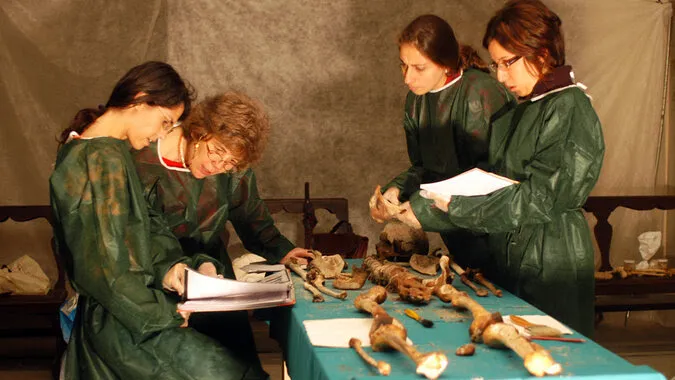
Ancient-DNA testing of Medici remains reported online June 17 in iScience found Plasmodium falciparum in both Cardinal Giovanni de' Medici (died 1562) and Grand Duke Francesco I de' Medici (died 1587), with additional findings in Francesco. For decision-makers, the case is a reminder of how evidence standards and “longstanding rumors” get overturned when new forensic tools arrive.
Two Renaissance Medici brothers were once the subject of poison rumors. Ancient-DNA analysis now confirms what “court physicians” already suspected: malaria, not poisoning, killed Cardinal Giovanni de' Medici and Grand Duke Francesco I de' Medici, with the evidence pulled directly from their skeletons.
The new study, published online June 17 in the journal iScience, specifically detected Plasmodium falciparum, the parasite behind the deadliest form of malaria, in the bones of both brothers. It also connects the medical language of the time to the biology researchers could finally test: reports at the time described Giovanni and Francesco as sick with “tertian fever,” a pattern of high fever returning every three days that is a hallmark of malaria. For the “what killed them” question, the DNA gives a clean answer and resolves the centuries-long feud narrative that has stuck to the family.
To understand why this matters beyond a museum-grade mystery, zoom out to who the Medicis were and what was at stake in their story. The Medici family rose to power in the 15th century by creating the largest bank in Europe. Their wealth did not just fund money and ledgers. It funded Renaissance artists and built a political dynasty that eventually included numerous dukes, four popes, and two queens of France. In the 16th century, Cosimo I took over all of Tuscany as grand duke. Then, within 25 years, at least five family members died from high fevers. That concentration of deaths is exactly the kind of pattern that invites suspicion and folklore.
And suspicion is what surfaced. A rumor circulated that arsenic poisoning had been used by another family member, tied to a long-standing feud. But there was a competing explanation that sounded less dramatic and yet matched the environment: malaria. Tuscany had marshy and swampy areas where malaria was prevalent well into the 20th century. The DNA work does not just pick a winner between “poison” and “malaria.” It also helps explain why the malaria hypothesis persisted despite the rumor. It ties the biology to the geography, to the physicians’ “tertian fever” notes, and to the timing.
So who did the researchers test, and what exactly did they find? An international group tested ancient DNA extracted from bones of two of Cosimo I’s sons: Cardinal Giovanni de' Medici and Grand Duke Francesco I de' Medici. Cardinal Giovanni died in 1562 at age 19, in the same month as his mother and younger brother Garzia. Grand Duke Francesco I died at age 46 in 1587, along with his wife. The study extracted ancient DNA from these remains and looked for Plasmodium falciparum, the parasite that causes the deadliest form of malaria and is transmitted by mosquitoes.
There was additional fuel for the poison story because Francesco and his wife died almost simultaneously. With two deaths close together, it is easy for narratives to travel faster than evidence. The DNA results complicate that tidy poison plot. The researchers found evidence of P. falciparum in the bones of both brothers, confirming the earlier court physicians’ descriptions. Francesco’s case, however, came with another layer: his bones tested positive not only for P. falciparum, but also for Plasmodium malariae, a different parasite species that also causes malaria in humans. That combination suggests both species contributed to the severe illness that killed him and his wife.
Then came the second big surprise, this one about evolution. Cardinal Giovanni’s bones were positive for P. falciparum, but the strain that infected him was previously unknown. The researchers report that the strain is similar to those found in ancient and early modern Europe, yet with two mutations they had never seen before. In other words, the DNA not only verifies malaria as the cause. It also adds evidence that parasite lineages were changing, even in historical timeframes.
This is where the story starts to look like something executives should care about. The study is built on the modern ability to interrogate the deep past with scientific methods. That capability has consequences for how we interpret evidence, and for how we manage uncertainty when the only “data” historically was rumor, memory, and handwritten medical reports. The authors explicitly frame the value of ancient-DNA work as both diagnostic and evolutionary. Study first author Alexander Ochoa, an evolutionary biologist at Yale University, said in a statement that the research provides “an opportunity not only to diagnose malaria in the remains of individuals from the past,” but also a “window for understanding the evolution” of malaria species such as P. falciparum. Further analysis is needed to determine the evolutionary relationship between the strains the brothers carried.
In the end, Valentina Giuffra, a medical historian at the University of Pisa, summarized the resolution bluntly: “Now we can say with scientific certainty that malaria, not poisoning, killed Grand Duke Francesco de Medici.” For boards, policy teams, and anyone tasked with making decisions under incomplete information, the executive lesson is surprisingly modern. Old explanations can persist for centuries, but better tools can still overturn them. In this case, ancient DNA didn’t just solve a mystery. It tightened the historical record and expanded what scientists can infer about how malaria adapts over time.
This story's Key Insights and Take-aways are locked.
Create a free account to unlock Executive Actions for one credit.
Register to UnlockAlways free for Executives Club members. Join the Club
More in Science

Alaska's 1,580-foot tsunami had warning signs. Scientists just found them.
Rapid glacier retreat, heavy rainfall, and thousands of tiny tremors preceded Alaska's 1,580-foot tsunami, a warning for every coastal community in a warming world.

The rare mutation that lets high-risk brains dodge Alzheimer's
Scientists found a natural defense against protein buildup, opening a new path to preventive treatments.

3,000 steps a day may halve Alzheimer's decline, study finds
New research links a modest daily walk to less tau buildup and nearly half the cognitive and functional decline, even for those with early signs.