
Andy Burnham faces revolt over Shabana Mahmood after Labour left attacks Treasury appointment
A noon special conference will formally name Burnham leader, but the fight is already centered on his planned Treasury hire.
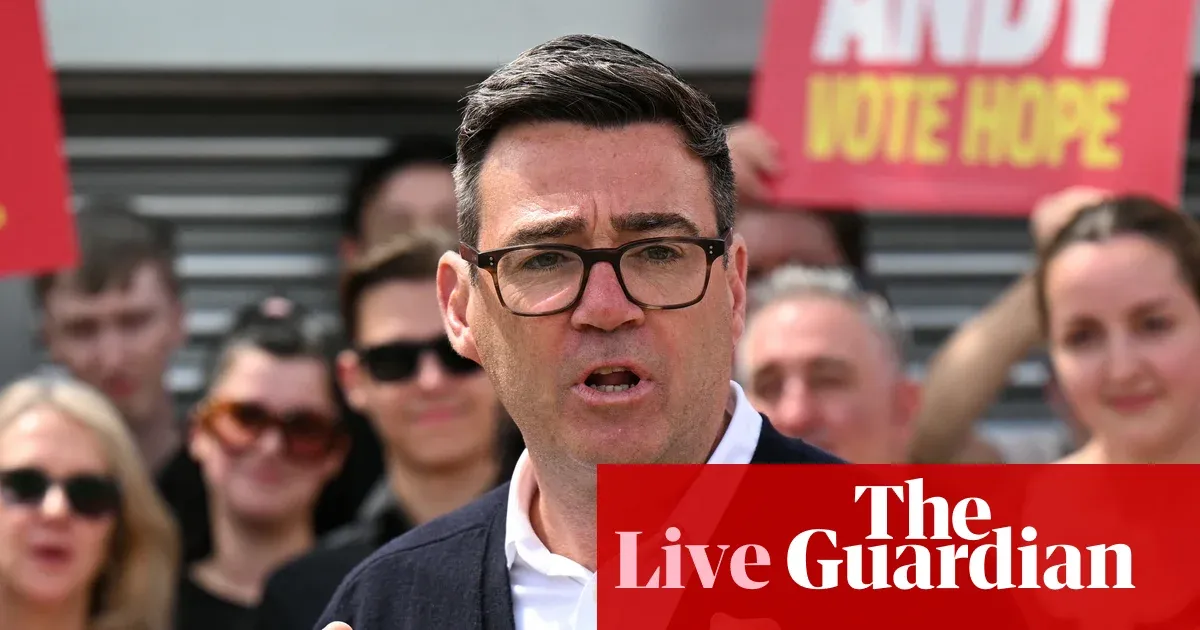
Andy Burnham is set to be formally announced as Labour leader at a special conference at noon, and he plans to appoint Shabana Mahmood. But Labour left MPs and allies are publicly questioning whether Mahmood has the economics, immigration stance, and leadership skills for a Treasury-level role.
Andy Burnham is about to be formally announced as Labour leader at a special conference at noon. But before he even gives his first speech as leader promising his government will be “unashamedly Labour,” The Times has splashed a claim that he faces “a revolt from his core support on the Labour left” over his plans to appoint Shabana Mahmood.
The specific line of fire matters because it is not aimed at vibes or general ideology. It is aimed at competence, coalition-building, and whether a planned Treasury appointment can be credibly executed. In the Times story, the only MP quoted on the record criticizing Mahmood is Rachael Maskell, described as a prominent leftwinger who is comfortable speaking out against the leadership. Maskell told the paper that Ed Miliband would be a better chancellor because he “has Treasury experience and he’s been able to bring our party together around some very difficult issues.” She then attacked Mahmood on immigration, saying Mahmood “hasn’t got the level of skill and experience to provide the leadership that is needed in the Treasury.”
Zoom out and this is a familiar kind of internal party governance problem, just wearing different branding. Labour, like any political organization that is trying to win elections while keeping multiple factions on side, runs on leadership legitimacy inside the party, not only in the public. Once a leader signals a high-profile appointment like a potential chancellor or senior economic figure, the appointment becomes a proxy for how the leader will govern the future coalition. In corporate terms, it is the difference between a CEO announcing strategy and a CEO also naming who is expected to execute the strategy. The people named for execution get judged instantly, sometimes more harshly than the plan itself.
What makes this episode sharper is that the criticism is not limited to one lane. A senior ally of Burnham is also cited criticizing the same candidate. The ally said: “Shabana has no sense of the economics. It’s just not something she’s ever spoken about. She’s not collaborative. It’s not clear how she would drive the machine.” Another Labour MP added a more procedural critique: “It’s baffling a lot of people because nobody knows what her views are on the economy. Does she even have any? She’s never done a speech or intervention. It’s just absolutely bizarre and I can’t see her as a sensible appointment.”
Those lines, taken together, suggest a classic board-level debate: does the person have demonstrated domain expertise, or are they being selected because of loyalty, factional balance, or broader political signaling? Maskell’s emphasis on Treasury experience and the ability to “bring our party together around some very difficult issues” points to an argument that the chancellor role is both technical and political. Mahmood, in this telling, lacks the visible track record to satisfy either requirement. Even the “nobody knows what her views are on the economy” critique is essentially asking for evidence, not promises.
There is also a second-order effect here for how party leadership manages internal dissent. If a leader is already walking into a special conference with reports of revolt on the Labour left, then every subsequent appointment becomes high-stakes optics. In newsroom language, that is the story’s momentum. In governance language, it is risk. Because once leaders appear to prioritize appointments that do not reassure their core support, they can trigger more than criticism. They can trigger uncertainty, delayed coalition-building, and a more transactional relationship between faction leaders and top leadership.
There is a regulatory angle too, even though this is a political story. In the UK context, “Treasury” is shorthand for the economics of policy making: how tax, spending, regulation, and macroeconomic credibility get translated into actual outcomes. That is why immigration, economics, and “experience” show up together in the criticism. Whether the party is crafting a governing platform, debating spending priorities, or preparing for scrutiny on policy feasibility, the leadership needs internal consensus around what the economic narrative is and who can credibly deliver it.
For executives, investors, or board members watching political leadership from the outside, the practical takeaway is that personnel signals can move organizational stability as much as strategy does. Burnham’s noon announcement will formalize leadership, but the internal fight over Mahmood is already framing how his team will be judged on execution. If the Labour left’s concerns are not addressed quickly, the party risks spending early momentum on internal reconciliation rather than on the broader political contest.
And for anyone in roles that combine strategy and appointments, the underlying lesson is brutally simple: when you name a “Treasury” type role, you are not just selecting a person. You are selecting a narrative of competence for the entire organization. Burnham may be “unashamedly Labour” in his first speech as leader, but the internal question is whether his economic leadership signal will unify the people who most need to believe in him first.
This story's Key Insights and Take-aways are locked.
Create a free account to unlock Executive Actions for one credit.
Register to UnlockAlways free for Executives Club members. Join the Club
More in Politics

LA County: DOJ's 20,000 'noncitizen' voter list is 'unreliable,' includes U.S.-born
Preliminary review by Los Angeles County election officials finds errors in the federal list, raising the stakes for voter roll integrity ahead of November.

Trump's $1.5B Pentagon chip investment lands in North Carolina
A $1.5 billion defense infusion for North Carolina chipmaking signals a new era of Pentagon-backed reshoring - here's what it means for the industry.

Nigeria confirms first Ebola case in Abuja, a woman just off a Uganda flight
Health Minister Muhammad Ali Pate says the patient flew in from Uganda, putting Africa's latest outbreak on Nigeria's doorstep.