

Andy Burnham will court social media creators to spread his prime minister message
The UK prime minister plans influencer collaboration, raising questions about platform power, credibility, and political compliance.
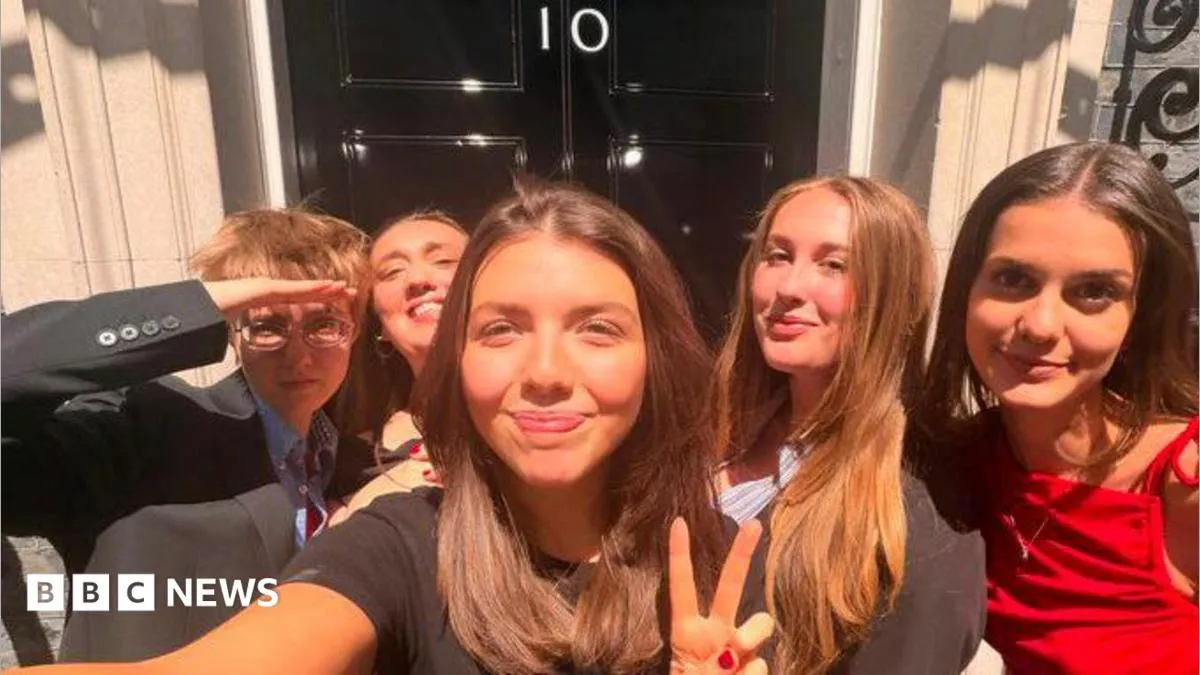
Andy Burnham, the new prime minister, plans to collaborate with social media creators and influencers to get his message out. For decision-makers, it signals a shift in how political communication will be operationalized in public view.
Andy Burnham’s plan is straightforward and, in 2026 terms, quietly radical: the new prime minister plans to collaborate with influencers and social media creators to get his message out. That is the entire story the BBC report highlights, but it lands in a world where “message distribution” is no longer a broadcaster’s problem. It is a platform problem, an audience-trust problem, and a compliance problem.
For executives and operators, the immediate takeaway is that Burnham is treating social media as an active channel, not a passive bulletin board. His goal is reach: using creators who already have attention, community norms, and the ability to turn political content into something that travels. When a prime minister makes that choice, the message is not just “we will post.” It is “we will partner,” which changes everything about who controls framing and how audiences interpret intent.
To understand why this matters, remember how political messaging used to work. Parties relied on traditional media cycles, official statements, and carefully staged appearances. Social platforms flipped the mechanics. Algorithms reward engagement, creators translate topics into formats their audiences understand, and the fastest path to visibility often bypasses editorial gatekeeping. In that environment, a decision by a prime minister to work with influencers effectively acknowledges a basic reality: the attention economy is now part of statecraft.
That creates second-order pressure on the people who manage brand, reputations, and risk, even if they are not in politics. If creators are a new distribution surface, then “truth” is not the only variable. Credibility transfers across partnerships. A creator’s relationship with their audience, their history of coverage, and the tone of their delivery can all influence how a political message is perceived. For leaders and boards at companies that operate near regulated areas like healthcare, finance, energy, or consumer tech, this is a reminder that partnerships with attention brokers are not neutral.
There is also a compliance and governance angle. Political content on social platforms can trigger questions about transparency, labeling, and how promotions or endorsements are handled. Even when no new regulation is announced in a story like this, the direction is clear: public-sector communicators are moving deeper into the creator ecosystem. That tends to increase the likelihood that lawyers, policy teams, and communications leads get pulled into workflows they may not normally own. In practical terms, the operational challenge becomes documentation, approvals, and clear boundaries around what is “official messaging” versus creator commentary.
Another practical implication: influencer collaboration reshapes who becomes a stakeholder. In the traditional model, stakeholders were institutions: broadcasters, newspapers, and official press channels. In the creator model, stakeholders include platform policies and the creator’s own production pipeline. That can affect timing. Creators may need advance information, fact-checking, and clarity on what claims can be made. If those pieces are unclear, messages can be delayed or fragmented. If they are clear, the content can land with more polish, because it is built for the medium rather than pasted into it.
None of this requires inventing conflict. The BBC report is specific about the plan: Burnham intends to collaborate with influencers and social media creators to get his message out. Still, anyone who has worked in communications knows that partnerships introduce friction points. Even when goals are aligned, incentives differ. Creators optimize for audience retention and distinct style. Political offices optimize for accuracy, consistency, and public legitimacy. Bridging those incentives is an execution problem, not a slogan problem.
The strategic stakes extend beyond the UK newsroom beat. If a prime minister uses creator collaboration as a communication strategy, other political leaders and institutions will notice. This could normalize influencer partnerships as a default distribution method, not a novelty. And for brand-facing organizations, it intensifies competition for attention by raising expectations that messages will be delivered in native formats, with creator-level storytelling.
So the real “why now” is less about novelty and more about operational reality: Burnham is treating influencer collaboration as a channel worth building around. Decision-makers in public affairs, communications, and corporate governance should treat that as a signal about where attention and trust will be negotiated next. The next phase of political communication will likely be measured not only by what gets said, but by who helps it travel, how it is framed, and how audiences are guided to interpret it.
This story's Key Insights and Take-aways are locked.
Create a free account to unlock Executive Actions for one credit.
Register to UnlockAlways free for Executives Club members. Join the Club
More in Politics

LA County: DOJ's 20,000 'noncitizen' voter list is 'unreliable,' includes U.S.-born
Preliminary review by Los Angeles County election officials finds errors in the federal list, raising the stakes for voter roll integrity ahead of November.

Trump's $1.5B Pentagon chip investment lands in North Carolina
A $1.5 billion defense infusion for North Carolina chipmaking signals a new era of Pentagon-backed reshoring - here's what it means for the industry.

Nigeria confirms first Ebola case in Abuja, a woman just off a Uganda flight
Health Minister Muhammad Ali Pate says the patient flew in from Uganda, putting Africa's latest outbreak on Nigeria's doorstep.