
Annie Andrews targets Nancy Mace, after Lindsey Graham’s death leaves South Carolina’s seat open
With filings starting July 21, Andrews calls the rematch with Mace “really interesting” and claims polling favors Democrats.
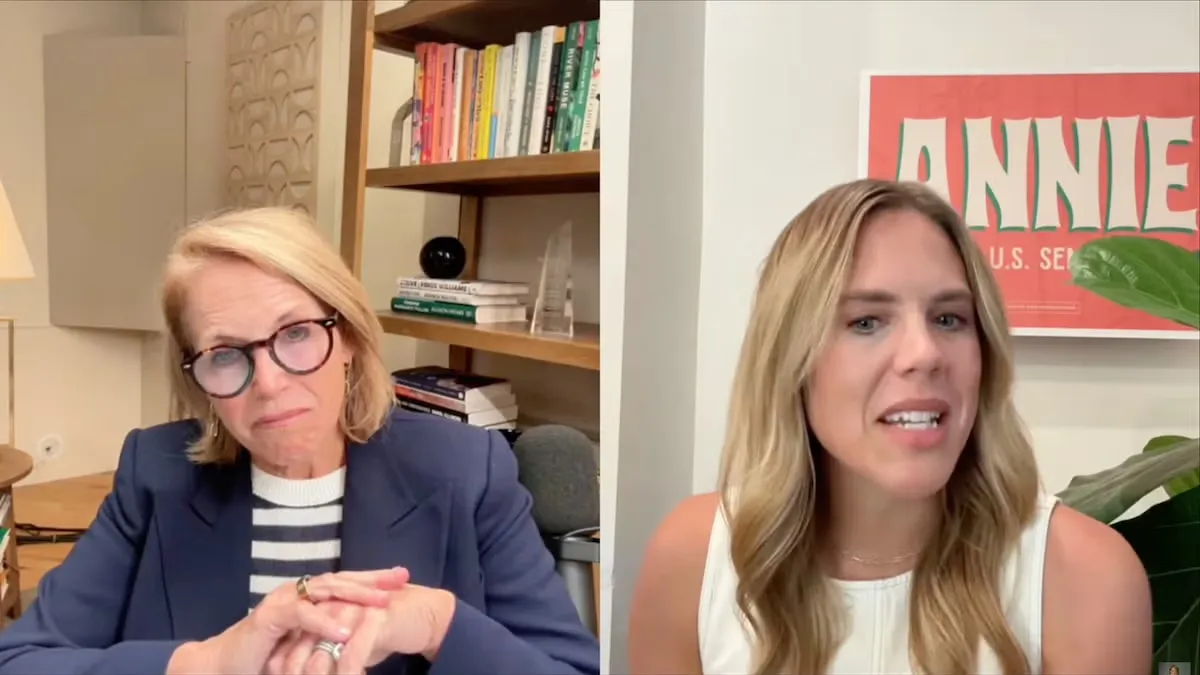
South Carolina Democratic Senate nominee Dr. Annie Andrews discussed her path after Sen. Lindsey Graham’s death, including the state’s new process to replace him for the November general election. She told Katie Couric she expects Republicans to offer an “extremist freedom caucus type” and said one in five non-MAGA Republicans plan to vote for her.
South Carolina’s Democratic nominee for Senate, Dr. Annie Andrews, is already treating the post-Lindsey Graham chessboard like it has been waiting for her. In an interview with Katie Couric, Andrews said the seat will open for the November general election because Sen. Lindsey Graham died over the weekend, and the Republican Party now has to nominate a new candidate. Gov. Henry McMaster appointed Graham’s sister, Darline Graham Nordone, to finish his Senate term on Monday, a move Andrews argued was designed to avoid immediate political endorsements from both the governor and President Donald Trump.
Andrews did not just talk process. When Couric asked whether she had a candidate she would want to run against, Andrews singled out Rep. Nancy Mace and suggested a rematch could be the story. Andrews said Mace “likes to make news cycles about herself” and had been talking since Sunday about getting into the race. She framed it as an opportunity, saying it would be “a really interesting rematch.” In Andrews’ view, the bigger political dynamic is that South Carolina Republicans have moved far to the extreme right, making it harder for more traditional conservatives to win a primary.
To understand why Andrews is sounding so confident, you have to zoom out on how this seat became “open” in the first place. Graham was elected to the Senate in 2002 and reelected in 2008, 2014, and 2020. He won the Republican nomination for a fifth term in June 2026, but he died before the general election. That timing matters because it turns what was supposed to be a straightforward matchup into a scramble. McMaster’s appointment of Darline Graham Nordone to finish the term buys time, but it also resets the candidate pool for the November election.
That candidate pool is where the real second-order effects show up for anyone watching state party mechanics and candidate strategy. Republican hopefuls can file to run for the open seat beginning Tuesday, July 21, with filings closing July 28. That window is short, which compresses how quickly a campaign can form coalitions, secure endorsements, and unify around a narrative. For boards and donors, rapid candidate filing timelines often force faster decisions on where to place money and which wing of a party is most likely to consolidate support. Andrews highlighted the rarity of this kind of opening, saying it is very rare for a Senate seat to open up in South Carolina, and she expects a competitive race.
Andrews also explained why she thinks facing Mace would not be a problem politically, even if it becomes one. She referenced the history between herself and Mace, including that Mace falsely accused Andrews of child abuse, which led Andrews to take unpaid leave from her job at a children’s hospital in South Carolina. Andrews said she would not be concerned about the possibility of running against Mace again and pointed to how Mace fared in past Republican politics, saying Mace ran for governor and finished fifth in the Republican primary. That is a concrete anchor: it implies Andrews sees Mace as a high-visibility candidate, but not necessarily a coalition-winner.
The more strategic part of Andrews’ pitch is her forecast of what kind of Republican nominee South Carolina will produce. Andrews told Couric the nominee would likely be “another very far-right extremist freedom caucus type,” and she suggested her ability to win depends on the state Republican primary system becoming more extreme. She argued that, in her view, a “nice centrist Republican” like Nikki Haley or even Mark Sanford could never win a Republican primary in South Carolina because the state party has been drawn so far to the extreme right. Whether one agrees with her characterization or not, the point is operational: primary electorates shape general-election candidates, and those candidates shape turnout and persuasion in the general.
Andrews said her campaign already has evidence of that persuasion opportunity. She claimed polling showed that one in five non-MAGA Republicans are planning to vote for her. She also tied her confidence to the current shape of politics in South Carolina, saying that because the Republican party has become more extreme, she expects there is room for Democrats to pick up votes from Republicans who do not identify with the MAGA brand. For decision-makers, that claim has a direct implication: campaigns might be less focused on flipping small numbers of swing voters and more focused on motivating a specific slice of voters who already exist in the electorate.
Finally, there is the governance and legitimacy angle that sits underneath the politics. When a Senate seat opens due to a death, the appointment process and the subsequent filing window can change the tone of the campaign. McMaster’s selection of Darline Graham Nordone is a non-traditional political route compared with a lifelong party operator, and Andrews argued the Republicans avoided endorsing a new candidate for the seat while President Donald Trump and McMaster “weren’t ready to pick who they want to anoint.” For Republicans, that decision can buy time, but it can also create a more chaotic primary phase and an opportunity for Democrats to define the opponent before the opponent fully consolidates.
For executives, investors, and anyone advising political-adjacent strategy, the practical lesson is that speed and faction matters. A short filing window from July 21 to July 28, an appointed interim senator, and a party that Andrews believes is polarized on the right all combine to create a general-election environment that could swing faster than usual. Andrews is betting that her strongest advantage is structural: if the Republican nominee emerges from an extreme primary dynamic, Democrats can win in November even against a high-profile name like Mace. The rematch story might be the headline-grabber, but the deeper gamble is whether the GOP’s next nominee is built to win a primary, not a general.
This story's Key Insights and Take-aways are locked.
Create a free account to unlock Executive Actions for one credit.
Register to UnlockAlways free for Executives Club members. Join the Club
More in Politics

Glacial collapse, not rain, killed 180 in Nepal's Himalayan flood
The Himalaya's extreme geography hid the true cause of Nepal's catastrophic flood, a glacial collapse that turned a geological battleground into a mass-casualty zone.

Iran’s Esmail Baghaei says Oman talks start shipping via Hormuz, not US talks yet
Temporary route plans with Oman aim to restart commerce while Tehran says Washington dialogue is not on the table.

Standards watchdog opens probe into Reform UK deputy leader Richard Tice over interests
The parliamentary standards commissioner says it began an investigation on 28 July into a possible undeclared interest.