

Chris Van Hollen warns Democrats failed to explain their agenda, not just Trump opposition
The 2028-bespectacled senator argues Democrats are losing voters by focusing too hard on resisting Trump, not delivering a case for change.
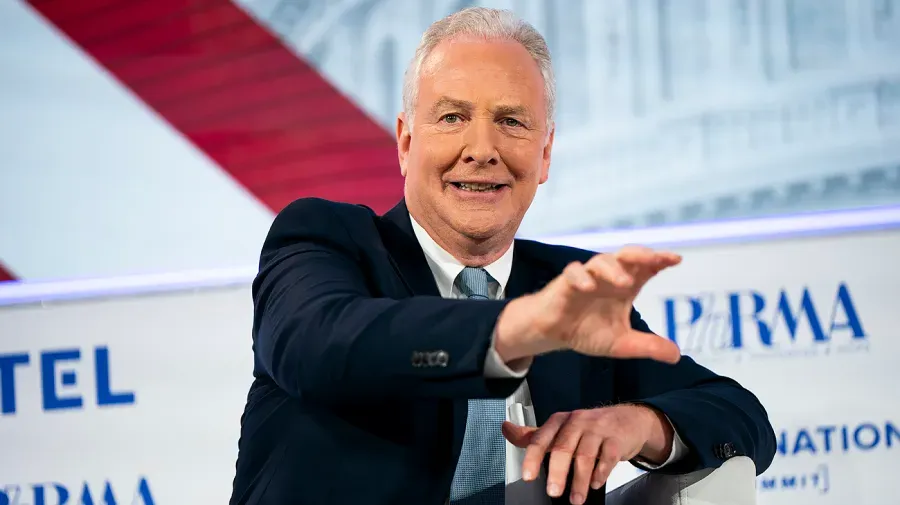
Sen. Chris Van Hollen (D-Md.), exploring a possible presidential run in 2028, says Democratic leaders have not done a good job explaining what the party is for and how it would improve Americans' lives. He frames the current approach as overly centered on opposing President Trump rather than making a persuasive, positive pitch to voters.
Sen. Chris Van Hollen (D-Md.), exploring a possible run for president in 2028, is making a blunt political case: Democrats are not telling voters what they stand for, and they are spending too much energy opposing President Trump instead of laying out a clear improvement story for Americans' lives. In plain English, he is arguing the party is running a campaign designed to win an argument, not earn a mandate.
Van Hollen ties his criticism to a contrast between resistance and presentation. He says Democratic leaders have not done a good job explaining what the party is for and how it would improve Americans' lives. And while he acknowledges the political gravitational pull of opposing Trump, his core point is that voters need more than negative comparisons. They need a reason to believe the next chapter will be meaningfully different.
If you are a founder, investor, or operator, you have seen this problem in other arenas: a team can be entirely correct about what is broken, and still struggle if it cannot translate that diagnosis into a concrete, human benefit. That translation is not just messaging polish. It is how people decide to take risk, spend money, change behavior, and support governance. In politics, the equivalent is turnout, persuasion, and sustained trust. Van Hollen is essentially saying Democrats risk turning their coalition into a permanent reaction force, rather than a governing brand with a repeatable promise.
The “why now” matters. Van Hollen is not offering this view from the cheap seats. The source notes he has experience leading party committees at the top level: “I chaired the DSCC once, I chaired the DCCC...” He is describing a perspective informed by party strategy and electoral math, not just general ideology. Committee leadership is where you learn that voters do not move on vibes alone. They move on whether they can quickly summarize what a party will do differently, and whether that difference feels like it shows up in everyday life.
There is also a structural incentive behind his complaint. When opposition to a president dominates the agenda, every decision becomes a referendum. That can help with mobilization in the short term. It can also crowd out the harder work of explaining the platform in a way that survives contact with daily costs like housing, healthcare, wages, and regulatory uncertainty. For decision-makers in business, those uncertainties are not abstract. They show up as slower investment, more caution in hiring, and negotiations that assume rule changes. Politics influences that environment, and the credibility of political promises influences how much risk the private sector is willing to take.
Van Hollen's remarks land in a broader pattern where parties are judged on both their contrast and their capability. Opposing Trump is a clear identity statement. But capability is harder to communicate. It requires a story about competence, outcomes, and tradeoffs. Even if leaders disagree internally on priorities, voters need a consistent “this is what we will deliver” narrative. When that narrative is missing, the opposition-focused strategy can become a trap. You win headlines, but lose the long-term belief that governance will improve lives.
There is a second-order implication for executives and boards of companies that operate under federal policy. When the political center of gravity is consumed by constant opposition, policymaking can become episodic and reactive. That dynamic tends to increase the premium investors place on predictability. It also increases the value of scenario planning and contingency strategies, because rule trajectories can swing with each political cycle. In other words, the way a party communicates is not only about persuasion. It can foreshadow how stable the policy pipeline will feel.
Van Hollen is also effectively challenging Democratic leaders to stop treating messaging as an afterthought. If voters cannot quickly name what Democrats are for, then every policy debate starts from a credibility deficit. That makes it harder for elected officials to build durable support for reforms. It can also make negotiations with stakeholders more fraught, because public buy-in is a key input to legislative momentum.
For peers in similar roles, the stake is straightforward: political credibility is an asset, and messaging discipline is how you protect it. Van Hollen's warning says the party cannot rely on a negative frame alone. If Democrats want to win bigger than a narrow opposition coalition, they need to show, in high-resolution detail, how the next administration would improve Americans' lives. That is the difference between reacting to a president and offering a governing project.
This story's Key Insights and Take-aways are locked.
Create a free account to unlock Executive Actions for one credit.
Register to UnlockAlways free for Executives Club members. Join the Club
More in Politics

LA County: DOJ's 20,000 'noncitizen' voter list is 'unreliable,' includes U.S.-born
Preliminary review by Los Angeles County election officials finds errors in the federal list, raising the stakes for voter roll integrity ahead of November.

Trump's $1.5B Pentagon chip investment lands in North Carolina
A $1.5 billion defense infusion for North Carolina chipmaking signals a new era of Pentagon-backed reshoring - here's what it means for the industry.

Nigeria confirms first Ebola case in Abuja, a woman just off a Uganda flight
Health Minister Muhammad Ali Pate says the patient flew in from Uganda, putting Africa's latest outbreak on Nigeria's doorstep.