
FBI evidence team inspects Lincoln Memorial pool after $16M repair starts peeling
A newly drained Lincoln Memorial reflect pool failed fast, and investigators are now probing whether vandals drove the damage.
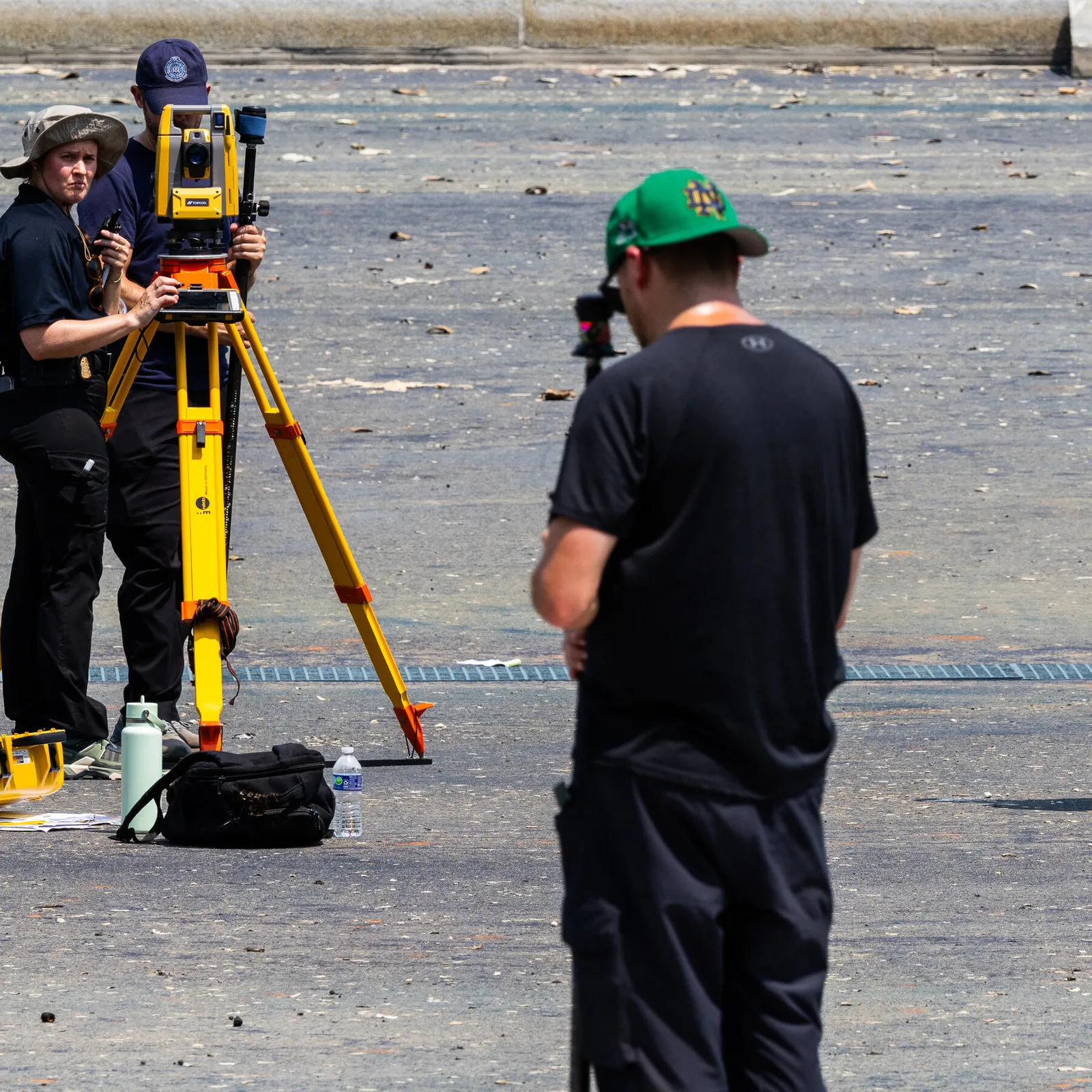
An FBI evidence team visited the Lincoln Memorial reflecting pool after officials drained it and found the floor began peeling soon after a $16 million repair job. The probe, plus President Trump’s vandal-blame framing, raises immediate questions for decision-makers about accountability and oversight of high-profile public works.
Officials with an FBI evidence team visited the Lincoln Memorial reflecting pool after it was newly drained, as part of a fact-finding effort tied to the pool’s sudden deterioration. The core issue is straightforward but high-stakes: the floor began peeling soon after a $16 million repair job.
This is where the political and operational story collide. President Trump has blamed vandals, and the arrival of investigators signals that the government is not treating the peeling as a routine maintenance hiccup. For executives and board members watching government assets and contracts, the message is simple: when an expensive, visible public project fails quickly, the accountability questions do not stay in-house.
To understand why this matters beyond Washington headlines, zoom out to how public works typically get managed. Large repair efforts are usually treated as both engineering problems and governance problems. Engineering problems are about materials, workmanship, environmental exposure, and whether the repair actually matches the conditions it will face once the asset is back in service. Governance problems are about how quickly issues are detected, whether contractors meet specs, how warranties or remediation are handled, and what documentation exists if something goes wrong.
Here, the timeline is the story. The pool had a $16 million repair, then after the pool was drained, officials observed that the floor began peeling soon afterward. That sequence turns the question from “what happened?” into “what did the system fail to catch or prevent?” If the repair work did not hold under real-world conditions, oversight and quality control come into focus. If it was damaged by outside interference, the emphasis shifts to security, monitoring, and incident response.
President Trump’s decision to blame vandals adds a layer that executives should recognize: public attribution can shape how institutions allocate blame internally and how investigators interpret evidence externally. In other words, when a political leader points to a cause early, it can accelerate scrutiny but also sets expectations for what investigators will be able to prove. For decision-makers, that matters because the endgame is rarely just fixing a surface problem. The broader stakes include reputational risk, potential claims between parties involved in the project, and the precedent this sets for how future repairs are contracted and monitored.
The FBI evidence team’s presence is the government’s signal that it is taking potential wrongdoing seriously. In executive terms, think of it like when a company’s internal incident review escalates to external investigators. It changes how records are preserved, how communications are handled, and how quickly the organization must be able to answer: What was known, when was it known, and what actions were taken in response?
Second-order implications are where boards and senior operators often earn their keep. A high-profile location like the Lincoln Memorial is not just a structure, it is a symbol, and it draws constant public attention. That visibility increases pressure for rapid explanations, but it also increases the risk of premature conclusions. Investigators will need to separate coincidence from causality. Was the peeling due to environmental or material failure? Was it linked to unauthorized contact? Or is it a combination of factors, where a repair that was marginal in the first place also became vulnerable to damage?
This event also matters for peers dealing with expensive infrastructure, especially projects that are both public-facing and mission-critical. When large-ticket repairs fail quickly, procurement and oversight processes tend to be stress-tested. Contracts may be reviewed for performance standards and inspection regimes. Warranties may be contested or enforced more aggressively. And governance bodies, from boards to oversight committees, may demand more evidence of quality control before the next dollar is spent.
At the strategic level, the lesson for executives is not to panic, it is to prepare for escalation. The FBI evidence team visiting the reflecting pool, the observation of peeling soon after a $16 million repair, and President Trump’s vandal attribution together point to a likely accountability reckoning. For leaders managing programs with complex deliverables, the stakes are clear: when a project’s failure timeline is short, the audit trail and the root-cause clarity have to be just as fast.
This story's Key Insights and Take-aways are locked.
Create a free account to unlock Executive Actions for one credit.
Register to UnlockAlways free for Executives Club members. Join the Club
More in Politics

LA County: DOJ's 20,000 'noncitizen' voter list is 'unreliable,' includes U.S.-born
Preliminary review by Los Angeles County election officials finds errors in the federal list, raising the stakes for voter roll integrity ahead of November.

Trump's $1.5B Pentagon chip investment lands in North Carolina
A $1.5 billion defense infusion for North Carolina chipmaking signals a new era of Pentagon-backed reshoring - here's what it means for the industry.

Nigeria confirms first Ebola case in Abuja, a woman just off a Uganda flight
Health Minister Muhammad Ali Pate says the patient flew in from Uganda, putting Africa's latest outbreak on Nigeria's doorstep.