

Anthropic, OpenAI, and Google discovered “distillation attacks” look like their own bot wars
The AI giants say rivals are harvesting outputs at scale, but the internet keeps proving symmetry wins.
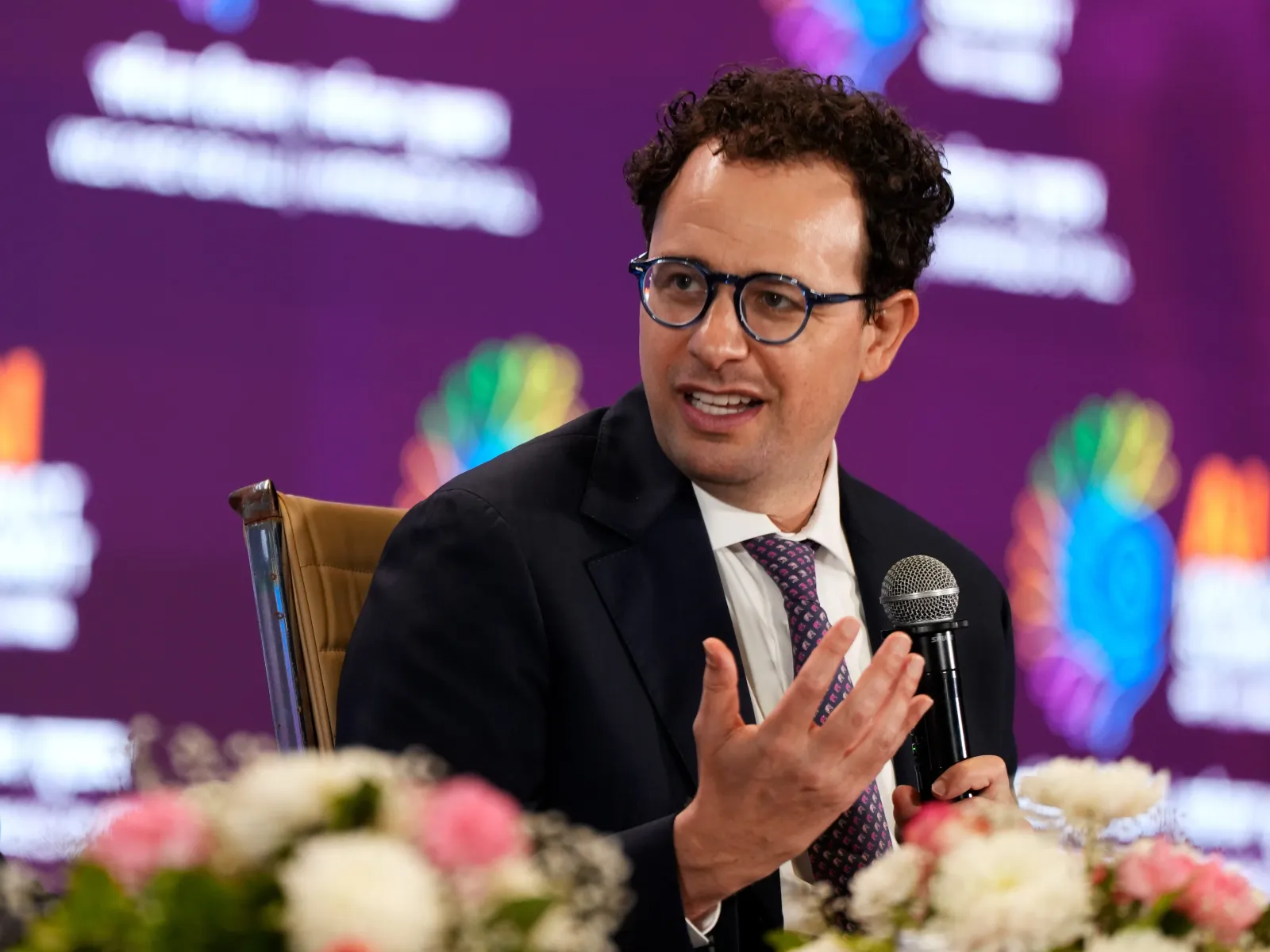
Anthropic CEO Dario Amodei and other AI leaders are warning that competitors use “distillation” to improve their models by harvesting Anthropic’s outputs at scale. For executives, the dispute is a warning sign: enforcement is messy, incentives conflict, and the cat-and-mouse game accelerates.
For years, AI giants argued the modern internet is fair game if information is publicly available. They leaned on “fair use” to justify scraping web content for model development and outputs. Now Anthropic, OpenAI, and Google are pointing at a newer flashpoint called “distillation,” where one AI model’s outputs are used to improve another, and they are discovering something the rest of the internet learned the hard way: once something is online, people can remix it, harvest it, and keep doing it in ways you cannot fully stop.
Anthropic says competitors are harvesting its outputs at scale, turning billions of dollars of research into a shortcut for rivals. The worry is simple and expensive: why spend billions building the best models if someone else can recreate a lot of the intelligence for a fraction of the cost? OpenAI and Google have made similar warnings recently, framing the issue as a kind of extraction problem, not just a legal technicality.
Here is the awkward part, and it is not subtle. From 30,000 feet, distillation looks a lot like what AI companies have been doing to the rest of the internet. Scrape web content for free and without permission. Turn it into a product you sell. Argue it is fair use. Then hope the lawyers sort out the details later. That is the symmetry Anthropic and the others cannot quite escape. Content owners have been trying to prevent their material from being used this way, and have largely failed. But now the same playbook is showing up in a different wrapper, aimed at model outputs rather than websites.
Anthropic, OpenAI, and especially Google also frame the fight as cybersecurity. They argue that swarms of bots are “attacking” their models to extract intelligence. But the source points out that they have been doing something comparable to many websites: bombarding them with so much bot crawling activity that site owners saw operating costs skyrocket. In other words, the dispute is not just about what is legal. It is also about what behavior actually looks like in the wild, when the internet treats “public” as “extractable.” The second-order problem for executives is that when both sides describe themselves as defenders, the operational damage lands on whoever owns the infrastructure and pays the bills.
Zoom in on “distillation,” and the industry still cannot agree what line even exists. There is a benign version where labs use outputs from their own models to create different, often smaller, models. Then there are what Anthropic calls “distillation attacks,” where rivals use other people’s AI outputs to develop or improve their own offerings. Even here, the boundaries blur: some AI researchers worry that Anthropic’s aggressive stance could hurt all types of distillation, not just the contested version. Nathan Lambert, an open-source AI expert, calls this “distillation panic.” That phrase captures the governance problem: when enforcement gets loud, everyone’s incentives tighten, and the ecosystem can start treating legitimate experimentation as hostile activity.
The cat-and-mouse dynamic is already underway. Anthropic has spent months tightening access to its top models to stop competitors from learning too much. The source says those efforts have either backfired or spurred more elaborate workarounds. That is the typical pattern for modern AI access controls: constrain one path, and the network routes around it. When model outputs are out in the world, clever people will find ways to collect them, remix them, and profit from them. The source quotes Zilan Qian, a researcher at the Oxford China Policy Lab: “It’s always a kind of a cat-and-mouse game.” The practical implication is that enforcement cannot be the only strategy, because the internet is designed for copying and recombination, not for consent.
So what does this mean for decision-makers inside AI labs, platforms, or companies that buy AI capabilities? First, legal arguments can cut both ways. Distillation may even be fair use depending on how it is done, which means a hardline posture might not produce the deterrence people want. Second, the industry already has a lived experience of escalation through bot wars: site owners saw costs rise, and the same dynamics can reappear around model access and scraping behaviors. Third, the reputational risk is structural. The source bluntly notes that despite pitching itself as the most ethical AI company, Anthropic is described as the worst actor in terms of data-sucking bots on the other side of the argument. Whether or not you accept that framing, the point is clear: stakeholders will notice hypocrisy when incentives are misaligned.
If you are an executive trying to plan for the next 12 to 24 months, the real lesson is that the internet is not waiting for consensus on AI ethics or policy. Once outputs are online, “fair use” debates will collide with operational reality. Welcome to the new internet for Anthropic, OpenAI, and Google. Get used to it, because the incentives that power extraction and the constraints that aim to stop it are both self-reinforcing.
This story's Key Insights and Take-aways are locked.
Create a free account to unlock Executive Actions for one credit.
Register to UnlockAlways free for Executives Club members. Join the Club
More in Business
SK Hynix opens at $170, raises $26.5B, and tops foreign IPO records
In Friday's Wall Street debut, SK Hynix turns AI RAM demand into a $26.5B fundraising moment that rewrites comps.

China lands a reusable Long March booster, a first that matches SpaceX and Blue Origin
A barge landing and net-based recovery move China from theory to proof, reshaping the reusability race and satellite ambitions.

AstraZeneca $27B wipeout as Wainua late trial misses cardiovascular target
A failed late-stage heart study triggered a swift market punishment, forcing investors and boards to reset timelines and risk.