

Anthropic priced at $83, hit $111, and shareholders still can't fire anyone
The first pure AI lab to list on Nasdaq handed investors a jump from $83 to $111 and almost no power over its founders, with a $900 billion compute bill coming due.
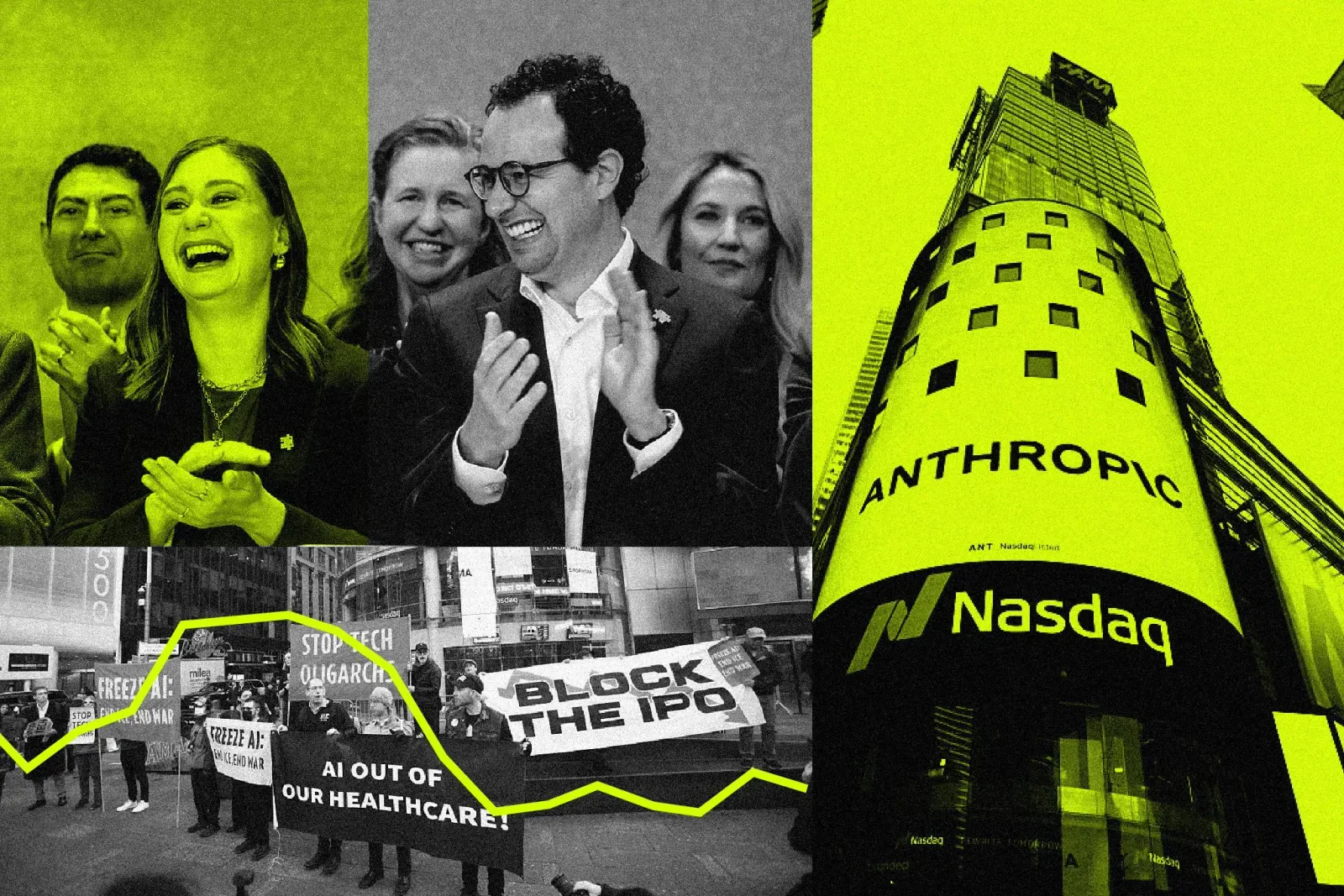
Anthropic, the AI lab behind Claude, went public on the Nasdaq last Thursday at $83 a share and traded up to $111, becoming the first pure AI lab to list while keeping a founder-and-trust structure that leaves shareholders unable to vote out executives. For boards and founders weighing their own listings, Anthropic is now the live test of whether a safety-first brand and a roughly $900 billion compute bill can survive quarterly public-market pressure.
Anthropic went public on the Nasdaq last Thursday, becoming the first pure AI lab to list, and the market did not shrug. The company priced its IPO at $83 a share and traded as high as $111, a victory lap complete enough that law firms swapped their homepages for congratulatory banners. Hayden Field, The Verge's senior AI reporter, told the Decoder podcast the listing is set to mint thousands of new millionaires and hundreds of new centimillionaires, billionaires included. Here is the detail that should stop a boardroom cold: the investors who bought that stock cannot vote out the executives running the company. Not after a bad quarter, not after a bad year, not ever.
That is not a quirk of the paperwork. It is the architecture. Governance experts and law professors consulted for the episode said Anthropic, like OpenAI, has a structure so unusual that it is not beholden to shareholders the way some public companies are. Control sits with the founders and a special trust, and the founders' grip is, in Field's words, "more than it may seem." Shareholders can never vote out executives and have little power to influence anything. The show's framing is blunt: Anthropic was structured to repel what one guest called "the rapacious pressures of capitalism," and it reflects the beliefs of a number of eccentric people. Now that structure has to survive contact with public markets.
The bill is the reason the structure matters. Anthropic's compute costs total roughly $900 billion over the coming years, according to the episode, and the company is not profitable on the face of it. Field cites one estimate from Steve Rattner that Anthropic will have to increase revenue roughly 17-fold within the next 10 years to deliver a return comparable to some of its tech peers. That is the arithmetic of frontier AI: buy tokens from Anthropic, and the company has to make each one for less than you paid, while also funding the training runs for the next model. Inference has a long way to go before it pays for training. Public investors typically want profits, or at least revenue growth steep enough that profits look near. Anthropic now has to reckon with that demand more than ever.
Then there is the brand. Anthropic markets itself as the safe AI lab, and that safety story is not just marketing garnish; it is the pitch to big enterprise customers. Field's point is that this same safety branding now sits in direct tension with the profit-oriented half of the business. A public company that misses revenue targets faces pressure to ship faster, sell harder, and take on the customers and use cases a safety-first lab might once have declined. Field expects more pressure around that marketing term than ever before, and she expects the tension point to move into the spotlight. How Anthropic handles it is the real story of the IPO, not the pop.
OpenAI's behavior is the tell. Field says she heard that in the past year Sam Altman was "really obsessed" with beating Anthropic to going public, and that it was all he thought about. Then came a year of setbacks and bad press, with OpenAI bearing the brunt of a broader AI populism backlash. The calculation flipped: step back and let Anthropic go first. Field describes OpenAI as happy to let its rival be the trial balloon, watching how the market values a frontier lab's revenue potential so it can sharpen its own IPO story. Now OpenAI can ride the coattails and say, in Field's paraphrase, "Yeah, us too." Whether it beats Anthropic's record is an open question. Either way, things could have gone worse for OpenAI if Anthropic had not gone first.
Governance is the thread running through all of it, and the episode flags it as especially relevant in the wake of the ongoing Jensen Huang saga. For anyone who assumed a Nasdaq listing means a company answers to its shareholders, Anthropic is the counterexample. The S-1 is worth reading for exactly this reason: who sits on which committee, which founders hold the most control, and how much control they actually have. The answer is more than the share count suggests.
Does any of this settle whether the AI bubble pops? Field says no. This is peak AI hype, she argues, and the listing does not give new information about the bubble's fate. What she does see is swelling. Tech workers inside a range of companies told her they are being tasked with doing more and more AI, even when it makes them less productive and the work less good. Her read: a reckoning is coming eventually, but not today.
The strategic stakes for peers are now clear. Anthropic has set the precedent for how a frontier lab lists: a founder-and-trust control structure, a safety brand, and a nine-figure compute bill that has to be fed by revenue growth. Every other lab weighing a listing, and every board weighing a dual-class or trust structure, now has a live test case to study. The question is not whether Anthropic can afford to put safety first. It is whether public shareholders will keep paying for a company that says it will.
This story's Key Insights and Take-aways are locked.
Create a free account to unlock Executive Actions for one credit.
Register to UnlockAlways free for Executives Club members. Join the Club
More in Business

GTA VI hauls $3.79bn in one day, out-earning every film ever made
Rockstar's own estimate covers a single Thursday plus a record 32.5m prerelease units, and it lands on every board weighing IP concentration, pricing power and launch risk.
FBI's crime database breached again, the second hack in months
CNN reports hackers hit the National Crime Information Center, the shared backbone of US policing, and the repeat timing is the part every security team should study.

S&P 500 Enters Correction, Down 10% From Its High on AI Worries
The index's slide past the 10 percent line is a symbolic verdict on investor mood, and the AI trade that powered the rally is now the thing testing it.