

FBI's crime database breached again, the second hack in months
CNN reports hackers hit the National Crime Information Center, the shared backbone of US policing, and the repeat timing is the part every security team should study.
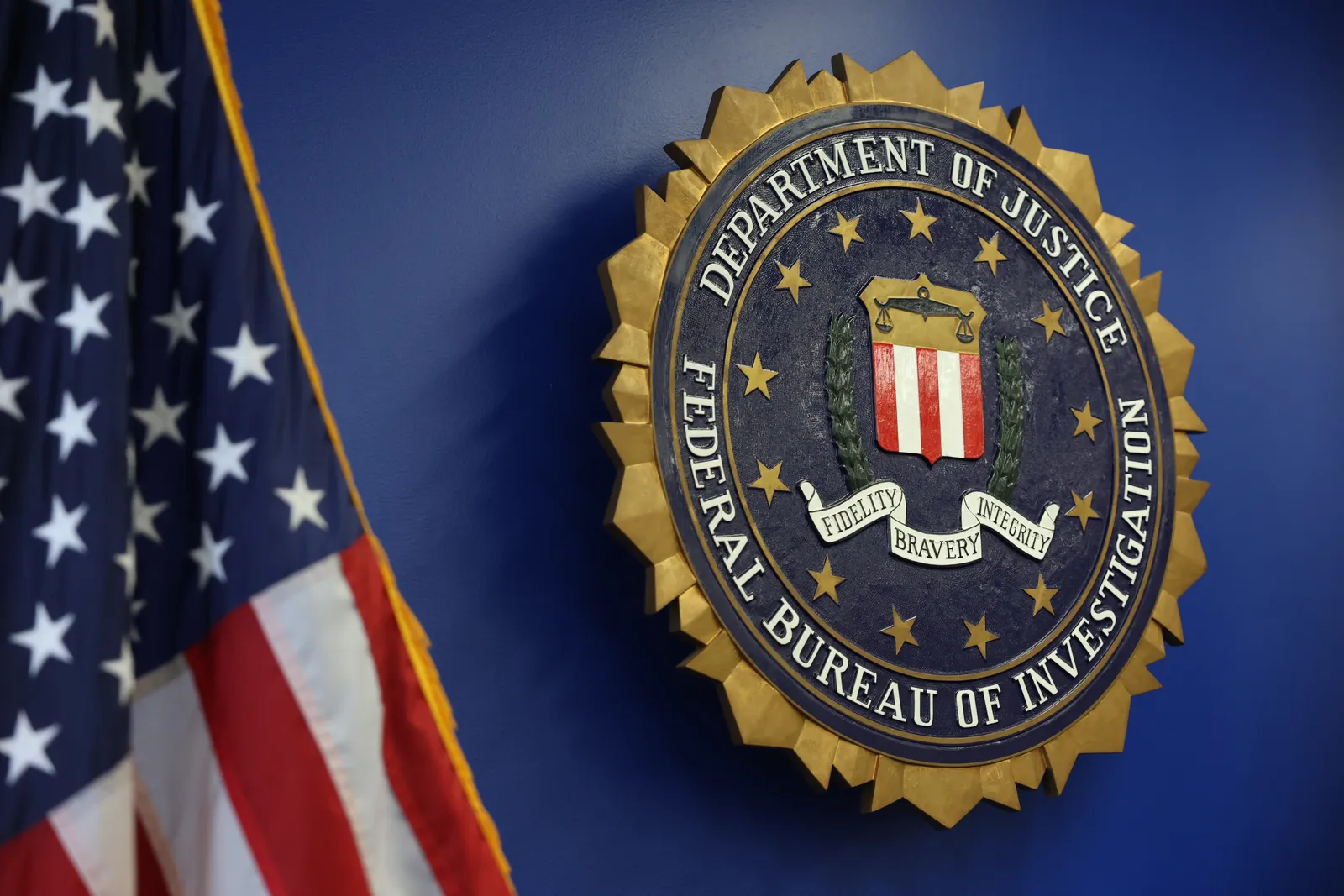
The FBI's National Crime Information Center, the bureau's shared crime database, was breached by hackers, the second incident in a few months, according to CNN sources, with an investigation still underway to determine the details. For executives and boards, the repeat timing matters more than any single intrusion: it points to adversaries who keep coming back at identity-rich government data, and to a disclosure process that leaves the public, and most security teams, waiting.
Hackers breached the FBI's National Crime Information Center, the bureau's central crime database, marking the second incident in a few months, according to CNN, which cited sources. An investigation is underway to determine the details of the intrusion: how the attackers got in, how long they stayed, and what, if anything, they took. That is the full extent of what has been publicly confirmed so far.
The repeat is the real story. One intrusion can be a single unlucky door left open. Two inside a few months is a pattern that deserves hard questions, even though the reporting does not yet say whether the two incidents are connected, whether the same weakness was used twice, or even whether the earlier incident hit this same system. The FBI has not publicly detailed the earlier episode either. So the honest state of play is this: a second breach is confirmed, the scope is not, and the silence in between the two events is itself a data point.
For context on what is actually at stake, NCIC is the quiet plumbing of American law enforcement. Stood up in 1967, it is the shared system that police officers, sheriff's deputies, state troopers, and federal agents query in the field, typically to check whether a vehicle is stolen, whether a person has an outstanding warrant, whether a firearm is flagged, or whether a missing person has surfaced somewhere else. It also feeds the criminal history checks that underpin background screening. It is not a consumer product, which is precisely why a breach lands differently: the people whose records sit inside it never signed up for the service, and they cannot opt out.
Law-enforcement data is a specific and unpleasant kind of valuable. Records in systems like this typically carry names, dates of birth, physical descriptors, case numbers, and identifiers that can be used to locate or impersonate a real person. For organized fraud, that is raw material. For someone with a grudge and a name, it is a targeting list. In the abstract, for a foreign intelligence service, it is a window into how the United States investigates crime and who it is watching. None of that requires the attacker to sell anything; the leverage is in simply holding it.
What is not known is doing a lot of work in this story. There is no public word on whether data was exfiltrated, how many records were involved, who is responsible, or whether the intrusion has been contained. Contrast that with the private sector, where public companies face disclosure expectations for material incidents, most states run breach-notification clocks, and critical-infrastructure operators have been moving toward federal incident-reporting requirements. Government systems have historically not been bound by the same public timers. The result is a familiar information pattern: fragments, unnamed sources, and an official record that fills in slowly.
The second-order effects are where this gets uncomfortable for anyone running a security program. Breaches of government systems have historically tended to run through a compromised credential, a loosely secured vendor, or an agency operating a system it did not build and does not fully control. Every contractor, integrator, and cloud provider with a connection into a system like NCIC is part of its attack surface, and each one is a spot where the overall posture is only as strong as the least-scrutinized supplier in the chain. That is a supply-chain problem dressed up as a government problem, and most large enterprises have the same shape of exposure.
For executives, the playbook here is not exotic. It is just usually postponed. Assume a breach is already underway somewhere in your environment and work backward. Inventory where your most sensitive identity data actually lives, including in systems you inherited and vendors you have not re-reviewed in a year. Run a tabletop that assumes the attackers hold valid credentials, because that is the scenario most likely to be real. Decide in advance what your board will hear in the first 24 hours, because the honest answer to "what do we know" will be "almost nothing" for longer than anyone wants. And pressure-test the assumption that your most sensitive data sits in the system with the tightest controls; in practice, it often sits in the oldest one.
The uncomfortable read-across is about trust. Police departments, courts, and the public rely on NCIC being accurate and available, and officers make split-second decisions based on what it returns. When the system that tells an officer whether the person in front of them has an outstanding warrant is compromised, the damage is not only to records but to the confidence officers place in them. An investigation is underway, according to the reporting, and that is the right answer. It is also the only answer anyone outside the bureau has right now, and for every security leader watching, the lesson is that the gap between what happened and what is disclosed is where reputations are actually made or lost.
This story's Key Insights and Take-aways are locked.
Create a free account to unlock Executive Actions for one credit.
Register to UnlockAlways free for Executives Club members. Join the Club
More in Business

GTA VI hauls $3.79bn in one day, out-earning every film ever made
Rockstar's own estimate covers a single Thursday plus a record 32.5m prerelease units, and it lands on every board weighing IP concentration, pricing power and launch risk.

S&P 500 Enters Correction, Down 10% From Its High on AI Worries
The index's slide past the 10 percent line is a symbolic verdict on investor mood, and the AI trade that powered the rally is now the thing testing it.

Dow and S&P 500 enter correction as Nasdaq logs worst week since 2020
All 11 S&P 500 sectors fell more than 1% in the same week for the first time since April 2025, a breadth signal that matters more than any single index level.